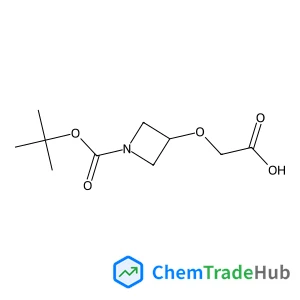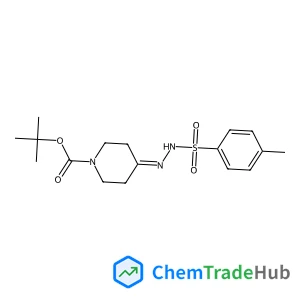
tert-Butyl 4-(2-(p-Tolylsulfonyl)hydrazono)piperidine-1-carboxylate
CAS Number:
1046478-89-0
Molecular Formula:
C17H25N3O4S
José L. Alonso, Cristóbal Pérez, M. Eugenia Sanz, Juan C. López, Susana Blanco
Rotational spectroscopy in combination with molecular beams and laser ablation (laser-ablation molecular-beam Fourier transform microwave (LA-MB-FTMW) spectroscopy) has proved to be successful in characterizing the conformers of natural amino acids. The procedure usually followed to assign and identify the different conformers of an amino acid from the rotational spectrum is described through the study of the natural amino acidL-threonine. The solid sample of L-threonine was vaporized by laser pulses, diluted in Ne and supersonically expanded between the mirrors of a Fabry–Pérot resonator where it was spectroscopically probed by microwave radiation. The rotational and nuclear quadrupole coupling constants extracted from the analysis of the rotational spectrum are directly compared with those predicted by ab initio methods to achieve the conclusive identification of seven different conformers. A complex hydrogen bonding network arises as a consequence of the polar side chain of threonine.
Xiaohang Han, Yangguang Hu, Miao Tang, Huagao Fang, Qianghua Wu, Zhigang Wang
DOI: 10.1039/C6PY00289G
Zhanwen Xu, Jiaping Lin, Qian Zhang, Liquan Wang, Xiaohui Tian
DOI: 10.1039/C6PY00535G
M. A. Subhani, B. Köhler, C. Gürtler, W. Leitner
DOI: 10.1039/C6PY00458J
J. P. Swanson, M. R. Martinez, M. A. Cruz, S. G. Mankoci, P. J. Costanzo, A. Joy
DOI: 10.1039/C6PY00814C
Shen Tan, Zhengquan Lu, Jing Zhao, Jianan Zhang, Mingyuan Wu, Qingyun Wu, Jianjun Yang
DOI: 10.1039/C6PY00544F
A. S. De León, S. Malhotra, M. Molina, A. Muñoz-Bonilla, J. Rodríguez-Hernández
DOI: 10.1039/C6PY00601A
X. Zhang, T. Higashihara, M. Ueda, L. Wang
DOI: 10.1039/C4PY00898G
Laibing Wang, Nozomu Suzuki, Jiangfei Liu, Takashi Matsuda, Nor Azura Abdul Rahim, Wei Zhang, Michiya Fujiki, Zhengbiao Zhang, Nianchen Zhou, Xiulin Zhu
DOI: 10.1039/C4PY00865K
Mingguang Yu, Jianbo Tan
DOI: 10.1039/C6PY00605A
When considering alternatives to 1-(4-Chlorophenyl)-N-hydroxymethanimine (CAS: 3...
This compound should be stored in a cool, dry place away from direct sunlight. I...
3-(4-Bromophenyl)-5-(2-fluorophenyl)-1,2,4-oxadiazole is synthesized through a m...
5-Chloro-2-(4-chlorophenyl)-4-methyl-6-[3-(1-piperidinyl)propoxy]pyrimidine (CAS...
2-Chloro-4-(difluoromethoxy)pyridine is used in the pharmaceutical industry for ...
3-Chloro-6-methylpyridazine (CAS: 1121-79-5) is classified under the Globally Ha...
Several alternatives can be used in the synthesis of Methyl 4,5-dimethyl-2-nitro...
Alternatives to (2E,2'E)-3,3'-(1,4-Phenylene)bisacrylaldehyde include other acry...
3-Amino-5-chloropyridin-2-ol hydrochloride is an organic compound with the CAS n...
When handling 6,7-Difluoro-2,3-dihydro-4H-chromen-4-one, it is essential to wear...

Physical Chemistry Chemical Physics (PCCP) is an international journal co-owned by 19 physical chemistry and physics societies from around the world. This journal publishes original, cutting-edge research in physical chemistry, chemical physics and biophysical chemistry. To be suitable for publication in PCCP, articles must include significant innovation and/or insight into physical chemistry; this is the most important criterion that reviewers and Editors will judge against when evaluating submissions. The journal has a broad scope and welcomes contributions spanning experiment, theory, computation and data science. Topical coverage includes spectroscopy, dynamics, kinetics, statistical mechanics, thermodynamics, electrochemistry, catalysis, surface science, quantum mechanics, quantum computing and machine learning. Interdisciplinary research areas such as polymers and soft matter, materials, nanoscience, energy, surfaces/interfaces, and biophysical chemistry are welcomed if they demonstrate significant innovation and/or insight into physical chemistry. Joined experimental/theoretical studies are particularly appreciated when complementary and based on up-to-date approaches.