












Synthesis and multi-responsiveness of poly(N-vinylcaprolactam-co-acrylic acid) core–shell microgels via miniemulsion polymerization
Literature Information
Publication Date
2016-05-24
DOI
10.1039/C6PY00544F
Impact Factor
5.582
Authors
Shen Tan, Zhengquan Lu, Jing Zhao, Jianan Zhang, Mingyuan Wu, Qingyun Wu, Jianjun Yang
View Original
Abstract
This paper reported a facile strategy to the large scale synthesis of multi-responsive core–shell microgels via seed miniemulsion copolymerization of N-vinylcaprolactam (NVCL) and acrylonitrile (AN) using 2,2′-azobis(2-methylpropionitrile) (AIBN) and divinylbenzene (DVB) as the initiator and the cross-linker, respectively. The core–shell microspheres were initially prepared via miniemulsion polymerization with polyacrylonitrile (PAN) as the core and poly(N-vinylcaprolactam) (PNVCL) as the shell. Then P(NVCL-co-AA) microgels were obtained by hydrolysis of the PAN core under base conditions. The sizes, morphologies and swelling behavior of the as-obtained microparticles were systematically investigated by transmission electron microscopy (TEM), dynamic light scattering (DLS), Fourier transform infrared spectroscopy (FT-IR) and thermogravimetric analyses (TGA). The results showed that the obtained microgels were spherical in shape with an average size of about 100 nm. P(NVCL-co-AA) microgels had a core–shell morphology with PAA as the core and PNVCL as the shell. The contents of NVCL and DVB had an effect on the structure of microgels and hydrodynamic diameters, respectively. The resultant microgels can reversibly swell and shrink in response to pH and temperature variation, demonstrating great promise for potential applications in drug delivery and bio-sensors.
Related Literature
Carbon dot-based colorimetric sensor array for the discrimination of different water samples
Masoud Shariati-Rad, Zahra Ghorbani
2019-10-11
Paper
DOI: 10.1039/C9AY01439J
A fast-responding, highly sensitive detection system consisting of a fluorescent probe and palladium ions for N2H4 in environmental water and living cells
Lingzhi Cao, Guangshun Wang, Wenjia Ji, Hailiang Nie, Chunliu Yang, Xiaoling Zhang
2019-08-30
Paper
DOI: 10.1039/C9AY01555H
Determination of membrane capacitance and cytoplasm conductivity by simultaneous electrorotation
Masato Suzuki, Satoshi Arimoto, Tsuguhiro Korenaga, Tomoyuki Yasukawa
2020-05-28
Paper
DOI: 10.1039/D0AN00100G
In situ analysis of corrosion inhibitors using a portable mass spectrometer with paper spray ionization
Fred. P. M. Jjunju, Anyin Li, Abraham Badu-Tawiah, Pu Wei, Linfan Li, Zheng Ouyang, Iman S. Roqan, R. Graham Cooks
2013-05-09
Paper
DOI: 10.1039/C3AN00249G
High-temporal-range drug-induced cardiac side-effect evaluation using simultaneous HL-1-based impedance and long-term electrophysiology recording systems
Xinwei Wei, Yuxiang Pan, Tao Liang, Ying Gan, Keqiang Gao, Yong Qiu
2019-09-16
Paper
DOI: 10.1039/C9AY01592B
A fast and validated capillary zone electrophoresis method for the determination of selected fatty acids applied to food and cosmetic purposes
Tatiane Lima Amorim, Mariana Gavioli dos Reis Pena, Fabiano Freire Costa, Marcone Augusto Leal de Oliveira, Paula Rocha Chellini
2019-10-08
Paper
DOI: 10.1039/C9AY01917K
Investigation of the mechanical effects of targeted drugs on cancerous cells based on atomic force microscopy
Jiajing Zhu, Yanling Tian, Xianping Liu
2021-05-28
Paper
DOI: 10.1039/D1AY00649E
You might also like
Compound Q&A
Are there alternatives to 1-(4-Chlorophenyl)-N-hydroxymethanimine (CAS: 3848-36-0) in synthesis?
When considering alternatives to 1-(4-Chlorophenyl)-N-hydroxymethanimine (CAS: 3...
3848-36-01-(4-Chlorophenyl)-N...
Compound Q&A
How should (1R,9S,10S,12S,14E,16S,19R,20R,21S,22R)-3,9,21-Trihydroxy-5,10,12,14,16,20,22-heptamethyl-23,24-dioxatetracyclo[17.3.1.1~6,9~.0~2,7~]tetracosa-2,5,7,14-tetraen-4-one (CAS: 183202-73-5) be stored?
This compound should be stored in a cool, dry place away from direct sunlight. I...
183202-73-5(1R,9S,10S,12S,14E,1...
Compound Q&A
How is 3-(4-Bromophenyl)-5-(2-fluorophenyl)-1,2,4-oxadiazole (CAS: 419553-16-5) typically synthesized?
3-(4-Bromophenyl)-5-(2-fluorophenyl)-1,2,4-oxadiazole is synthesized through a m...
419553-16-53-(4-Bromophenyl)-5-...
Compound Q&A
How is 5-Chloro-2-(4-chlorophenyl)-4-methyl-6-[3-(1-piperidinyl)propoxy]pyrimidine (CAS: 1639220-19-1) typically synthesized?
5-Chloro-2-(4-chlorophenyl)-4-methyl-6-[3-(1-piperidinyl)propoxy]pyrimidine (CAS...
1639220-19-15-Chloro-2-(4-chloro...
Compound Q&A
What industries use 2-Chloro-4-(difluoromethoxy)pyridine (CAS: 1206978-15-5)?
2-Chloro-4-(difluoromethoxy)pyridine is used in the pharmaceutical industry for ...
1206978-15-52-Chloro-4-(difluoro...
Compound Q&A
What regulatory guidelines apply to 3-Chloro-6-methylpyridazine (CAS: 1121-79-5)?
3-Chloro-6-methylpyridazine (CAS: 1121-79-5) is classified under the Globally Ha...
1121-79-53-Chloro-6-methylpyr...
Compound Q&A
Are there alternatives to Methyl 4,5-dimethyl-2-nitrobenzoate in synthesis?
Several alternatives can be used in the synthesis of Methyl 4,5-dimethyl-2-nitro...
90922-74-0Methyl 4,5-dimethyl-...
Compound Q&A
Are there alternatives to (2E,2'E)-3,3'-(1,4-Phenylene)bisacrylaldehyde in synthesis?
Alternatives to (2E,2'E)-3,3'-(1,4-Phenylene)bisacrylaldehyde include other acry...
63405-68-5(2E,2'E)-3,3'-(1,4-P...
Compound Q&A
What is 3-Amino-5-chloropyridin-2-ol hydrochloride (CAS: 1261906-29-9)?
3-Amino-5-chloropyridin-2-ol hydrochloride is an organic compound with the CAS n...
1261906-29-93-Amino-5-chloropyri...
Compound Q&A
What precautions should be taken when handling 6,7-Difluoro-2,3-dihydro-4H-chromen-4-one (CAS: 1092349-93-3)?
When handling 6,7-Difluoro-2,3-dihydro-4H-chromen-4-one, it is essential to wear...
1092349-93-36,7-Difluoro-2,3-dih...
Source Journal
Polymer Chemistry

CiteScore:
8.6
Self-citation Rate:
7.3%
Articles per Year:
457
Polymer Chemistry welcomes submissions in all areas of polymer science that have a strong focus on macromolecular chemistry. Manuscripts may cover a broad range of fields, yet no direct application focus is required.
Recommended Compounds
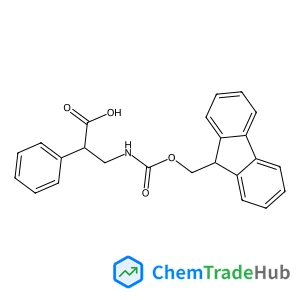
(S)-3-((((9H-Fluoren-9-yl)methoxy)carbonyl)amino)-2-phenylpropanoic acid
CAS Number:
1217663-60-9
Molecular Formula:
C24H21NO4
Recommended Suppliers





Disclaimer
This page provides academic journal information for reference and research purposes only. We are not affiliated with any journal publishers and do not handle publication submissions. For publication-related inquiries, please contact the respective journal publishers directly.
If you notice any inaccuracies in the information displayed, please contact us at support@chemtradehub.com. We will promptly review and address your concerns.