


Light-mediated curing of CO2-based unsaturated polyethercarbonates via thiol–ene click chemistry
Literature Information
Publication Date
2016-05-24
DOI
10.1039/C6PY00458J
Impact Factor
5.582
Authors
M. A. Subhani, B. Köhler, C. Gürtler, W. Leitner
View Original
Abstract
Facile cross-linking of CO2-based unsaturated polyethercarbonates with polymercaptanes via thiol–ene click chemistry makes them highly interesting sustainable pre-polymers for material applications as elastomers and sealants. CO2-Based unsaturated polyethercarbonates, characterised by a glass transition temperature well below room temperature, were obtained by convenient one-pot synthesis. Terpolymerization of CO2 with propylene oxide and allylglycidylether provided the polyethercarbonates with a defined number of pendant unsaturated bonds along the backbone of the polymer chain. The time-dependent viscoelastic behaviour during cross-linking with pentaerythritol tetrakis(3-mercaptopropionate) revealed faster curing with increasing content of double bonds in the pre-polymer. In parallel, the higher cross-linking density provided access to more rigid elastic materials.
Recommended Journals

Russian Journal of General Chemistry

Nature Medicine

Saudi Pharmaceutical Journal

Current Opinion in Solid State & Materials Science

Russian Journal of Coordination Chemistry

Acta Materialia

Chemical Communications

Journal of Saudi Chemical Society

Russian Journal of Applied Chemistry

Journal of Natural Medicines
Related Literature
Impact of molecular solvophobicity vs. solvophilicity on device performances of dimeric perylene diimide based solution-processed non-fullerene organic solar cells
Zhenhuan Lu, Xin Zhang, Chuanlang Zhan, Bo Jiang, Xinliang Zhang, Lili Chen, Jiannian Yao
2013-06-06
Paper
DOI: 10.1039/C3CP51475G
Donor–acceptor–donor thienyl/bithienyl-benzothiadiazole/quinoxaline model oligomers: experimental and theoretical studies
João Pina, J. Seixas de Melo, D. Breusov, Ullrich Scherf
2013-08-08
Paper
DOI: 10.1039/C3CP52056K
Temperature dependence of high field 13C dynamic nuclear polarization processes with trityl radicals below 35 Kelvin
Shamon A. Walker, Devin T. Edwards, Ting Ann Siaw, Brandon D. Armstrong
2013-07-24
Paper
DOI: 10.1039/C3CP51628H
1-Propanol probing methodology: two-dimensional characterization of the effect of solute on H2O
2013-06-04
Perspective
DOI: 10.1039/C3CP51650D
Effect of the state of distribution of supported Pt nanoparticles on effective Pt utilization in polymer electrolyte fuel cells
Makoto Uchida, Young-Chul Park, Katsuyoshi Kakinuma, Hiroshi Yano, Donald A. Tryk, Takeo Kamino, Hiroyuki Uchida, Masahiro Watanabe
2013-05-29
Paper
DOI: 10.1039/C3CP51801A
The molecular clusters in a supercritical fluid–solid system should be considered as a phase—thermodynamic principle and evidence
Minqiang Hou, Jianling Zhang, Buxing Han, Qingqing Mei, Hui Ning, Dezhong Yang
2013-04-09
Paper
DOI: 10.1039/C3CP44670K
Layer-by-layer self-assembly and disassembly of single charged inorganic small molecules: towards surface patterning
Mengjiao Cheng, Chao Jiang, Zhiyi Ding, Yajun Zhang, Yu Fu, Feng Shi
2013-07-16
Paper
DOI: 10.1039/C3CP52217B
An ENDOR and DFT analysis of hindered methyl group rotations in frozen solutions of bis(acetylacetonato)-copper(ii)
Katherine M. Sharples, Emma Carter, Colan E. Hughes, Kenneth D. M. Harris, James A. Platts, Damien M. Murphy
2013-08-05
Paper
DOI: 10.1039/C3CP52464G
A microiterative intrinsic reaction coordinate method for large QM/MM systems
Iakov Polyak, Eliot Boulanger, Kakali Sen, Walter Thiel
2013-05-31
Paper
DOI: 10.1039/C3CP51669E
You might also like
Compound Q&A
Are there alternatives to 1-(4-Chlorophenyl)-N-hydroxymethanimine (CAS: 3848-36-0) in synthesis?
When considering alternatives to 1-(4-Chlorophenyl)-N-hydroxymethanimine (CAS: 3...
3848-36-01-(4-Chlorophenyl)-N...
Compound Q&A
How should (1R,9S,10S,12S,14E,16S,19R,20R,21S,22R)-3,9,21-Trihydroxy-5,10,12,14,16,20,22-heptamethyl-23,24-dioxatetracyclo[17.3.1.1~6,9~.0~2,7~]tetracosa-2,5,7,14-tetraen-4-one (CAS: 183202-73-5) be stored?
This compound should be stored in a cool, dry place away from direct sunlight. I...
183202-73-5(1R,9S,10S,12S,14E,1...
Compound Q&A
How is 3-(4-Bromophenyl)-5-(2-fluorophenyl)-1,2,4-oxadiazole (CAS: 419553-16-5) typically synthesized?
3-(4-Bromophenyl)-5-(2-fluorophenyl)-1,2,4-oxadiazole is synthesized through a m...
419553-16-53-(4-Bromophenyl)-5-...
Compound Q&A
How is 5-Chloro-2-(4-chlorophenyl)-4-methyl-6-[3-(1-piperidinyl)propoxy]pyrimidine (CAS: 1639220-19-1) typically synthesized?
5-Chloro-2-(4-chlorophenyl)-4-methyl-6-[3-(1-piperidinyl)propoxy]pyrimidine (CAS...
1639220-19-15-Chloro-2-(4-chloro...
Compound Q&A
What industries use 2-Chloro-4-(difluoromethoxy)pyridine (CAS: 1206978-15-5)?
2-Chloro-4-(difluoromethoxy)pyridine is used in the pharmaceutical industry for ...
1206978-15-52-Chloro-4-(difluoro...
Compound Q&A
What regulatory guidelines apply to 3-Chloro-6-methylpyridazine (CAS: 1121-79-5)?
3-Chloro-6-methylpyridazine (CAS: 1121-79-5) is classified under the Globally Ha...
1121-79-53-Chloro-6-methylpyr...
Compound Q&A
Are there alternatives to Methyl 4,5-dimethyl-2-nitrobenzoate in synthesis?
Several alternatives can be used in the synthesis of Methyl 4,5-dimethyl-2-nitro...
90922-74-0Methyl 4,5-dimethyl-...
Compound Q&A
Are there alternatives to (2E,2'E)-3,3'-(1,4-Phenylene)bisacrylaldehyde in synthesis?
Alternatives to (2E,2'E)-3,3'-(1,4-Phenylene)bisacrylaldehyde include other acry...
63405-68-5(2E,2'E)-3,3'-(1,4-P...
Compound Q&A
What is 3-Amino-5-chloropyridin-2-ol hydrochloride (CAS: 1261906-29-9)?
3-Amino-5-chloropyridin-2-ol hydrochloride is an organic compound with the CAS n...
1261906-29-93-Amino-5-chloropyri...
Compound Q&A
What precautions should be taken when handling 6,7-Difluoro-2,3-dihydro-4H-chromen-4-one (CAS: 1092349-93-3)?
When handling 6,7-Difluoro-2,3-dihydro-4H-chromen-4-one, it is essential to wear...
1092349-93-36,7-Difluoro-2,3-dih...
Source Journal
Polymer Chemistry

CiteScore:
8.6
Self-citation Rate:
7.3%
Articles per Year:
457
Polymer Chemistry welcomes submissions in all areas of polymer science that have a strong focus on macromolecular chemistry. Manuscripts may cover a broad range of fields, yet no direct application focus is required.
Recommended Compounds
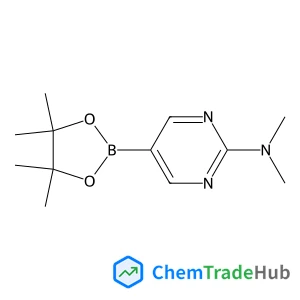
N,N-Dimethyl-5-(4,4,5,5-tetramethyl-1,3,2-dioxaborolan-2-yl)-2-pyrimidinamine
CAS Number:
1032759-30-0
Molecular Formula:
C12H20BN3O2
Recommended Suppliers





Disclaimer
This page provides academic journal information for reference and research purposes only. We are not affiliated with any journal publishers and do not handle publication submissions. For publication-related inquiries, please contact the respective journal publishers directly.
If you notice any inaccuracies in the information displayed, please contact us at support@chemtradehub.com. We will promptly review and address your concerns.