


A coacervate-forming biodegradable polyester with elevated LCST based on bis-(2-methoxyethyl)amine
Literature Information
Publication Date
2016-06-01
DOI
10.1039/C6PY00814C
Impact Factor
5.582
Authors
J. P. Swanson, M. R. Martinez, M. A. Cruz, S. G. Mankoci, P. J. Costanzo, A. Joy
View Original
Abstract
Recently, we reported a new class of biodegradable, thermoresponsive polyesters (TR-PEs) inspired by polyacrylamides and elastin-like peptides (ELPs). The polyesters exhibit tunable cloud point temperatures (Tcp) and thermoresponsive coacervation in aqueous solution as shown via UV-vis spectroscopy, 1H NMR, and DLS. However, the Tcp of all TR-PEs remained low (<15 °C), and higher thermoresponsivity would be beneficial for many applications. This study examines the synthesis, polymerization, and analysis of a new monomer bearing a more hydrophilic pendant group, bis-2-methoxyethylamine (bMoEtA). The resulting TR-PE, TR-bMoEtAPE, displays a threefold increase in Tcp (ca. 50 °C) that is affected by solution (DI water vs. phosphate buffered saline), concentration (1–40 mg mL−1) molecular weight (20–130 kDa), and cosolutes (Hofmeister salts and urea). The Tcp and Tg of random TR-bMoEtAPE copolymers can be tuned via comonomer feed. Variable temperature 1H NMR indicated a cooperative coacervation mechanism above Tcp, further reinforced by DLS measurements. As evidenced by UV-vis and SEC analysis, TR-bMoEtAPE underwent rapid degradation over a period of 7 days in DI water and PBS. Finally, cytotoxicity studies suggested that TR-bMoEtAPE is non-cytotoxic even at high concentrations (ca. 1000 μg mL−1). The increased Tcp and tunability suggests TR-bMoEtAPE as a potential candidate for future functionalized TR-PE therapeutic-delivery systems.
Recommended Journals

Journal of Saudi Chemical Society

Saudi Pharmaceutical Journal

Russian Journal of Coordination Chemistry

Drug Discovery Today

Russian Journal of General Chemistry

Russian Chemical Bulletin

New Journal of Chemistry

Current Opinion in Colloid & Interface Science

Organic Process Research & Development

Chemistry Education Research and Practice
Related Literature
Molecular rheometry: direct determination of viscosity in Lo and Ldlipid phases via fluorescence lifetime imaging
Yilei Wu, Agnieszka Olzyńska, Martin Hof, Gokhan Yahioglu, Duncan R. Casey, Oscar Ces, Jana Humpolíčková, Marina K. Kuimova
2013-07-09
Paper
DOI: 10.1039/C3CP51953H
Starburst triarylamine based dyes bearing a 3,4-ethylenedioxythiophene linker for efficient dye-sensitized solar cells
Li-Lin Tan, Hong-Yan Chen, Li-Feng Hao, Yong Shen, Li-Min Xiao, Jun-Min Liu, Dai-Bin Kuang, Cheng-Yong Su
2013-05-10
Paper
DOI: 10.1039/C3CP51633D
A low-cost bio-inspired integrated carbon counter electrode for high conversion efficiency dye-sensitized solar cells
Chunlei Wang, Fanning Meng, Mingxing Wu, Xiao Lin, Tonghua Wang, Jieshan Qiu, Tingli Ma
2013-06-27
Communication
DOI: 10.1039/C3CP52525B
Luminescence spectroscopy of singlet oxygen enables monitoring of oxygen consumption in biological systems consisting of fatty acids
Anita Gollmer, Johannes Regensburger, Tim Maisch, Wolfgang Bäumler
2013-05-14
Paper
DOI: 10.1039/C3CP50841B
1-Propanol probing methodology: two-dimensional characterization of the effect of solute on H2O
2013-06-04
Perspective
DOI: 10.1039/C3CP51650D
Highly soluble energy relay dyes for dye-sensitized solar cells
George Y. Margulis, Bogyu Lim, Brian E. Hardin, Eva L. Unger, Jun-Ho Yum, Johann M. Feckl, Dina Fattakhova-Rohlfing, Thomas Bein, Michael Grätzel, Alan Sellinger, Michael D. McGehee
2013-05-28
Paper
DOI: 10.1039/C3CP51018B
Time-resolved photoelectron spectroscopy of adenine and adenosine in aqueous solution
Franziska Buchner, Hans-Hermann Ritze, Jan Lahl, Andrea Lübcke
2013-05-07
Paper
DOI: 10.1039/C3CP51057C
Layer-by-layer self-assembly and disassembly of single charged inorganic small molecules: towards surface patterning
Mengjiao Cheng, Chao Jiang, Zhiyi Ding, Yajun Zhang, Yu Fu, Feng Shi
2013-07-16
Paper
DOI: 10.1039/C3CP52217B
A microiterative intrinsic reaction coordinate method for large QM/MM systems
Iakov Polyak, Eliot Boulanger, Kakali Sen, Walter Thiel
2013-05-31
Paper
DOI: 10.1039/C3CP51669E
You might also like
Compound Q&A
Are there alternatives to 1-(4-Chlorophenyl)-N-hydroxymethanimine (CAS: 3848-36-0) in synthesis?
When considering alternatives to 1-(4-Chlorophenyl)-N-hydroxymethanimine (CAS: 3...
3848-36-01-(4-Chlorophenyl)-N...
Compound Q&A
How should (1R,9S,10S,12S,14E,16S,19R,20R,21S,22R)-3,9,21-Trihydroxy-5,10,12,14,16,20,22-heptamethyl-23,24-dioxatetracyclo[17.3.1.1~6,9~.0~2,7~]tetracosa-2,5,7,14-tetraen-4-one (CAS: 183202-73-5) be stored?
This compound should be stored in a cool, dry place away from direct sunlight. I...
183202-73-5(1R,9S,10S,12S,14E,1...
Compound Q&A
How is 3-(4-Bromophenyl)-5-(2-fluorophenyl)-1,2,4-oxadiazole (CAS: 419553-16-5) typically synthesized?
3-(4-Bromophenyl)-5-(2-fluorophenyl)-1,2,4-oxadiazole is synthesized through a m...
419553-16-53-(4-Bromophenyl)-5-...
Compound Q&A
How is 5-Chloro-2-(4-chlorophenyl)-4-methyl-6-[3-(1-piperidinyl)propoxy]pyrimidine (CAS: 1639220-19-1) typically synthesized?
5-Chloro-2-(4-chlorophenyl)-4-methyl-6-[3-(1-piperidinyl)propoxy]pyrimidine (CAS...
1639220-19-15-Chloro-2-(4-chloro...
Compound Q&A
What industries use 2-Chloro-4-(difluoromethoxy)pyridine (CAS: 1206978-15-5)?
2-Chloro-4-(difluoromethoxy)pyridine is used in the pharmaceutical industry for ...
1206978-15-52-Chloro-4-(difluoro...
Compound Q&A
What regulatory guidelines apply to 3-Chloro-6-methylpyridazine (CAS: 1121-79-5)?
3-Chloro-6-methylpyridazine (CAS: 1121-79-5) is classified under the Globally Ha...
1121-79-53-Chloro-6-methylpyr...
Compound Q&A
Are there alternatives to Methyl 4,5-dimethyl-2-nitrobenzoate in synthesis?
Several alternatives can be used in the synthesis of Methyl 4,5-dimethyl-2-nitro...
90922-74-0Methyl 4,5-dimethyl-...
Compound Q&A
Are there alternatives to (2E,2'E)-3,3'-(1,4-Phenylene)bisacrylaldehyde in synthesis?
Alternatives to (2E,2'E)-3,3'-(1,4-Phenylene)bisacrylaldehyde include other acry...
63405-68-5(2E,2'E)-3,3'-(1,4-P...
Compound Q&A
What is 3-Amino-5-chloropyridin-2-ol hydrochloride (CAS: 1261906-29-9)?
3-Amino-5-chloropyridin-2-ol hydrochloride is an organic compound with the CAS n...
1261906-29-93-Amino-5-chloropyri...
Compound Q&A
What precautions should be taken when handling 6,7-Difluoro-2,3-dihydro-4H-chromen-4-one (CAS: 1092349-93-3)?
When handling 6,7-Difluoro-2,3-dihydro-4H-chromen-4-one, it is essential to wear...
1092349-93-36,7-Difluoro-2,3-dih...
Source Journal
Polymer Chemistry

CiteScore:
8.6
Self-citation Rate:
7.3%
Articles per Year:
457
Polymer Chemistry welcomes submissions in all areas of polymer science that have a strong focus on macromolecular chemistry. Manuscripts may cover a broad range of fields, yet no direct application focus is required.
Recommended Compounds
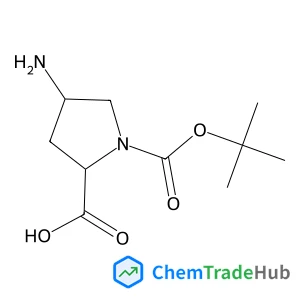
(2R,4R)-1-Boc-4-Aminopyrrolidine-2-carboxylic acid
CAS Number:
132622-98-1
Molecular Formula:
C10H18N2O4
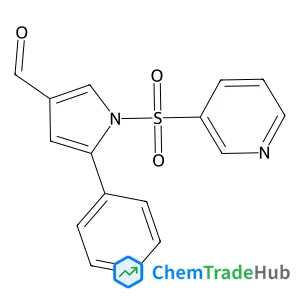
5-Phenyl-1-(pyridin-3-ylsulfonyl)-1H-pyrrole-3-carbaldehyde
CAS Number:
881676-90-0
Molecular Formula:
C16H12N2O3S
Recommended Suppliers



Disclaimer
This page provides academic journal information for reference and research purposes only. We are not affiliated with any journal publishers and do not handle publication submissions. For publication-related inquiries, please contact the respective journal publishers directly.
If you notice any inaccuracies in the information displayed, please contact us at support@chemtradehub.com. We will promptly review and address your concerns.