












Heavier group 2 element-catalysed hydroamination of isocyanates
Literature Information
Publication Date
2008-09-12
DOI
10.1039/B809649J
Impact Factor
6.222
Authors
Anthony G. M. Barrett, Tanya C. Boorman, Mark R. Crimmin, Michael S. Hill, Gabriele Kociok-Köhn, Panayiotis A. Procopiou
View Original
Abstract
The heteroleptic calcium amides [{ArNC(Me)CHC(Me)NAr}Ca(NR2)(THF)] (Ar = 2,6-di-iso-propylphenyl, R = SiMe3, Ph) and the homoleptic heavier alkaline earth amides, [M{N(SiMe3)2}2] (M = Ca, Sr and Ba) are reported as pre-catalysts for the hydroamination of isocyanates.
Related Literature
Simulation of the Raman spectroscopy of multi-layered carbon nanomaterials
Pritesh M. Tailor, Richard J. Wheatley, Nicholas A. Besley
2018-10-25
Paper
DOI: 10.1039/C8CP05908J
Extrapolation of high-order correlation energies: the WMS model
Yan Zhao, Lixue Xia, Xiaobin Liao, Qiu He, Maria X. Zhao, Donald G. Truhlar
2018-10-18
Paper
DOI: 10.1039/C8CP04973D
Interrogating the effects of ion-implantation-induced defects on the energy storage properties of bulk molybdenum disulphide
Rasmita Barik
2018-10-26
Paper
DOI: 10.1039/C8CP05384G
Theoretical study of radiative and nonradiative decay rates for Cu(i) complexes with double heteroleptic ligands
Yuannan Chen, Aimin Ren, Zhongyue Yang, Tengfei He, Xiaoli Ding, Hongxing Zhang, Luyi Zou
2018-03-07
Paper
DOI: 10.1039/C8CP00525G
Nitric oxide oxidation of a Ta encapsulating Si cage nanocluster superatom (Ta@Si16) deposited on an organic substrate; a Si cage collapse indicator
Masahiro Shibuta, Toshiki Niikura, Toshiaki Kamoshida, Hironori Tsunoyama
2018-10-01
Paper
DOI: 10.1039/C8CP05580G
Programed dynamical ordering in self-organization processes of a nanocube: a molecular dynamics study
Ryuhei Harada, Takako Mashiko, Masanori Tachikawa, Shuichi Hiraoka, Yasuteru Shigeta
2018-03-06
Paper
DOI: 10.1039/C8CP00284C
Interactions between similar and dissimilar charged interfaces in the presence of multivalent anions
Pavel Adam, Alexander M. Smith, Gregor Trefalt, István Szilágyi, Plinio Maroni, Michal Borkovec
2018-03-12
Paper
DOI: 10.1039/C8CP00679B
Pressure-dependent kinetics of methyl formate reactions with OH at combustion, atmospheric and interstellar temperatures
Junjun Wu, Liuhao Ma
2018-09-24
Paper
DOI: 10.1039/C8CP04114H
You might also like
Compound Q&A
What are the main uses of 1-(3-Aminophenyl)-3-[(3R)-1-(3,3-dimethyl-2-oxobutyl)-2-oxo-5-(2-pyridinyl)-2,3-dihydro-1H-1,4-benzodiazepin-3-yl]urea (CAS: 155412-88-7)?
This compound is mainly used as an intermediate in the synthesis of antipsychoti...
155412-88-71-(3-Aminophenyl)-3-...
Compound Q&A
How should waste containing 1-(D-Ribofuranosyl)-1,4-dihydro-3-pyridinecarboxamide (CAS: 19132-12-8) be handled?
Waste containing 1-(D-Ribofuranosyl)-1,4-dihydro-3-pyridinecarboxamide (CAS: 191...
19132-12-81-(D-Ribofuranosyl)-...
Compound Q&A
What regulatory guidelines apply to 2-Methyl-2-propanyl 3-bromo-3-(hydroxymethyl)-1-azetidinecarboxylate (CAS: 2007919-81-3)?
2-Methyl-2-propanyl 3-bromo-3-(hydroxymethyl)-1-azetidinecarboxylate (CAS: 20079...
2007919-81-32-Methyl-2-propanyl ...
Compound Q&A
What is N-(4-Chloro-2-pyridinyl)acetamide (CAS: 245056-66-0)?
N-(4-Chloro-2-pyridinyl)acetamide (CAS: 245056-66-0) is a chemical compound with...
245056-66-0N-(4-Chloro-2-pyridi...
Compound Q&A
What is 5-Chloro-2-hydroxybenzoic acid (CAS: 321-14-2)?
5-Chloro-2-hydroxybenzoic acid, also known as 5-chlorosalicylic acid, is an arom...
321-14-25-Chloro-2-hydroxybe...
Compound Q&A
What precautions should be taken when handling 1,1-Dichloro-1-fluoroethane (CAS: 1717-00-6)?
When handling 1,1-Dichloro-1-fluoroethane (CAS: 1717-00-6), it is important to u...
1717-00-61,1-Dichloro-1-fluor...
Compound Q&A
What are the physical and chemical properties of Fmoc-(2S,3R)-3-phenylpyrrolidine-2-carboxylic acid (CAS: 281655-32-1)?
Fmoc-(2S,3R)-3-phenylpyrrolidine-2-carboxylic acid is a white crystalline solid ...
281655-32-1Fmoc-(2S,3R)-3-pheny...
Compound Q&A
What are the main uses of 4-Amino-5-bromo-2-pyridinecarboxylic acid (CAS: 1363381-01-4)?
4-Amino-5-bromo-2-pyridinecarboxylic acid is primarily used as a precursor in th...
1363381-01-44-Amino-5-bromo-2-py...
Compound Q&A
What precautions should be taken when handling (S)-tert-butyl 2-((2-(4-bromophenyl)-2-oxoethyl)carbamoyl)pyrrolidine-1-carboxylate (CAS: 1007881-98-2)?
Handling this compound should be done with personal protective equipment (PPE) i...
1007881-98-2(S)-tert-butyl 2-((2...
Compound Q&A
What precautions should be taken when handling 8-bromo-2,2-dimethyl-3,4-dihydro-2H-1,4-benzoxazin-3-one (CAS: 688363-73-7)?
When handling 8-bromo-2,2-dimethyl-3,4-dihydro-2H-1,4-benzoxazin-3-one, use prop...
688363-73-78-bromo-2,2-dimethyl...
Source Journal
Chemical Communications

CiteScore:
8.6
Self-citation Rate:
4.7%
Articles per Year:
2458
ChemComm publishes urgent research which is of outstanding significance and interest to experts in the field, while also appealing to the journal’s broad chemistry readership. Our communication format is ideally suited to short, urgent studies that are of such importance that they require accelerated publication. Our scope covers all topics in chemistry, and research at the interface of chemistry and other disciplines (such as materials science, nanoscience, physics, engineering and biology) where there is a significant novelty in the chemistry aspects. Major topic areas covered include: Analytical Chemistry Catalysis Chemical Biology and medicinal chemistry Computational Chemistry and Machine Learning Energy and sustainable chemistry Environmental Chemistry Green Chemistry Inorganic Chemistry Materials Chemistry Nanoscience Organic Chemistry Physical Chemistry Polymer Chemistry Supramolecular Chemistry
Recommended Compounds


(3-Oxo-1,2,3,4-tetrahydro-2-quinoxalinyl)acetic acid
CAS Number:
136584-14-0
Molecular Formula:
C10H10N2O3
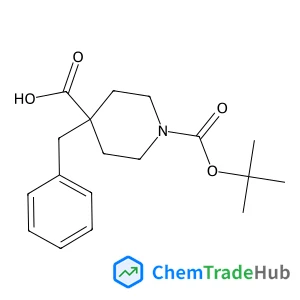
4-Benzyl-1-(tert-butoxycarbonyl)piperidine-4-carboxylic acid
CAS Number:
170838-87-6
Molecular Formula:
C18H25NO4
Recommended Suppliers




Disclaimer
This page provides academic journal information for reference and research purposes only. We are not affiliated with any journal publishers and do not handle publication submissions. For publication-related inquiries, please contact the respective journal publishers directly.
If you notice any inaccuracies in the information displayed, please contact us at support@chemtradehub.com. We will promptly review and address your concerns.