












Interactions between similar and dissimilar charged interfaces in the presence of multivalent anions
Literature Information
Publication Date
2018-03-12
DOI
10.1039/C8CP00679B
Impact Factor
3.676
Authors
Pavel Adam, Alexander M. Smith, Gregor Trefalt, István Szilágyi, Plinio Maroni, Michal Borkovec
View Original
Abstract
Direct force measurements involving amidine latex (AL) and sulfate latex (SL) particles in aqueous solutions containing multivalent ferrocyanide anions are presented. These measurements feature three different pairs of particles, namely SL–SL, AL–SL, and AL–AL. The force profiles are quantitatively interpreted in terms of the theory by Derjaguin, Landau, Verwey, and Overbeek (DLVO) that is combined with a short-ranged exponential attraction. In monovalent salt solutions, the AL particles are positively charged, while the SL particles are negatively charged. In solutions containing ferrocyanide, the charge of the AL particles is reversed as the concentration is increased. The longer-ranged component of all force profiles is fully compatible with DLVO theory, provided effects of charge regulation are included. At shorter distances, an additional exponential attraction must be introduced, whereby the respective decay length is about 2 nm for the AL–AL pair, and below 1 nm for the SL–SL pair. This non-DLVO force is intermediate for the asymmetric AL–SL pair. These additional forces are probably related to charge fluctuations, patch-charged interactions, or hydrophobic forces.
Related Literature
Understanding the electromagnetic interaction of metal organic framework reactants in aqueous solution at microwave frequencies
Juliano Katrib, Paula A. Palade, Neil R. Champness, Samuel W. Kingman
2016-01-29
Paper
DOI: 10.1039/C5CP05426E
Current transient and in situ AFM studies of initial growth stages of electrochemically deposited nickel cobalt hydroxide nanosheet films
Tuyen Nguyen, M. Fátima Montemor
2016-03-29
Paper
DOI: 10.1039/C6CP00709K
Electronic transport properties of ultra-thin Ni and Ni–C nanowires
Leining Zhang, Weikang Wu, Yi Zhou, Hongru Ren, Jichen Dong, Hui Li
2016-01-21
Paper
DOI: 10.1039/C5CP07641B
Palladium-atom catalyzed formic acid decomposition and the switch of reaction mechanism with temperature
Nan He, Zhen Hua Li
2016-03-07
Paper
DOI: 10.1039/C6CP00186F
Pulsed EPR characterization of HIV-1 protease conformational sampling and inhibitor-induced population shifts
Zhanglong Liu, Thomas M. Casey, Mandy E. Blackburn, Xi Huang, Linh Pham, Ian Mitchelle S. de Vera, Jeffrey D. Carter, Jamie L. Kear-Scott, Angelo M. Veloro, Luis Galiano, Gail E. Fanucci
2015-10-09
Paper
DOI: 10.1039/C5CP04556H
A systematic study on Pt based, subnanometer-sized alloy cluster catalysts for alkane dehydrogenation: effects of intermetallic interaction
Andreas W. Hauser, Paul R. Horn, Martin Head-Gordon, Alexis T. Bell
2016-03-09
Paper
DOI: 10.1039/C6CP00360E
An insight to the role of Cr in the process of intrinsic point defects in α-Al2O3
Xin Xiang, Guikai Zhang, Feilong Yang, Xuexing Peng, Tao Tang, Yan Shi, Xiaolin Wang
2016-02-09
Paper
DOI: 10.1039/C5CP07626A
Correction: Effects of p-substituents on electrochemical CO oxidation by Rh porphyrin-based catalysts
Shin-ichi Yamazaki, Yusuke Yamada, Sahori Takeda, Midori Goto, Tsutomu Ioroi, Zyun Siroma, Kazuaki Yasuda
2016-04-15
Correction
DOI: 10.1039/C6CP90101H
The crystallization of metal soaps and fatty acids in oil paint model systems
Joen J. Hermans, Annelies van Loon, Piet D. Iedema
2016-03-07
Paper
DOI: 10.1039/C6CP00487C
A PYP chromophore acts as a ‘photoacid’ in an isolated hydrogen bonded complex
Lars H. Andersen, Jørgen Houmøller, Hjalte V. Kiefer, Elie Lattouf, Mark H. Stockett
2016-03-09
Communication
DOI: 10.1039/C6CP00433D
You might also like
Compound Q&A
What are the main uses of 1-(3-Aminophenyl)-3-[(3R)-1-(3,3-dimethyl-2-oxobutyl)-2-oxo-5-(2-pyridinyl)-2,3-dihydro-1H-1,4-benzodiazepin-3-yl]urea (CAS: 155412-88-7)?
This compound is mainly used as an intermediate in the synthesis of antipsychoti...
155412-88-71-(3-Aminophenyl)-3-...
Compound Q&A
How should waste containing 1-(D-Ribofuranosyl)-1,4-dihydro-3-pyridinecarboxamide (CAS: 19132-12-8) be handled?
Waste containing 1-(D-Ribofuranosyl)-1,4-dihydro-3-pyridinecarboxamide (CAS: 191...
19132-12-81-(D-Ribofuranosyl)-...
Compound Q&A
What regulatory guidelines apply to 2-Methyl-2-propanyl 3-bromo-3-(hydroxymethyl)-1-azetidinecarboxylate (CAS: 2007919-81-3)?
2-Methyl-2-propanyl 3-bromo-3-(hydroxymethyl)-1-azetidinecarboxylate (CAS: 20079...
2007919-81-32-Methyl-2-propanyl ...
Compound Q&A
What is N-(4-Chloro-2-pyridinyl)acetamide (CAS: 245056-66-0)?
N-(4-Chloro-2-pyridinyl)acetamide (CAS: 245056-66-0) is a chemical compound with...
245056-66-0N-(4-Chloro-2-pyridi...
Compound Q&A
What is 5-Chloro-2-hydroxybenzoic acid (CAS: 321-14-2)?
5-Chloro-2-hydroxybenzoic acid, also known as 5-chlorosalicylic acid, is an arom...
321-14-25-Chloro-2-hydroxybe...
Compound Q&A
What precautions should be taken when handling 1,1-Dichloro-1-fluoroethane (CAS: 1717-00-6)?
When handling 1,1-Dichloro-1-fluoroethane (CAS: 1717-00-6), it is important to u...
1717-00-61,1-Dichloro-1-fluor...
Compound Q&A
What are the physical and chemical properties of Fmoc-(2S,3R)-3-phenylpyrrolidine-2-carboxylic acid (CAS: 281655-32-1)?
Fmoc-(2S,3R)-3-phenylpyrrolidine-2-carboxylic acid is a white crystalline solid ...
281655-32-1Fmoc-(2S,3R)-3-pheny...
Compound Q&A
What are the main uses of 4-Amino-5-bromo-2-pyridinecarboxylic acid (CAS: 1363381-01-4)?
4-Amino-5-bromo-2-pyridinecarboxylic acid is primarily used as a precursor in th...
1363381-01-44-Amino-5-bromo-2-py...
Compound Q&A
What precautions should be taken when handling (S)-tert-butyl 2-((2-(4-bromophenyl)-2-oxoethyl)carbamoyl)pyrrolidine-1-carboxylate (CAS: 1007881-98-2)?
Handling this compound should be done with personal protective equipment (PPE) i...
1007881-98-2(S)-tert-butyl 2-((2...
Compound Q&A
What precautions should be taken when handling 8-bromo-2,2-dimethyl-3,4-dihydro-2H-1,4-benzoxazin-3-one (CAS: 688363-73-7)?
When handling 8-bromo-2,2-dimethyl-3,4-dihydro-2H-1,4-benzoxazin-3-one, use prop...
688363-73-78-bromo-2,2-dimethyl...
Source Journal
Physical Chemistry Chemical Physics

CiteScore:
5.5
Self-citation Rate:
10.3%
Articles per Year:
3036
Physical Chemistry Chemical Physics (PCCP) is an international journal co-owned by 19 physical chemistry and physics societies from around the world. This journal publishes original, cutting-edge research in physical chemistry, chemical physics and biophysical chemistry. To be suitable for publication in PCCP, articles must include significant innovation and/or insight into physical chemistry; this is the most important criterion that reviewers and Editors will judge against when evaluating submissions. The journal has a broad scope and welcomes contributions spanning experiment, theory, computation and data science. Topical coverage includes spectroscopy, dynamics, kinetics, statistical mechanics, thermodynamics, electrochemistry, catalysis, surface science, quantum mechanics, quantum computing and machine learning. Interdisciplinary research areas such as polymers and soft matter, materials, nanoscience, energy, surfaces/interfaces, and biophysical chemistry are welcomed if they demonstrate significant innovation and/or insight into physical chemistry. Joined experimental/theoretical studies are particularly appreciated when complementary and based on up-to-date approaches.
Recommended Compounds
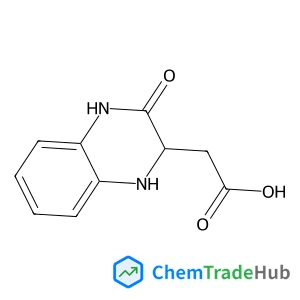
(3-Oxo-1,2,3,4-tetrahydro-2-quinoxalinyl)acetic acid
CAS Number:
136584-14-0
Molecular Formula:
C10H10N2O3

Recommended Suppliers





Disclaimer
This page provides academic journal information for reference and research purposes only. We are not affiliated with any journal publishers and do not handle publication submissions. For publication-related inquiries, please contact the respective journal publishers directly.
If you notice any inaccuracies in the information displayed, please contact us at support@chemtradehub.com. We will promptly review and address your concerns.