













Extrapolation of high-order correlation energies: the WMS model
Literature Information
Publication Date
2018-10-18
DOI
10.1039/C8CP04973D
Impact Factor
3.676
Authors
Yan Zhao, Lixue Xia, Xiaobin Liao, Qiu He, Maria X. Zhao, Donald G. Truhlar
View Original
Abstract
We have developed a new composite model chemistry method called WMS (Wuhan–Minnesota scaling method) with three characteristics: (1) a composite scheme to approximate the complete configuration interaction valence energy with the affordability condition of requiring no calculation more expensive than CCSD(T)/jul-cc-pV(T+d)Z, (2) low-cost methods for the inner-shell correlation contribution and scalar relativistic correction, and (3) accuracy comparable to methods with post-CCSD(T) components. The new method is shown to be accurate for the W4-17 database of 200 atomization energies with an average mean unsigned error (averaged with equal weight over strongly correlated and weakly correlated subsets of the data) of 0.45 kcal mol−1, and the performance/cost ratio of these results compares very favorably to previously available methods. We also assess the WMS method against the DBH24-W4 database of diverse barrier heights and the energetics of the reactions of three strongly correlated Criegee intermediates with water. These results demonstrate that higher-order correlation contributions necessary to obtain high accuracy for molecular thermochemistry may be successfully extrapolated from the lower-order components of CCSD(T) calculations, and chemical accuracy can now be obtained for larger and more complex molecules and reactions.
Related Literature
Defect structure and optical phonon confinement in ultrananocrystalline BixSn1−xO2 (x = 0, 0.03, 0.05, and 0.08) synthesized by a sonochemical method
L. Aswaghosh, Divinah Manoharan, N. Victor Jaya
2016-01-18
Paper
DOI: 10.1039/C5CP06214D
Time-resolved fluctuation during the photochemical reaction of a photoreceptor protein: phototropin1LOV2-linker
Kunisato Kuroi, Francielle Sato, Yusuke Nakasone, Kazunori Zikihara, Satoru Tokutomi, Masahide Terazima
2016-01-27
Paper
DOI: 10.1039/C5CP07472J
CdSe-sensitized branched CdS hierarchical nanostructures for efficient photoelectrochemical solar hydrogen generation
Zonghu Han, Meng Wang, Xiangyan Chen, Shaohua Shen
2016-03-29
Paper
DOI: 10.1039/C6CP00692B
A medium range order structural connection to the configurational heat capacity of borate–silicate mixed glasses
Morten M. Smedskjaer, Haizheng Tao, Lars R. Jensen, Xiujian Zhao
2016-03-15
Paper
DOI: 10.1039/C6CP00749J
Aminophenol isomers unraveled by conformer-specific far-IR action spectroscopy
Daniël J. Bakker, Raimund Feifel, Anouk M. Rijs, Vitali Zhaunerchyk
2016-02-01
Paper
DOI: 10.1039/C5CP07426F
A systematic study on Pt based, subnanometer-sized alloy cluster catalysts for alkane dehydrogenation: effects of intermetallic interaction
Andreas W. Hauser, Paul R. Horn, Martin Head-Gordon, Alexis T. Bell
2016-03-09
Paper
DOI: 10.1039/C6CP00360E
A theoretical study on charge transport of dithiolene nickel complexes
Vu Thi Thu Huong, Truong Ba Tai, Minh Tho Nguyen
2016-01-27
Paper
DOI: 10.1039/C5CP07277H
Identification and exclusion of intermediates of photocatalytic CO2 reduction on TiO2 under conditions of highest purity
Anna Pougin, Martin Dilla
2016-03-04
Paper
DOI: 10.1039/C5CP07148H
Designing graphene as a new frustrated Lewis pair catalyst for hydrogen activation by co-doping
Bo Li, TianFu Liu, Jian Song, Dang Sheng Su
2016-03-24
Paper
DOI: 10.1039/C5CP07969A
Large-size nanosheets of 9,10-bis(phenylethynyl)anthracene with high photoresponse and light emission anisotropy
Hong-Dan Peng, Jia-Mei Yang, Jing-Hui Yan, Ge-Bo Pan
2015-10-13
Communication
DOI: 10.1039/C5CP05507E
You might also like
Compound Q&A
What are the main uses of 1-(3-Aminophenyl)-3-[(3R)-1-(3,3-dimethyl-2-oxobutyl)-2-oxo-5-(2-pyridinyl)-2,3-dihydro-1H-1,4-benzodiazepin-3-yl]urea (CAS: 155412-88-7)?
This compound is mainly used as an intermediate in the synthesis of antipsychoti...
155412-88-71-(3-Aminophenyl)-3-...
Compound Q&A
How should waste containing 1-(D-Ribofuranosyl)-1,4-dihydro-3-pyridinecarboxamide (CAS: 19132-12-8) be handled?
Waste containing 1-(D-Ribofuranosyl)-1,4-dihydro-3-pyridinecarboxamide (CAS: 191...
19132-12-81-(D-Ribofuranosyl)-...
Compound Q&A
What regulatory guidelines apply to 2-Methyl-2-propanyl 3-bromo-3-(hydroxymethyl)-1-azetidinecarboxylate (CAS: 2007919-81-3)?
2-Methyl-2-propanyl 3-bromo-3-(hydroxymethyl)-1-azetidinecarboxylate (CAS: 20079...
2007919-81-32-Methyl-2-propanyl ...
Compound Q&A
What is N-(4-Chloro-2-pyridinyl)acetamide (CAS: 245056-66-0)?
N-(4-Chloro-2-pyridinyl)acetamide (CAS: 245056-66-0) is a chemical compound with...
245056-66-0N-(4-Chloro-2-pyridi...
Compound Q&A
What is 5-Chloro-2-hydroxybenzoic acid (CAS: 321-14-2)?
5-Chloro-2-hydroxybenzoic acid, also known as 5-chlorosalicylic acid, is an arom...
321-14-25-Chloro-2-hydroxybe...
Compound Q&A
What precautions should be taken when handling 1,1-Dichloro-1-fluoroethane (CAS: 1717-00-6)?
When handling 1,1-Dichloro-1-fluoroethane (CAS: 1717-00-6), it is important to u...
1717-00-61,1-Dichloro-1-fluor...
Compound Q&A
What are the physical and chemical properties of Fmoc-(2S,3R)-3-phenylpyrrolidine-2-carboxylic acid (CAS: 281655-32-1)?
Fmoc-(2S,3R)-3-phenylpyrrolidine-2-carboxylic acid is a white crystalline solid ...
281655-32-1Fmoc-(2S,3R)-3-pheny...
Compound Q&A
What are the main uses of 4-Amino-5-bromo-2-pyridinecarboxylic acid (CAS: 1363381-01-4)?
4-Amino-5-bromo-2-pyridinecarboxylic acid is primarily used as a precursor in th...
1363381-01-44-Amino-5-bromo-2-py...
Compound Q&A
What precautions should be taken when handling (S)-tert-butyl 2-((2-(4-bromophenyl)-2-oxoethyl)carbamoyl)pyrrolidine-1-carboxylate (CAS: 1007881-98-2)?
Handling this compound should be done with personal protective equipment (PPE) i...
1007881-98-2(S)-tert-butyl 2-((2...
Compound Q&A
What precautions should be taken when handling 8-bromo-2,2-dimethyl-3,4-dihydro-2H-1,4-benzoxazin-3-one (CAS: 688363-73-7)?
When handling 8-bromo-2,2-dimethyl-3,4-dihydro-2H-1,4-benzoxazin-3-one, use prop...
688363-73-78-bromo-2,2-dimethyl...
Source Journal
Physical Chemistry Chemical Physics

CiteScore:
5.5
Self-citation Rate:
10.3%
Articles per Year:
3036
Physical Chemistry Chemical Physics (PCCP) is an international journal co-owned by 19 physical chemistry and physics societies from around the world. This journal publishes original, cutting-edge research in physical chemistry, chemical physics and biophysical chemistry. To be suitable for publication in PCCP, articles must include significant innovation and/or insight into physical chemistry; this is the most important criterion that reviewers and Editors will judge against when evaluating submissions. The journal has a broad scope and welcomes contributions spanning experiment, theory, computation and data science. Topical coverage includes spectroscopy, dynamics, kinetics, statistical mechanics, thermodynamics, electrochemistry, catalysis, surface science, quantum mechanics, quantum computing and machine learning. Interdisciplinary research areas such as polymers and soft matter, materials, nanoscience, energy, surfaces/interfaces, and biophysical chemistry are welcomed if they demonstrate significant innovation and/or insight into physical chemistry. Joined experimental/theoretical studies are particularly appreciated when complementary and based on up-to-date approaches.
Recommended Compounds
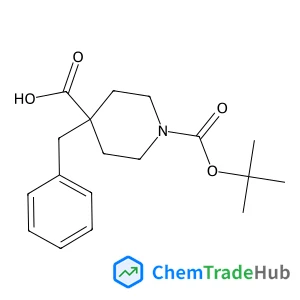
4-Benzyl-1-(tert-butoxycarbonyl)piperidine-4-carboxylic acid
CAS Number:
170838-87-6
Molecular Formula:
C18H25NO4

(3-Oxo-1,2,3,4-tetrahydro-2-quinoxalinyl)acetic acid
CAS Number:
136584-14-0
Molecular Formula:
C10H10N2O3
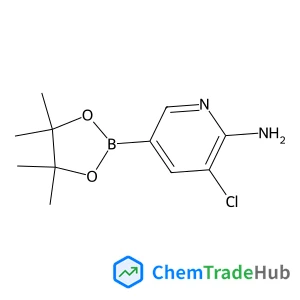
3-Chloro-5-(4,4,5,5-tetramethyl-1,3,2-dioxaborolan-2-yl)-2-pyridinamine
CAS Number:
1032758-99-8
Molecular Formula:
C11H16BClN2O2
Recommended Suppliers





Disclaimer
This page provides academic journal information for reference and research purposes only. We are not affiliated with any journal publishers and do not handle publication submissions. For publication-related inquiries, please contact the respective journal publishers directly.
If you notice any inaccuracies in the information displayed, please contact us at support@chemtradehub.com. We will promptly review and address your concerns.