












Simulation of the Raman spectroscopy of multi-layered carbon nanomaterials
Literature Information
Publication Date
2018-10-25
DOI
10.1039/C8CP05908J
Impact Factor
3.676
Authors
Pritesh M. Tailor, Richard J. Wheatley, Nicholas A. Besley
View Original
Abstract
Multi-layered carbon nanomaterials can have an important role in modern nanotechnology. Raman spectroscopy is a widely used analytical technique that is used to characterise the structure of these materials. In this work, an approach based upon an empirical potential for the simulation of the Raman spectroscopy of carbon nanomaterials [P. M. Tailor, R. J. Wheatley and N. A. Besley, Carbon, 2017, 113, 299–308] is extended through the addition of a term to describe the van der Waals interaction between layers of sp2 hybridised carbons. The resulting model accurately describes the properties of the shearing modes of few layer graphene and is used to characterise the low frequency modes of multi-walled carbon nanotubes and carbon nanofibres.
Related Literature
Electrophoresis of pH-regulated nanoparticles: impact of the Stern layer
Lanju Mei, Tzung-Han Chou, Yu-Shen Cheng, Ming-Jiang Huang, Li-Hsien Yeh, Shizhi Qian
2015-10-14
Paper
DOI: 10.1039/C5CP05728K
Kinetics of the ClO + HO2 reaction over the temperature range T = 210–298 K
Michael K. M. Ward, David M. Rowley
2016-02-02
Paper
DOI: 10.1039/C5CP07329D
Robust half-metallic ferromagnetism and curvature dependent magnetic coupling in fluorinated boron nitride nanotubes
Chunsheng Guo, Yu Zhou, Xin-Qiang Shi, Li-Yong Gan, Hong Jiang
2016-04-04
Paper
DOI: 10.1039/C6CP01477A
A wavelength dependent investigation of the indole photophysics via ionization and fragmentation pump–probe spectroscopies
T. J. Godfrey, Hui Yu, Michael S. Biddle, Susanne Ullrich
2015-09-01
Paper
DOI: 10.1039/C5CP02975A
Self-assembled nanoparticle patterns on carbon nanowall surfaces
N. V. Suetin, S. A. Evlashin, A. V. Egorov, K. V. Mironovich, S. A. Dagesyan, L. V. Yashina, E. A. Goodilin, V. A. Krivchenko
2016-03-31
Paper
DOI: 10.1039/C6CP01638C
Homonuclear decoupling for spectral simplification of carbon-13 enriched molecules in solution-state NMR enhanced by dissolution DNP
Aurélien Bornet, Sami Jannin
2016-03-31
Paper
DOI: 10.1039/C5CP07884A
Insights into the allosteric regulation of Syk association with receptor ITAM, a multi-state equilibrium
Chao Feng, Carol Beth Post
2015-10-08
Paper
DOI: 10.1039/C5CP05417F
Vibronic coupling in the excited-states of carotenoids
Takeshi Miki, Tiago Buckup, Marie S. Krause, June Southall, Richard J. Cogdell, Marcus Motzkus
2016-03-23
Paper
DOI: 10.1039/C5CP07542D
Exploring the mechanism of water-splitting reaction in NiOx/β-Ga2O3 photocatalysts by first-principles calculations
Xin Zhou, Hao Dong, Ai-Min Ren
2016-03-22
Paper
DOI: 10.1039/C5CP07260C
Identification and exclusion of intermediates of photocatalytic CO2 reduction on TiO2 under conditions of highest purity
Anna Pougin, Martin Dilla
2016-03-04
Paper
DOI: 10.1039/C5CP07148H
You might also like
Compound Q&A
What are the main uses of 1-(3-Aminophenyl)-3-[(3R)-1-(3,3-dimethyl-2-oxobutyl)-2-oxo-5-(2-pyridinyl)-2,3-dihydro-1H-1,4-benzodiazepin-3-yl]urea (CAS: 155412-88-7)?
This compound is mainly used as an intermediate in the synthesis of antipsychoti...
155412-88-71-(3-Aminophenyl)-3-...
Compound Q&A
How should waste containing 1-(D-Ribofuranosyl)-1,4-dihydro-3-pyridinecarboxamide (CAS: 19132-12-8) be handled?
Waste containing 1-(D-Ribofuranosyl)-1,4-dihydro-3-pyridinecarboxamide (CAS: 191...
19132-12-81-(D-Ribofuranosyl)-...
Compound Q&A
What regulatory guidelines apply to 2-Methyl-2-propanyl 3-bromo-3-(hydroxymethyl)-1-azetidinecarboxylate (CAS: 2007919-81-3)?
2-Methyl-2-propanyl 3-bromo-3-(hydroxymethyl)-1-azetidinecarboxylate (CAS: 20079...
2007919-81-32-Methyl-2-propanyl ...
Compound Q&A
What is N-(4-Chloro-2-pyridinyl)acetamide (CAS: 245056-66-0)?
N-(4-Chloro-2-pyridinyl)acetamide (CAS: 245056-66-0) is a chemical compound with...
245056-66-0N-(4-Chloro-2-pyridi...
Compound Q&A
What is 5-Chloro-2-hydroxybenzoic acid (CAS: 321-14-2)?
5-Chloro-2-hydroxybenzoic acid, also known as 5-chlorosalicylic acid, is an arom...
321-14-25-Chloro-2-hydroxybe...
Compound Q&A
What precautions should be taken when handling 1,1-Dichloro-1-fluoroethane (CAS: 1717-00-6)?
When handling 1,1-Dichloro-1-fluoroethane (CAS: 1717-00-6), it is important to u...
1717-00-61,1-Dichloro-1-fluor...
Compound Q&A
What are the physical and chemical properties of Fmoc-(2S,3R)-3-phenylpyrrolidine-2-carboxylic acid (CAS: 281655-32-1)?
Fmoc-(2S,3R)-3-phenylpyrrolidine-2-carboxylic acid is a white crystalline solid ...
281655-32-1Fmoc-(2S,3R)-3-pheny...
Compound Q&A
What are the main uses of 4-Amino-5-bromo-2-pyridinecarboxylic acid (CAS: 1363381-01-4)?
4-Amino-5-bromo-2-pyridinecarboxylic acid is primarily used as a precursor in th...
1363381-01-44-Amino-5-bromo-2-py...
Compound Q&A
What precautions should be taken when handling (S)-tert-butyl 2-((2-(4-bromophenyl)-2-oxoethyl)carbamoyl)pyrrolidine-1-carboxylate (CAS: 1007881-98-2)?
Handling this compound should be done with personal protective equipment (PPE) i...
1007881-98-2(S)-tert-butyl 2-((2...
Compound Q&A
What precautions should be taken when handling 8-bromo-2,2-dimethyl-3,4-dihydro-2H-1,4-benzoxazin-3-one (CAS: 688363-73-7)?
When handling 8-bromo-2,2-dimethyl-3,4-dihydro-2H-1,4-benzoxazin-3-one, use prop...
688363-73-78-bromo-2,2-dimethyl...
Source Journal
Physical Chemistry Chemical Physics

CiteScore:
5.5
Self-citation Rate:
10.3%
Articles per Year:
3036
Physical Chemistry Chemical Physics (PCCP) is an international journal co-owned by 19 physical chemistry and physics societies from around the world. This journal publishes original, cutting-edge research in physical chemistry, chemical physics and biophysical chemistry. To be suitable for publication in PCCP, articles must include significant innovation and/or insight into physical chemistry; this is the most important criterion that reviewers and Editors will judge against when evaluating submissions. The journal has a broad scope and welcomes contributions spanning experiment, theory, computation and data science. Topical coverage includes spectroscopy, dynamics, kinetics, statistical mechanics, thermodynamics, electrochemistry, catalysis, surface science, quantum mechanics, quantum computing and machine learning. Interdisciplinary research areas such as polymers and soft matter, materials, nanoscience, energy, surfaces/interfaces, and biophysical chemistry are welcomed if they demonstrate significant innovation and/or insight into physical chemistry. Joined experimental/theoretical studies are particularly appreciated when complementary and based on up-to-date approaches.
Recommended Compounds
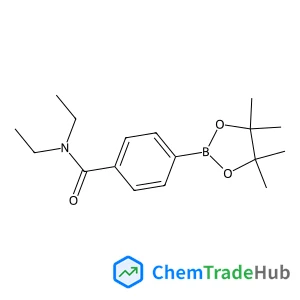
N,N-Diethyl-4-(4,4,5,5-tetramethyl-1,3,2-dioxaborolan-2-yl)benzamide
CAS Number:
325142-99-2
Molecular Formula:
C17H26BNO3
![Methyl 4-({[(2-methyl-2-propanyl)oxy]carbonyl}amino)bicyclo[2.2.2]octane-1-carboxylate structure](https://static.chemtradehub.com/structs/943/943845-74-7-b7e5.webp "Methyl 4-({[(2-methyl-2-propanyl)oxy]carbonyl}amino)bicyclo[2.2.2]octane-1-carboxylate structure")
Methyl 4-({[(2-methyl-2-propanyl)oxy]carbonyl}amino)bicyclo[2.2.2]octane-1-carboxylate
CAS Number:
943845-74-7
Molecular Formula:
C15H25NO4
Recommended Suppliers




Disclaimer
This page provides academic journal information for reference and research purposes only. We are not affiliated with any journal publishers and do not handle publication submissions. For publication-related inquiries, please contact the respective journal publishers directly.
If you notice any inaccuracies in the information displayed, please contact us at support@chemtradehub.com. We will promptly review and address your concerns.