![4-Penten-1-yl 2-[(2-furylmethyl)(1H-imidazol-1-ylcarbonyl)amino]butanoate structure](https://static.chemtradehub.com/structs/101/101903-30-4-ac34.webp "4-Penten-1-yl 2-[(2-furylmethyl)(1H-imidazol-1-ylcarbonyl)amino]butanoate structure")
4-Penten-1-yl 2-[(2-furylmethyl)(1H-imidazol-1-ylcarbonyl)amino]butanoate
CAS Number:
101903-30-4
Molecular Formula:
C18H23N3O4
Jean-Martial L’Helgoual’ch, Floris Chevallier, Mitsuhiro Yonehara, Masanobu Uchiyama, Aïcha Derdour, Florence Mongin
This communication describes the deproto-metalation of a large range of aromatics including heterocycles using a newly developed lithium–cadmium base; the reaction proceeds at room temperature with an excellent chemoselectivity and efficiency, and proved to be regioselective in most cases.
T. H. Samuel Tan, David T. Hickman, Jordi Morral, Ian G. Beadham, Jason Micklefield
DOI: 10.1039/B315768G
Makoto Minato, Takaomi Matsumoto, Miyuki Ichikawa, Takashi Ito
DOI: 10.1039/B310663M
Richard E. Douthwaite, Jennifer Houghton, Benson M. Kariuki
DOI: 10.1039/B314814A
David E. Bergbreiter, Jun Li
DOI: 10.1039/B312368E
Dae-Hwan Jung, Young Koan Ko, Seung Joo Seo, Hee-Tae Jung
DOI: 10.1039/B315348G
K. Barthelet, J. Marrot, G. Férey, D. Riou
DOI: 10.1039/B312589K
Bo Yang, Shoko Kamiya, Kaname Yoshida
DOI: 10.1039/B313100A
Concepción López, Amparo Caubet, Sonia Pérez, Xavier Solans, Mercè Font-Bardía
DOI: 10.1039/B315157C
Benjamin D. Ward, Aline Maisse-François, Philip Mountford
DOI: 10.1039/B316383K
Fuquan Song, Roderick D. Cannon, Manfred Bochmann
DOI: 10.1039/B314845A
1H-Indazole-6-carbonitrile finds applications in pharmaceuticals, where it serve...
Waste containing Dioctyl (2E)-2-butenedioate (CAS: 2997-85-5) should be collecte...
Sodium [(1,2-benzoxazol-3-ylmethyl)sulfonyl]azanide is primarily used in pharmac...
Dimethyl 4-(4,4,5,5-tetramethyl-1,3,2-dioxaborolan-2-yl)-2,6-pyridinedicarboxyla...
Waste containing 2-Fluoro-6-hydrazinopyridine (CAS: 80714-39-2) should be manage...
6-Formyl-2-pyridinecarboxylic acid is an organic compound with the molecular for...
Research trends for this compound indicate a focus on its potential applications...
9H-Tribenzo[b,d,f]azepine is typically synthesized via a multi-step process invo...
1-Cyclopropyl-7-ethoxy-6-fluoro-8-methoxy-4-oxo-1,4-dihydro-3-quinolinecarboxyli...
Waste containing Methyl 3-oxo-1,2,3,4-tetrahydro-6-quinoxalinecarboxylate (CAS: ...

ChemComm publishes urgent research which is of outstanding significance and interest to experts in the field, while also appealing to the journal’s broad chemistry readership. Our communication format is ideally suited to short, urgent studies that are of such importance that they require accelerated publication. Our scope covers all topics in chemistry, and research at the interface of chemistry and other disciplines (such as materials science, nanoscience, physics, engineering and biology) where there is a significant novelty in the chemistry aspects. Major topic areas covered include: Analytical Chemistry Catalysis Chemical Biology and medicinal chemistry Computational Chemistry and Machine Learning Energy and sustainable chemistry Environmental Chemistry Green Chemistry Inorganic Chemistry Materials Chemistry Nanoscience Organic Chemistry Physical Chemistry Polymer Chemistry Supramolecular Chemistry
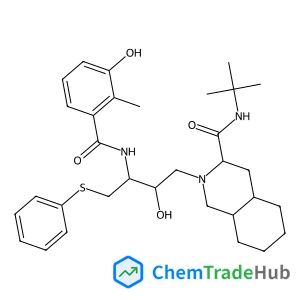
![Benzeneacetic acid, 2-[(2,6-dichlorophenyl)amino]-, compd. with 1-pyrrolidineethanol (1:1) structure](https://static.chemtradehub.com/structs/119/119623-66-4-5301.webp "Benzeneacetic acid, 2-[(2,6-dichlorophenyl)amino]-, compd. with 1-pyrrolidineethanol (1:1) structure")