












Electron transfer in pristine and functionalised single-walled carbon nanotubes
Literature Information
Publication Date
2008-08-21
DOI
10.1039/B809285K
Impact Factor
6.222
Authors
Matteo Iurlo, Demis Paolucci, Massimo Marcaccio, Francesco Paolucci
View Original
Abstract
Since their very first days, electron transfer has always played a special role in carbon nanotubes’ life. In view of their structural and electronic uniqueness, carbon nanotubes have been proposed either as bulk electrode materials for sensing and biosensing in advanced electrochemical devices, or as molecular-sized electrodes for very fast electrode kinetics investigations. Alternatively, electron transfer has been used to probe the electronic properties of carbon nanotubes by either direct voltammetric inspection or coupling with spectroscopic techniques, ultimately allowing, in the case of true solutions of individual uncut single-walled carbon nanotubes (SWNTs), to single-out their redox potentials as a function of diameter. For their redox properties, as emerged from these studies, SWNTs represent unique building blocks for the construction of photofunctional nanosystems to be used in efficient light energy conversion devices.
Related Literature
The effect of temperature on the kinetics of enhanced amide bond formation from lactic acid and valine driven by deep eutectic solvents
Yi-Ting Tsai, Cong-Wei Huang
2021-11-24
Paper
DOI: 10.1039/D1CP03243G
How does excess phenylalanine affect the packing density and fluidity of a lipid membrane?
Shakkira Erimban, Snehasis Daschakraborty
2021-11-16
Paper
DOI: 10.1039/D1CP05004D
Decomposition of nitric oxide by rhodium cluster cations at high temperatures
Toshiaki Nagata, Kimihiro Kawada, Xuemei Chen, Masato Yamaguchi, Ken Miyajima, Fumitaka Mafuné
2021-11-23
Paper
DOI: 10.1039/D1CP04633K
Facet-dependent CO2 reduction reactions on kesterite Cu2ZnSnS4 photo-electro-integrated electrodes
Ruifen Zhang, Xin Wen, Hongliang Peng, Yongpeng Xia, Fen Xu, Lixian Sun
2021-09-09
Paper
DOI: 10.1039/D1CP03595A
Hydrogen-bond-dominated mechanical stretchability in PVA films: from phenomenological to numerical insights
Zhen-zhen Fu, Sheng-jie Guo, Chen-xi Li, Ke Wang, Qin Zhang, Qiang Fu
2021-12-22
Paper
DOI: 10.1039/D1CP03893A
Mechanical behaviour of inorganic solid-state batteries: can we model the ionic mobility in the electrolyte with Nernst–Einstein's relation?
Mei-Chin Pang, Monica Marinescu, Huizhi Wang, Gregory Offer
2021-12-01
Perspective
DOI: 10.1039/D1CP00909E
Exploration of chromophores for a VCD couplet in a spectrally transparent infrared region for biomolecules
Tohru Taniguchi, Mohamad Zarif Mohd Zubir, Nobuyuki Harada, Kenji Monde
2021-11-18
Paper
DOI: 10.1039/D1CP04074J
A computational study of competing conformational selection and induced fit in an abiotic system
Remy F. Lalisse, Radoslav Z. Pavlović, Christopher M. Hadad, Jovica D. Badjić
2021-12-06
Paper
DOI: 10.1039/D1CP05253E
On the nature of bonding in a new boronyl species Zn2(BO)2: a linear four-center two-electron σ bond
Da-Zhi Li, Li-Juan Zhang, Ling Pei
2021-11-20
Paper
DOI: 10.1039/D1CP03920B
Molecular simulations on the stability and dynamics of bulk nanobubbles in aqueous environments
Yi Lu, Lei Yang, Yangmin Kuang, Yongchen Song, Jiafei Zhao, Amadeu K. Sum
2021-11-25
Paper
DOI: 10.1039/D1CP03325E
You might also like
Compound Q&A
What are the main uses of 1-(3-Aminophenyl)-3-[(3R)-1-(3,3-dimethyl-2-oxobutyl)-2-oxo-5-(2-pyridinyl)-2,3-dihydro-1H-1,4-benzodiazepin-3-yl]urea (CAS: 155412-88-7)?
This compound is mainly used as an intermediate in the synthesis of antipsychoti...
155412-88-71-(3-Aminophenyl)-3-...
Compound Q&A
How should waste containing 1-(D-Ribofuranosyl)-1,4-dihydro-3-pyridinecarboxamide (CAS: 19132-12-8) be handled?
Waste containing 1-(D-Ribofuranosyl)-1,4-dihydro-3-pyridinecarboxamide (CAS: 191...
19132-12-81-(D-Ribofuranosyl)-...
Compound Q&A
What regulatory guidelines apply to 2-Methyl-2-propanyl 3-bromo-3-(hydroxymethyl)-1-azetidinecarboxylate (CAS: 2007919-81-3)?
2-Methyl-2-propanyl 3-bromo-3-(hydroxymethyl)-1-azetidinecarboxylate (CAS: 20079...
2007919-81-32-Methyl-2-propanyl ...
Compound Q&A
What is N-(4-Chloro-2-pyridinyl)acetamide (CAS: 245056-66-0)?
N-(4-Chloro-2-pyridinyl)acetamide (CAS: 245056-66-0) is a chemical compound with...
245056-66-0N-(4-Chloro-2-pyridi...
Compound Q&A
What is 5-Chloro-2-hydroxybenzoic acid (CAS: 321-14-2)?
5-Chloro-2-hydroxybenzoic acid, also known as 5-chlorosalicylic acid, is an arom...
321-14-25-Chloro-2-hydroxybe...
Compound Q&A
What precautions should be taken when handling 1,1-Dichloro-1-fluoroethane (CAS: 1717-00-6)?
When handling 1,1-Dichloro-1-fluoroethane (CAS: 1717-00-6), it is important to u...
1717-00-61,1-Dichloro-1-fluor...
Compound Q&A
What are the physical and chemical properties of Fmoc-(2S,3R)-3-phenylpyrrolidine-2-carboxylic acid (CAS: 281655-32-1)?
Fmoc-(2S,3R)-3-phenylpyrrolidine-2-carboxylic acid is a white crystalline solid ...
281655-32-1Fmoc-(2S,3R)-3-pheny...
Compound Q&A
What are the main uses of 4-Amino-5-bromo-2-pyridinecarboxylic acid (CAS: 1363381-01-4)?
4-Amino-5-bromo-2-pyridinecarboxylic acid is primarily used as a precursor in th...
1363381-01-44-Amino-5-bromo-2-py...
Compound Q&A
What precautions should be taken when handling (S)-tert-butyl 2-((2-(4-bromophenyl)-2-oxoethyl)carbamoyl)pyrrolidine-1-carboxylate (CAS: 1007881-98-2)?
Handling this compound should be done with personal protective equipment (PPE) i...
1007881-98-2(S)-tert-butyl 2-((2...
Compound Q&A
What precautions should be taken when handling 8-bromo-2,2-dimethyl-3,4-dihydro-2H-1,4-benzoxazin-3-one (CAS: 688363-73-7)?
When handling 8-bromo-2,2-dimethyl-3,4-dihydro-2H-1,4-benzoxazin-3-one, use prop...
688363-73-78-bromo-2,2-dimethyl...
Source Journal
Chemical Communications

CiteScore:
8.6
Self-citation Rate:
4.7%
Articles per Year:
2458
ChemComm publishes urgent research which is of outstanding significance and interest to experts in the field, while also appealing to the journal’s broad chemistry readership. Our communication format is ideally suited to short, urgent studies that are of such importance that they require accelerated publication. Our scope covers all topics in chemistry, and research at the interface of chemistry and other disciplines (such as materials science, nanoscience, physics, engineering and biology) where there is a significant novelty in the chemistry aspects. Major topic areas covered include: Analytical Chemistry Catalysis Chemical Biology and medicinal chemistry Computational Chemistry and Machine Learning Energy and sustainable chemistry Environmental Chemistry Green Chemistry Inorganic Chemistry Materials Chemistry Nanoscience Organic Chemistry Physical Chemistry Polymer Chemistry Supramolecular Chemistry
Recommended Compounds
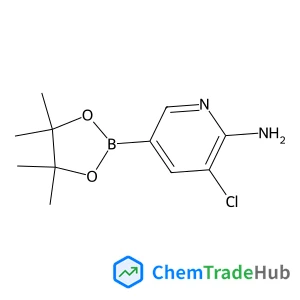
3-Chloro-5-(4,4,5,5-tetramethyl-1,3,2-dioxaborolan-2-yl)-2-pyridinamine
CAS Number:
1032758-99-8
Molecular Formula:
C11H16BClN2O2
![1-[3-(4-Morpholinylsulfonyl)phenyl]methanamine structure](https://static.chemtradehub.com/structs/933/933989-32-3-51af.webp "1-[3-(4-Morpholinylsulfonyl)phenyl]methanamine structure")
Recommended Suppliers





Disclaimer
This page provides academic journal information for reference and research purposes only. We are not affiliated with any journal publishers and do not handle publication submissions. For publication-related inquiries, please contact the respective journal publishers directly.
If you notice any inaccuracies in the information displayed, please contact us at support@chemtradehub.com. We will promptly review and address your concerns.