












Decomposition of nitric oxide by rhodium cluster cations at high temperatures
Literature Information
Publication Date
2021-11-23
DOI
10.1039/D1CP04633K
Impact Factor
3.676
Authors
Toshiaki Nagata, Kimihiro Kawada, Xuemei Chen, Masato Yamaguchi, Ken Miyajima, Fumitaka Mafuné
View Original
Abstract
Decomposition reactions of NO molecules on gas-phase Rhn+ (n = 6–9) clusters were investigated by gas-phase thermal desorption spectrometry and density functional theory calculations. We found that NO adsorbs on the clusters, forming RhnNxOx+ at room temperature. Upon heating, NO desorption was observed below 800 K. Above 800 K, while for n = 7 and 8, each of Rh7N3O3+, Rh7N4O4+, and Rh8N3O3+ was found to release an N2 molecule, no N2 formation was clearly observed for Rh6,9NxOy+. We considered that both Rh7N3O3+ and Rh8N3O3+ have at least two dissociated NO molecules, while Rh6NxOx+ (x = 1–3) has one or less. Our computational results for Rh8N3O3+ suggested that the formation of an N–N bond in the Rh8N3O3+ structure must overcome an energy barrier of ∼2 eV, which is the highest among the suggested possible reaction pathways. These findings suggested that the size-dependent activity of NO decomposition is governed primarily by how NO molecules are adsorbed on Rhn+ clusters, i.e. whether two or more N atoms from dissociated NO molecules exist in the NO adsorbed clusters, and secondly, by the readiness of the N–N bond formation.
Recommended Journals
Related Literature
Molecular structure and vibrations of NTCDA monolayers on Ag(111) from density-functional theory and infrared absorption spectroscopy
Phil Rosenow
2016-02-03
Paper
DOI: 10.1039/C5CP06619K
Electrophoresis of pH-regulated nanoparticles: impact of the Stern layer
Lanju Mei, Tzung-Han Chou, Yu-Shen Cheng, Ming-Jiang Huang, Li-Hsien Yeh, Shizhi Qian
2015-10-14
Paper
DOI: 10.1039/C5CP05728K
Molecular dynamics study on the nucleation of methane + tetrahydrofuran mixed guest hydrate
Jyun-Yi Wu, Li-Jen Chen, Yan-Ping Chen, Shiang-Tai Lin
2015-12-22
Paper
DOI: 10.1039/C5CP06419H
The crystallization of metal soaps and fatty acids in oil paint model systems
Joen J. Hermans, Annelies van Loon, Piet D. Iedema
2016-03-07
Paper
DOI: 10.1039/C6CP00487C
Direct electrical transport measurement on a single thermoelectric nanowire embedded in an alumina template
Christophe Garagnon, Valerie Serradeil
2016-04-01
Paper
DOI: 10.1039/C6CP00972G
Palladium-atom catalyzed formic acid decomposition and the switch of reaction mechanism with temperature
Nan He, Zhen Hua Li
2016-03-07
Paper
DOI: 10.1039/C6CP00186F
Near-UV photodissociation dynamics of CH2I2
Benjamin W. Toulson, Jonathan P. Alaniz, J. Grant Hill, Craig Murray
2016-04-06
Paper
DOI: 10.1039/C6CP01063F
A wavelength dependent investigation of the indole photophysics via ionization and fragmentation pump–probe spectroscopies
T. J. Godfrey, Hui Yu, Michael S. Biddle, Susanne Ullrich
2015-09-01
Paper
DOI: 10.1039/C5CP02975A
Electronic transport properties of ultra-thin Ni and Ni–C nanowires
Leining Zhang, Weikang Wu, Yi Zhou, Hongru Ren, Jichen Dong, Hui Li
2016-01-21
Paper
DOI: 10.1039/C5CP07641B
Structural determination of niobium-doped silicon clusters by far-infrared spectroscopy and theory
Xiaojun Li, Pieterjan Claes, Marko Haertelt, Peter Lievens, Ewald Janssens
2016-01-27
Paper
DOI: 10.1039/C5CP07298K
You might also like
Compound Q&A
What are the main uses of 1-(3-Aminophenyl)-3-[(3R)-1-(3,3-dimethyl-2-oxobutyl)-2-oxo-5-(2-pyridinyl)-2,3-dihydro-1H-1,4-benzodiazepin-3-yl]urea (CAS: 155412-88-7)?
This compound is mainly used as an intermediate in the synthesis of antipsychoti...
155412-88-71-(3-Aminophenyl)-3-...
Compound Q&A
How should waste containing 1-(D-Ribofuranosyl)-1,4-dihydro-3-pyridinecarboxamide (CAS: 19132-12-8) be handled?
Waste containing 1-(D-Ribofuranosyl)-1,4-dihydro-3-pyridinecarboxamide (CAS: 191...
19132-12-81-(D-Ribofuranosyl)-...
Compound Q&A
What regulatory guidelines apply to 2-Methyl-2-propanyl 3-bromo-3-(hydroxymethyl)-1-azetidinecarboxylate (CAS: 2007919-81-3)?
2-Methyl-2-propanyl 3-bromo-3-(hydroxymethyl)-1-azetidinecarboxylate (CAS: 20079...
2007919-81-32-Methyl-2-propanyl ...
Compound Q&A
What is N-(4-Chloro-2-pyridinyl)acetamide (CAS: 245056-66-0)?
N-(4-Chloro-2-pyridinyl)acetamide (CAS: 245056-66-0) is a chemical compound with...
245056-66-0N-(4-Chloro-2-pyridi...
Compound Q&A
What is 5-Chloro-2-hydroxybenzoic acid (CAS: 321-14-2)?
5-Chloro-2-hydroxybenzoic acid, also known as 5-chlorosalicylic acid, is an arom...
321-14-25-Chloro-2-hydroxybe...
Compound Q&A
What precautions should be taken when handling 1,1-Dichloro-1-fluoroethane (CAS: 1717-00-6)?
When handling 1,1-Dichloro-1-fluoroethane (CAS: 1717-00-6), it is important to u...
1717-00-61,1-Dichloro-1-fluor...
Compound Q&A
What are the physical and chemical properties of Fmoc-(2S,3R)-3-phenylpyrrolidine-2-carboxylic acid (CAS: 281655-32-1)?
Fmoc-(2S,3R)-3-phenylpyrrolidine-2-carboxylic acid is a white crystalline solid ...
281655-32-1Fmoc-(2S,3R)-3-pheny...
Compound Q&A
What are the main uses of 4-Amino-5-bromo-2-pyridinecarboxylic acid (CAS: 1363381-01-4)?
4-Amino-5-bromo-2-pyridinecarboxylic acid is primarily used as a precursor in th...
1363381-01-44-Amino-5-bromo-2-py...
Compound Q&A
What precautions should be taken when handling (S)-tert-butyl 2-((2-(4-bromophenyl)-2-oxoethyl)carbamoyl)pyrrolidine-1-carboxylate (CAS: 1007881-98-2)?
Handling this compound should be done with personal protective equipment (PPE) i...
1007881-98-2(S)-tert-butyl 2-((2...
Compound Q&A
What precautions should be taken when handling 8-bromo-2,2-dimethyl-3,4-dihydro-2H-1,4-benzoxazin-3-one (CAS: 688363-73-7)?
When handling 8-bromo-2,2-dimethyl-3,4-dihydro-2H-1,4-benzoxazin-3-one, use prop...
688363-73-78-bromo-2,2-dimethyl...
Source Journal
Physical Chemistry Chemical Physics

CiteScore:
5.5
Self-citation Rate:
10.3%
Articles per Year:
3036
Physical Chemistry Chemical Physics (PCCP) is an international journal co-owned by 19 physical chemistry and physics societies from around the world. This journal publishes original, cutting-edge research in physical chemistry, chemical physics and biophysical chemistry. To be suitable for publication in PCCP, articles must include significant innovation and/or insight into physical chemistry; this is the most important criterion that reviewers and Editors will judge against when evaluating submissions. The journal has a broad scope and welcomes contributions spanning experiment, theory, computation and data science. Topical coverage includes spectroscopy, dynamics, kinetics, statistical mechanics, thermodynamics, electrochemistry, catalysis, surface science, quantum mechanics, quantum computing and machine learning. Interdisciplinary research areas such as polymers and soft matter, materials, nanoscience, energy, surfaces/interfaces, and biophysical chemistry are welcomed if they demonstrate significant innovation and/or insight into physical chemistry. Joined experimental/theoretical studies are particularly appreciated when complementary and based on up-to-date approaches.
Recommended Compounds

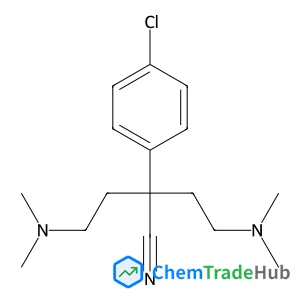
2-(4-Chlorophenyl)-4-(dimethylamino)-2-(2-(dimethylamino)ethyl)butanenitrile
CAS Number:
1246816-57-8
Molecular Formula:
C16H24ClN3

Recommended Suppliers




Disclaimer
This page provides academic journal information for reference and research purposes only. We are not affiliated with any journal publishers and do not handle publication submissions. For publication-related inquiries, please contact the respective journal publishers directly.
If you notice any inaccuracies in the information displayed, please contact us at support@chemtradehub.com. We will promptly review and address your concerns.