












![1-[3-(4-Morpholinylsulfonyl)phenyl]methanamine structure](https://static.chemtradehub.com/structs/933/933989-32-3-51af.webp "1-[3-(4-Morpholinylsulfonyl)phenyl]methanamine structure")
A computational study of competing conformational selection and induced fit in an abiotic system
Literature Information
Publication Date
2021-12-06
DOI
10.1039/D1CP05253E
Impact Factor
3.676
Authors
Remy F. Lalisse, Radoslav Z. Pavlović, Christopher M. Hadad, Jovica D. Badjić
View Original
Abstract
Host–guest complexations can be described by two competing mechanisms, conformational selection (CS) and induced fit (IF). In this work, we used a combination of nudged elastic band (NEB), adaptive steered molecular dynamics (ASMD), and density functional theory (DFT, with a correction for dispersion) to study the dynamics of the pathways (IF/CS) by which two conformers of basket B(+) and B(−) interconvert and trap CX4 guests (X = Cl and Br). While the results from NEB/DFT studies disclosed host–guest noncovalent contacts reducing the basket's conformational dynamics, ASMD methodology suggested an associative mechanism for the guest complexation. With theory in excellent agreement with experiments, NEB and ASMD emerge as the methods of choice for studying dynamics of supramolecular systems.
Related Literature
Multi-probe relaxation dispersion measurements increase sensitivity to protein dynamics
R. Bryn Fenwick, David Oyen, Peter E. Wright
2015-09-24
Paper
DOI: 10.1039/C5CP04670J
Molecular simulations of cytochrome c adsorption on positively charged surfaces: the influence of anion type and concentration
Chunwang Peng, Yun Xie, Jian Zhou
2016-03-04
Paper
DOI: 10.1039/C6CP00170J
The crystallization of metal soaps and fatty acids in oil paint model systems
Joen J. Hermans, Annelies van Loon, Piet D. Iedema
2016-03-07
Paper
DOI: 10.1039/C6CP00487C
Molecular structure and vibrations of NTCDA monolayers on Ag(111) from density-functional theory and infrared absorption spectroscopy
Phil Rosenow
2016-02-03
Paper
DOI: 10.1039/C5CP06619K
A sedimentation study of graphene oxide in aqueous solution using gradient differential centrifugation
Jing-Jing Huang, Yong J. Yuan
2016-03-16
Paper
DOI: 10.1039/C6CP00167J
A systematic study on Pt based, subnanometer-sized alloy cluster catalysts for alkane dehydrogenation: effects of intermetallic interaction
Andreas W. Hauser, Paul R. Horn, Martin Head-Gordon, Alexis T. Bell
2016-03-09
Paper
DOI: 10.1039/C6CP00360E
An insight to the role of Cr in the process of intrinsic point defects in α-Al2O3
Xin Xiang, Guikai Zhang, Feilong Yang, Xuexing Peng, Tao Tang, Yan Shi, Xiaolin Wang
2016-02-09
Paper
DOI: 10.1039/C5CP07626A
Thickness-dependent photocatalytic performance of graphite oxide for degrading organic pollutants under visible light
Junghoon Oh, Yun Hee Chang, Yong-Hyun Kim, Sungjin Park
2016-03-16
Paper
DOI: 10.1039/C6CP00582A
Large-size nanosheets of 9,10-bis(phenylethynyl)anthracene with high photoresponse and light emission anisotropy
Hong-Dan Peng, Jia-Mei Yang, Jing-Hui Yan, Ge-Bo Pan
2015-10-13
Communication
DOI: 10.1039/C5CP05507E
In situ characterization of the decomposition behavior of Mg(BH4)2 by X-ray Raman scattering spectroscopy
Simon Kujawski, Arndt Remhof, Yigang Yan, Nicholas P. Stadie, Ali Al-Zein, Metin Tolan, Simo Huotari, Michael Krisch, Christian Sternemann
2016-01-06
Paper
DOI: 10.1039/C5CP06571B
You might also like
Compound Q&A
What are the main uses of 1-(3-Aminophenyl)-3-[(3R)-1-(3,3-dimethyl-2-oxobutyl)-2-oxo-5-(2-pyridinyl)-2,3-dihydro-1H-1,4-benzodiazepin-3-yl]urea (CAS: 155412-88-7)?
This compound is mainly used as an intermediate in the synthesis of antipsychoti...
155412-88-71-(3-Aminophenyl)-3-...
Compound Q&A
How should waste containing 1-(D-Ribofuranosyl)-1,4-dihydro-3-pyridinecarboxamide (CAS: 19132-12-8) be handled?
Waste containing 1-(D-Ribofuranosyl)-1,4-dihydro-3-pyridinecarboxamide (CAS: 191...
19132-12-81-(D-Ribofuranosyl)-...
Compound Q&A
What regulatory guidelines apply to 2-Methyl-2-propanyl 3-bromo-3-(hydroxymethyl)-1-azetidinecarboxylate (CAS: 2007919-81-3)?
2-Methyl-2-propanyl 3-bromo-3-(hydroxymethyl)-1-azetidinecarboxylate (CAS: 20079...
2007919-81-32-Methyl-2-propanyl ...
Compound Q&A
What is N-(4-Chloro-2-pyridinyl)acetamide (CAS: 245056-66-0)?
N-(4-Chloro-2-pyridinyl)acetamide (CAS: 245056-66-0) is a chemical compound with...
245056-66-0N-(4-Chloro-2-pyridi...
Compound Q&A
What is 5-Chloro-2-hydroxybenzoic acid (CAS: 321-14-2)?
5-Chloro-2-hydroxybenzoic acid, also known as 5-chlorosalicylic acid, is an arom...
321-14-25-Chloro-2-hydroxybe...
Compound Q&A
What precautions should be taken when handling 1,1-Dichloro-1-fluoroethane (CAS: 1717-00-6)?
When handling 1,1-Dichloro-1-fluoroethane (CAS: 1717-00-6), it is important to u...
1717-00-61,1-Dichloro-1-fluor...
Compound Q&A
What are the physical and chemical properties of Fmoc-(2S,3R)-3-phenylpyrrolidine-2-carboxylic acid (CAS: 281655-32-1)?
Fmoc-(2S,3R)-3-phenylpyrrolidine-2-carboxylic acid is a white crystalline solid ...
281655-32-1Fmoc-(2S,3R)-3-pheny...
Compound Q&A
What are the main uses of 4-Amino-5-bromo-2-pyridinecarboxylic acid (CAS: 1363381-01-4)?
4-Amino-5-bromo-2-pyridinecarboxylic acid is primarily used as a precursor in th...
1363381-01-44-Amino-5-bromo-2-py...
Compound Q&A
What precautions should be taken when handling (S)-tert-butyl 2-((2-(4-bromophenyl)-2-oxoethyl)carbamoyl)pyrrolidine-1-carboxylate (CAS: 1007881-98-2)?
Handling this compound should be done with personal protective equipment (PPE) i...
1007881-98-2(S)-tert-butyl 2-((2...
Compound Q&A
What precautions should be taken when handling 8-bromo-2,2-dimethyl-3,4-dihydro-2H-1,4-benzoxazin-3-one (CAS: 688363-73-7)?
When handling 8-bromo-2,2-dimethyl-3,4-dihydro-2H-1,4-benzoxazin-3-one, use prop...
688363-73-78-bromo-2,2-dimethyl...
Source Journal
Physical Chemistry Chemical Physics

CiteScore:
5.5
Self-citation Rate:
10.3%
Articles per Year:
3036
Physical Chemistry Chemical Physics (PCCP) is an international journal co-owned by 19 physical chemistry and physics societies from around the world. This journal publishes original, cutting-edge research in physical chemistry, chemical physics and biophysical chemistry. To be suitable for publication in PCCP, articles must include significant innovation and/or insight into physical chemistry; this is the most important criterion that reviewers and Editors will judge against when evaluating submissions. The journal has a broad scope and welcomes contributions spanning experiment, theory, computation and data science. Topical coverage includes spectroscopy, dynamics, kinetics, statistical mechanics, thermodynamics, electrochemistry, catalysis, surface science, quantum mechanics, quantum computing and machine learning. Interdisciplinary research areas such as polymers and soft matter, materials, nanoscience, energy, surfaces/interfaces, and biophysical chemistry are welcomed if they demonstrate significant innovation and/or insight into physical chemistry. Joined experimental/theoretical studies are particularly appreciated when complementary and based on up-to-date approaches.
Recommended Compounds
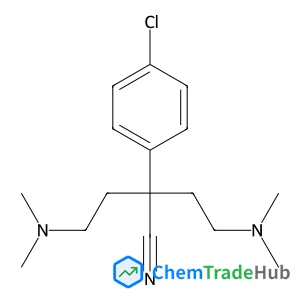
2-(4-Chlorophenyl)-4-(dimethylamino)-2-(2-(dimethylamino)ethyl)butanenitrile
CAS Number:
1246816-57-8
Molecular Formula:
C16H24ClN3
![Methyl 4-({[(2-methyl-2-propanyl)oxy]carbonyl}amino)bicyclo[2.2.2]octane-1-carboxylate structure](https://static.chemtradehub.com/structs/943/943845-74-7-b7e5.webp "Methyl 4-({[(2-methyl-2-propanyl)oxy]carbonyl}amino)bicyclo[2.2.2]octane-1-carboxylate structure")
Methyl 4-({[(2-methyl-2-propanyl)oxy]carbonyl}amino)bicyclo[2.2.2]octane-1-carboxylate
CAS Number:
943845-74-7
Molecular Formula:
C15H25NO4
Recommended Suppliers





Disclaimer
This page provides academic journal information for reference and research purposes only. We are not affiliated with any journal publishers and do not handle publication submissions. For publication-related inquiries, please contact the respective journal publishers directly.
If you notice any inaccuracies in the information displayed, please contact us at support@chemtradehub.com. We will promptly review and address your concerns.