












Exploration of chromophores for a VCD couplet in a spectrally transparent infrared region for biomolecules
Literature Information
Publication Date
2021-11-18
DOI
10.1039/D1CP04074J
Impact Factor
3.676
Authors
Tohru Taniguchi, Mohamad Zarif Mohd Zubir, Nobuyuki Harada, Kenji Monde
View Original
Abstract
Interactions of two chromophores such as carbonyl groups yield a strong VCD couplet that reflects the molecular structures. The use of VCD couplets for biomacromolecular structural studies has been hampered by severe signal overlap caused by numerous functional groups that originally exist in biomacromolecules. Nitrile, isonitrile, alkyne, and azido groups show characteristic IR absorption in the 2300–2000 cm−1 region, where biomolecules do not strongly absorb. We herein examined the usefulness of these functional groups as chromophores to observe a strong VCD couplet that can be readily interpreted using theoretical calculations. Studies on a chiral binaphthyl scaffold possessing two identical chromophores showed that nitrile and isonitrile groups generate moderately-strong but complex VCD signals due to anharmonic contributions. The nature of their anharmonic VCD patterns is discussed by comparison with the VCD spectrum of a mono-chromophoric molecule and by anharmonic DFT calculations. On the other hand, through studies on diazido binaphthyl and diazido monosaccharide, we demonstrated that the azido group is more promising for structural analysis of larger molecules due to its simple, strong VCD couplet whose spectral patterns are readily predicted by harmonic DFT calculations.
Related Literature
Effects of hydration on the protonation state of a lysine analog crossing a phospholipid bilayer – insights from molecular dynamics and free-energy calculations
Daniel Bonhenry, François Dehez, Mounir Tarek
2018-02-27
Paper
DOI: 10.1039/C8CP00312B
Site-selective bond scission of methylbenzoate following core excitation
Osamu Takahashi, Hanna Myllynen, Joakim Laksman, Elisabeth Rachlew, Edwin Kukk
2018-03-06
Paper
DOI: 10.1039/C7CP08428E
The RbSr 2Σ+ ground state investigated via spectroscopy of hot and ultracold molecules‡
Alessio Ciamei, Jacek Szczepkowski, Alex Bayerle, Vincent Barbé, Lukas Reichsöllner, Slava M. Tzanova, Chun-Chia Chen, Benjamin Pasquiou, Anna Grochola, Pawel Kowalczyk, Wlodzimierz Jastrzebski, Florian Schreck
2018-09-21
Paper
DOI: 10.1039/C8CP03919D
Density-functional description of alkalides: introducing the alkalide state
Stephen G. Dale, Axel D. Becke, Erin R. Johnson
2018-10-01
Paper
DOI: 10.1039/C8CP04014A
Naturally occurring quaternary benzo[c]phenanthridine alkaloids selectively stabilize G-quadruplexes
Petra Jarosova, Petr Paroulek, Michal Rajecky, Veronika Rajecka, Eva Taborska, Ramon Eritja, Anna Aviñó, Stefania Mazzini, Raimundo Gargallo, Petr Taborsky
2018-08-06
Paper
DOI: 10.1039/C8CP02681E
Determination of the protonation preferences of bilin pigments in cryptophyte antenna complexes
Marina Corbella, Zi S. D. Toa, Gregory D. Scholes, F. Javier Luque, Carles Curutchet
2018-07-30
Paper
DOI: 10.1039/C8CP02541J
Effects of biaxial tensile strain on the first-principles-driven thermal conductivity of buckled arsenene and phosphorene
Armin Taheri, Carlos Da Silva, Cristina H. Amon
2018-10-23
Paper
DOI: 10.1039/C8CP05342A
A theoretical study on lidocaine solubility in deep eutectic solvents
Alberto Gutiérrez, Santiago Aparicio
2018-10-10
Paper
DOI: 10.1039/C8CP05641B
You might also like
Compound Q&A
What are the main uses of 1-(3-Aminophenyl)-3-[(3R)-1-(3,3-dimethyl-2-oxobutyl)-2-oxo-5-(2-pyridinyl)-2,3-dihydro-1H-1,4-benzodiazepin-3-yl]urea (CAS: 155412-88-7)?
This compound is mainly used as an intermediate in the synthesis of antipsychoti...
155412-88-71-(3-Aminophenyl)-3-...
Compound Q&A
How should waste containing 1-(D-Ribofuranosyl)-1,4-dihydro-3-pyridinecarboxamide (CAS: 19132-12-8) be handled?
Waste containing 1-(D-Ribofuranosyl)-1,4-dihydro-3-pyridinecarboxamide (CAS: 191...
19132-12-81-(D-Ribofuranosyl)-...
Compound Q&A
What regulatory guidelines apply to 2-Methyl-2-propanyl 3-bromo-3-(hydroxymethyl)-1-azetidinecarboxylate (CAS: 2007919-81-3)?
2-Methyl-2-propanyl 3-bromo-3-(hydroxymethyl)-1-azetidinecarboxylate (CAS: 20079...
2007919-81-32-Methyl-2-propanyl ...
Compound Q&A
What is N-(4-Chloro-2-pyridinyl)acetamide (CAS: 245056-66-0)?
N-(4-Chloro-2-pyridinyl)acetamide (CAS: 245056-66-0) is a chemical compound with...
245056-66-0N-(4-Chloro-2-pyridi...
Compound Q&A
What is 5-Chloro-2-hydroxybenzoic acid (CAS: 321-14-2)?
5-Chloro-2-hydroxybenzoic acid, also known as 5-chlorosalicylic acid, is an arom...
321-14-25-Chloro-2-hydroxybe...
Compound Q&A
What precautions should be taken when handling 1,1-Dichloro-1-fluoroethane (CAS: 1717-00-6)?
When handling 1,1-Dichloro-1-fluoroethane (CAS: 1717-00-6), it is important to u...
1717-00-61,1-Dichloro-1-fluor...
Compound Q&A
What are the physical and chemical properties of Fmoc-(2S,3R)-3-phenylpyrrolidine-2-carboxylic acid (CAS: 281655-32-1)?
Fmoc-(2S,3R)-3-phenylpyrrolidine-2-carboxylic acid is a white crystalline solid ...
281655-32-1Fmoc-(2S,3R)-3-pheny...
Compound Q&A
What are the main uses of 4-Amino-5-bromo-2-pyridinecarboxylic acid (CAS: 1363381-01-4)?
4-Amino-5-bromo-2-pyridinecarboxylic acid is primarily used as a precursor in th...
1363381-01-44-Amino-5-bromo-2-py...
Compound Q&A
What precautions should be taken when handling (S)-tert-butyl 2-((2-(4-bromophenyl)-2-oxoethyl)carbamoyl)pyrrolidine-1-carboxylate (CAS: 1007881-98-2)?
Handling this compound should be done with personal protective equipment (PPE) i...
1007881-98-2(S)-tert-butyl 2-((2...
Compound Q&A
What precautions should be taken when handling 8-bromo-2,2-dimethyl-3,4-dihydro-2H-1,4-benzoxazin-3-one (CAS: 688363-73-7)?
When handling 8-bromo-2,2-dimethyl-3,4-dihydro-2H-1,4-benzoxazin-3-one, use prop...
688363-73-78-bromo-2,2-dimethyl...
Source Journal
Physical Chemistry Chemical Physics

CiteScore:
5.5
Self-citation Rate:
10.3%
Articles per Year:
3036
Physical Chemistry Chemical Physics (PCCP) is an international journal co-owned by 19 physical chemistry and physics societies from around the world. This journal publishes original, cutting-edge research in physical chemistry, chemical physics and biophysical chemistry. To be suitable for publication in PCCP, articles must include significant innovation and/or insight into physical chemistry; this is the most important criterion that reviewers and Editors will judge against when evaluating submissions. The journal has a broad scope and welcomes contributions spanning experiment, theory, computation and data science. Topical coverage includes spectroscopy, dynamics, kinetics, statistical mechanics, thermodynamics, electrochemistry, catalysis, surface science, quantum mechanics, quantum computing and machine learning. Interdisciplinary research areas such as polymers and soft matter, materials, nanoscience, energy, surfaces/interfaces, and biophysical chemistry are welcomed if they demonstrate significant innovation and/or insight into physical chemistry. Joined experimental/theoretical studies are particularly appreciated when complementary and based on up-to-date approaches.
Recommended Compounds
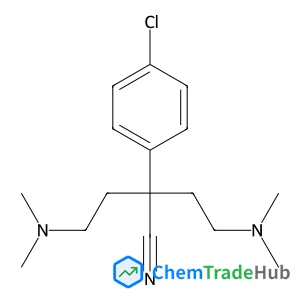
2-(4-Chlorophenyl)-4-(dimethylamino)-2-(2-(dimethylamino)ethyl)butanenitrile
CAS Number:
1246816-57-8
Molecular Formula:
C16H24ClN3
![2,6-Di(thiophen-2-yl)dithieno[3,2-b:2',3'-d]thiophene structure](https://static.chemtradehub.com/structs/910/910788-24-8-5b70.webp "2,6-Di(thiophen-2-yl)dithieno[3,2-b:2',3'-d]thiophene structure")
2,6-Di(thiophen-2-yl)dithieno[3,2-b:2',3'-d]thiophene
CAS Number:
910788-24-8
Molecular Formula:
C16H8S5
Recommended Suppliers






Disclaimer
This page provides academic journal information for reference and research purposes only. We are not affiliated with any journal publishers and do not handle publication submissions. For publication-related inquiries, please contact the respective journal publishers directly.
If you notice any inaccuracies in the information displayed, please contact us at support@chemtradehub.com. We will promptly review and address your concerns.