












Detoxification system for inorganic arsenic: transformation of As2O3 into TMAO by vitamin B12 derivatives and conversion of TMAO into arsenobetaine
Literature Information
Publication Date
2008-09-25
DOI
10.1039/B808937J
Impact Factor
6.222
Authors
Koichiro Nakamura, Yoshio Hisaeda, Ling Pan, Hiroshi Yamauchi
View Original
Abstract
A new two-step synthetic pathway developed for the transformation of arsenic trioxide [iAs(III); As2O3] into arsenobetaine (AB; Me3As+CH2CO2−) involves treatment of iAs(III) with native B12 or biomimetic B12 in the presence of glutathione (GSH) to give TMAO with a high selectivity and a high conversion rate; subsequent treatment of TMAO with iodoacetic acid in the presence of GSH gives arsenobetaine.
Related Literature
Femtochemistry of bimolecular reactions from weakly bound complexes: computational study of the H + H′OD → H′OH + D or HOD + H′ exchange reactions
Alexandre Voute, Fabien Gatti, Klaus B. Møller, Niels E. Henriksen
2021-11-18
Paper
DOI: 10.1039/D1CP04391A
A DFT-design of single component bifunctional organocatalysts for the carbon dioxide/propylene oxide coupling reaction
Morad M. El-Hendawy, Ibtesam M. Desoky, Mahmoud M. A. Mohamed
2021-11-08
Paper
DOI: 10.1039/D1CP04091J
Electronic relaxation and dissociation dynamics in formaldehyde: pump wavelength dependence
Simon P. Neville, Philippe Lassonde, Chen Qu, Hikaru Fujise, Mizuho Fushitani, Joel M. Bowman, François Légaré, Heide Ibrahim
2021-12-14
Paper
DOI: 10.1039/D1CP04264E
Polarized Raman spectroscopy in low-symmetry 2D materials: angle-resolved experiments and complex number tensor elements
Marcos A. Pimenta, Geovani C. Resende, Henrique B. Ribeiro, Bruno R. Carvalho
2021-10-16
Perspective
DOI: 10.1039/D1CP03626B
Fragmentation and rearrangement of Breslow intermediates: branches to both radical and ionic pathways
Ming-Hsiu Hsieh, Jen-Shiang K. Yu
2021-11-17
Paper
DOI: 10.1039/D1CP03118J
Photoinduced quasi-2D to 3D phase transformation in hybrid halide perovskite nanoplatelets
Mrinmoy Roy, Vikram, Bhawna, Aftab Alam, M. Aslam
2021-11-16
Paper
DOI: 10.1039/D1CP03529K
The lowest-energy structure of the gold cluster Au10: planar vs. nonplanar?
Pham Vu Nhat, Nguyen Thanh Si, Nguyen Thi Nhat Hang, Minh Tho Nguyen
2021-11-30
Communication
DOI: 10.1039/D1CP04440K
Elucidating the promotion of Na2CO3 in CO2 capture by Li4SiO4
Zhen Wang, Qian Xu, Kun Peng, Zirui Wang, Xingli Zou, Hongwei Cheng, Xionggang Lu
2021-11-16
Paper
DOI: 10.1039/D1CP04507E
Flow effects on the surface properties of surfactant foam films
Zhicheng Ye, Jie Yang, Haiping Su, Yazhuo Shang
2021-11-15
Paper
DOI: 10.1039/D1CP03279H
Analytically and empirically consistent characterization of the resistive switching mechanism in a Ag conducting-bridge random-access memory device through a pseudo-liquid interpretation approach
Yeon-Joon Choi, Suhyun Bang, Tae-Hyeon Kim, Kyungho Hong, Sungjoon Kim, Sungjun Kim, Seongjae Cho, Byung-Gook Park
2021-11-09
Paper
DOI: 10.1039/D1CP04637C
You might also like
Compound Q&A
What are the main uses of 1-(3-Aminophenyl)-3-[(3R)-1-(3,3-dimethyl-2-oxobutyl)-2-oxo-5-(2-pyridinyl)-2,3-dihydro-1H-1,4-benzodiazepin-3-yl]urea (CAS: 155412-88-7)?
This compound is mainly used as an intermediate in the synthesis of antipsychoti...
155412-88-71-(3-Aminophenyl)-3-...
Compound Q&A
How should waste containing 1-(D-Ribofuranosyl)-1,4-dihydro-3-pyridinecarboxamide (CAS: 19132-12-8) be handled?
Waste containing 1-(D-Ribofuranosyl)-1,4-dihydro-3-pyridinecarboxamide (CAS: 191...
19132-12-81-(D-Ribofuranosyl)-...
Compound Q&A
What regulatory guidelines apply to 2-Methyl-2-propanyl 3-bromo-3-(hydroxymethyl)-1-azetidinecarboxylate (CAS: 2007919-81-3)?
2-Methyl-2-propanyl 3-bromo-3-(hydroxymethyl)-1-azetidinecarboxylate (CAS: 20079...
2007919-81-32-Methyl-2-propanyl ...
Compound Q&A
What is N-(4-Chloro-2-pyridinyl)acetamide (CAS: 245056-66-0)?
N-(4-Chloro-2-pyridinyl)acetamide (CAS: 245056-66-0) is a chemical compound with...
245056-66-0N-(4-Chloro-2-pyridi...
Compound Q&A
What is 5-Chloro-2-hydroxybenzoic acid (CAS: 321-14-2)?
5-Chloro-2-hydroxybenzoic acid, also known as 5-chlorosalicylic acid, is an arom...
321-14-25-Chloro-2-hydroxybe...
Compound Q&A
What precautions should be taken when handling 1,1-Dichloro-1-fluoroethane (CAS: 1717-00-6)?
When handling 1,1-Dichloro-1-fluoroethane (CAS: 1717-00-6), it is important to u...
1717-00-61,1-Dichloro-1-fluor...
Compound Q&A
What are the physical and chemical properties of Fmoc-(2S,3R)-3-phenylpyrrolidine-2-carboxylic acid (CAS: 281655-32-1)?
Fmoc-(2S,3R)-3-phenylpyrrolidine-2-carboxylic acid is a white crystalline solid ...
281655-32-1Fmoc-(2S,3R)-3-pheny...
Compound Q&A
What are the main uses of 4-Amino-5-bromo-2-pyridinecarboxylic acid (CAS: 1363381-01-4)?
4-Amino-5-bromo-2-pyridinecarboxylic acid is primarily used as a precursor in th...
1363381-01-44-Amino-5-bromo-2-py...
Compound Q&A
What precautions should be taken when handling (S)-tert-butyl 2-((2-(4-bromophenyl)-2-oxoethyl)carbamoyl)pyrrolidine-1-carboxylate (CAS: 1007881-98-2)?
Handling this compound should be done with personal protective equipment (PPE) i...
1007881-98-2(S)-tert-butyl 2-((2...
Compound Q&A
What precautions should be taken when handling 8-bromo-2,2-dimethyl-3,4-dihydro-2H-1,4-benzoxazin-3-one (CAS: 688363-73-7)?
When handling 8-bromo-2,2-dimethyl-3,4-dihydro-2H-1,4-benzoxazin-3-one, use prop...
688363-73-78-bromo-2,2-dimethyl...
Source Journal
Chemical Communications

CiteScore:
8.6
Self-citation Rate:
4.7%
Articles per Year:
2458
ChemComm publishes urgent research which is of outstanding significance and interest to experts in the field, while also appealing to the journal’s broad chemistry readership. Our communication format is ideally suited to short, urgent studies that are of such importance that they require accelerated publication. Our scope covers all topics in chemistry, and research at the interface of chemistry and other disciplines (such as materials science, nanoscience, physics, engineering and biology) where there is a significant novelty in the chemistry aspects. Major topic areas covered include: Analytical Chemistry Catalysis Chemical Biology and medicinal chemistry Computational Chemistry and Machine Learning Energy and sustainable chemistry Environmental Chemistry Green Chemistry Inorganic Chemistry Materials Chemistry Nanoscience Organic Chemistry Physical Chemistry Polymer Chemistry Supramolecular Chemistry
Recommended Compounds
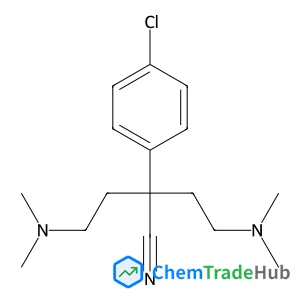
2-(4-Chlorophenyl)-4-(dimethylamino)-2-(2-(dimethylamino)ethyl)butanenitrile
CAS Number:
1246816-57-8
Molecular Formula:
C16H24ClN3
![4-Chloro-3-(trifluoromethyl)-1H-pyrrolo[2,3-b]pyridine structure](https://static.chemtradehub.com/structs/869/869335-75-1-a9d0.webp "4-Chloro-3-(trifluoromethyl)-1H-pyrrolo[2,3-b]pyridine structure")
4-Chloro-3-(trifluoromethyl)-1H-pyrrolo[2,3-b]pyridine
CAS Number:
869335-75-1
Molecular Formula:
C8H4ClF3N2
Recommended Suppliers








Disclaimer
This page provides academic journal information for reference and research purposes only. We are not affiliated with any journal publishers and do not handle publication submissions. For publication-related inquiries, please contact the respective journal publishers directly.
If you notice any inaccuracies in the information displayed, please contact us at support@chemtradehub.com. We will promptly review and address your concerns.