












A DFT-design of single component bifunctional organocatalysts for the carbon dioxide/propylene oxide coupling reaction
Literature Information
Publication Date
2021-11-08
DOI
10.1039/D1CP04091J
Impact Factor
3.676
Authors
Morad M. El-Hendawy, Ibtesam M. Desoky, Mahmoud M. A. Mohamed
View Original
Abstract
The aim of this work is to develop single-component bifunctional organic catalysts capable of effective coupling reactions between CO2 and propylene epoxide (PO) under mild conditions using density functional theory (DFT) calculations. The dual functionalities of the target catalysts come from their inclusion of a hydroxyl-containing electrophile and the nucleophilicity of iodide ion. In this respect, a series of hydroxyl-functionalized quaternary onium-based ionic liquids were studied using M062X-D3/def2-TZVP//M062X-D3/def2-SVPP model chemistry. The design of catalysts was based on tailoring two structural factors; the first one is the onium center of pnictogens (N, P, As, Sb and Bi), and the second one is the number of hydrogen bond donor groups (n = 1–3). The proposed catalysts were examined by investigation of their catalytic mechanisms to afford the cyclic carbonate. Additionally, the highest active transition state, along with the potential energy difference, was examined using non-covalent interaction (NCI) analysis. Also, the activation strain model (ASM) was used to explain the kinetic behavior of PO activation. The findings showed that the ring-opening step of PO is always the critical step of the reaction. Among the suggested catalysts, the results indicated that the dihydroxyl ammonium-based catalyst (2OH-NI) is a good choice for this catalysis under mild and solvent-free conditions.
Related Literature
Slowing and cooling of heavy or light (even with a tiny electric dipole moment) polar molecules using a novel, versatile electrostatic Stark decelerator
Qin Wang, Shunyong Hou, Liang Xu, Jianping Yin
2016-01-06
Paper
DOI: 10.1039/C5CP06392B
Dissipative particle dynamics simulation study of poly(2-oxazoline)-based multicompartment micelle nanoreactor
Christina Clare Fisher
2016-01-28
Paper
DOI: 10.1039/C5CP07100C
Cross-plane heat transfer through single-layer carbon structures
Huaichen Zhang, Silvia V. Nedea, Camilo C. M. Rindt, David M. J. Smeulders
2016-01-21
Paper
DOI: 10.1039/C5CP07715J
Theoretical predictions of structures in dispersions containing charged colloidal particles and non-adsorbing polymers
Fei Xie, Martin Turesson, Clifford E. Woodward, Kitty van Gruijthuijsen, Anna Stradner, Jan Forsman
2016-03-30
Paper
DOI: 10.1039/C5CP07814H
Indented Cu2MoS4 nanosheets with enhanced electrocatalytic and photocatalytic activities realized through edge engineering
Bang-Bao Chen, De-Kun Ma, Qing-Ping Ke, Wei Chen, Shao-Ming Huang
2016-02-08
Paper
DOI: 10.1039/C5CP07900D
Structural determination of niobium-doped silicon clusters by far-infrared spectroscopy and theory
Xiaojun Li, Pieterjan Claes, Marko Haertelt, Peter Lievens, Ewald Janssens
2016-01-27
Paper
DOI: 10.1039/C5CP07298K
CdSe-sensitized branched CdS hierarchical nanostructures for efficient photoelectrochemical solar hydrogen generation
Zonghu Han, Meng Wang, Xiangyan Chen, Shaohua Shen
2016-03-29
Paper
DOI: 10.1039/C6CP00692B
Giant strain geared to transformable H-bonded network in compressed β-d-mannose
Ewa Patyk, Anna Jenczak, Andrzej Katrusiak
2016-03-21
Paper
DOI: 10.1039/C6CP01286H
Effects of carbon vacancies on the structures, mechanical properties, and chemical bonding of zirconium carbides: a first-principles study
2016-03-30
Paper
DOI: 10.1039/C5CP07724A
Electrochemical synthesis of poly(3-aminophenylboronic acid) in ethylene glycol without exogenous protons
Feifan Wang, Feixue Zou, Xinxin Yu, Zhenyu Feng, Na Du, Yaohua Zhong
2016-03-11
Paper
DOI: 10.1039/C6CP00800C
You might also like
Compound Q&A
What are the main uses of 1-(3-Aminophenyl)-3-[(3R)-1-(3,3-dimethyl-2-oxobutyl)-2-oxo-5-(2-pyridinyl)-2,3-dihydro-1H-1,4-benzodiazepin-3-yl]urea (CAS: 155412-88-7)?
This compound is mainly used as an intermediate in the synthesis of antipsychoti...
155412-88-71-(3-Aminophenyl)-3-...
Compound Q&A
How should waste containing 1-(D-Ribofuranosyl)-1,4-dihydro-3-pyridinecarboxamide (CAS: 19132-12-8) be handled?
Waste containing 1-(D-Ribofuranosyl)-1,4-dihydro-3-pyridinecarboxamide (CAS: 191...
19132-12-81-(D-Ribofuranosyl)-...
Compound Q&A
What regulatory guidelines apply to 2-Methyl-2-propanyl 3-bromo-3-(hydroxymethyl)-1-azetidinecarboxylate (CAS: 2007919-81-3)?
2-Methyl-2-propanyl 3-bromo-3-(hydroxymethyl)-1-azetidinecarboxylate (CAS: 20079...
2007919-81-32-Methyl-2-propanyl ...
Compound Q&A
What is N-(4-Chloro-2-pyridinyl)acetamide (CAS: 245056-66-0)?
N-(4-Chloro-2-pyridinyl)acetamide (CAS: 245056-66-0) is a chemical compound with...
245056-66-0N-(4-Chloro-2-pyridi...
Compound Q&A
What is 5-Chloro-2-hydroxybenzoic acid (CAS: 321-14-2)?
5-Chloro-2-hydroxybenzoic acid, also known as 5-chlorosalicylic acid, is an arom...
321-14-25-Chloro-2-hydroxybe...
Compound Q&A
What precautions should be taken when handling 1,1-Dichloro-1-fluoroethane (CAS: 1717-00-6)?
When handling 1,1-Dichloro-1-fluoroethane (CAS: 1717-00-6), it is important to u...
1717-00-61,1-Dichloro-1-fluor...
Compound Q&A
What are the physical and chemical properties of Fmoc-(2S,3R)-3-phenylpyrrolidine-2-carboxylic acid (CAS: 281655-32-1)?
Fmoc-(2S,3R)-3-phenylpyrrolidine-2-carboxylic acid is a white crystalline solid ...
281655-32-1Fmoc-(2S,3R)-3-pheny...
Compound Q&A
What are the main uses of 4-Amino-5-bromo-2-pyridinecarboxylic acid (CAS: 1363381-01-4)?
4-Amino-5-bromo-2-pyridinecarboxylic acid is primarily used as a precursor in th...
1363381-01-44-Amino-5-bromo-2-py...
Compound Q&A
What precautions should be taken when handling (S)-tert-butyl 2-((2-(4-bromophenyl)-2-oxoethyl)carbamoyl)pyrrolidine-1-carboxylate (CAS: 1007881-98-2)?
Handling this compound should be done with personal protective equipment (PPE) i...
1007881-98-2(S)-tert-butyl 2-((2...
Compound Q&A
What precautions should be taken when handling 8-bromo-2,2-dimethyl-3,4-dihydro-2H-1,4-benzoxazin-3-one (CAS: 688363-73-7)?
When handling 8-bromo-2,2-dimethyl-3,4-dihydro-2H-1,4-benzoxazin-3-one, use prop...
688363-73-78-bromo-2,2-dimethyl...
Source Journal
Physical Chemistry Chemical Physics

CiteScore:
5.5
Self-citation Rate:
10.3%
Articles per Year:
3036
Physical Chemistry Chemical Physics (PCCP) is an international journal co-owned by 19 physical chemistry and physics societies from around the world. This journal publishes original, cutting-edge research in physical chemistry, chemical physics and biophysical chemistry. To be suitable for publication in PCCP, articles must include significant innovation and/or insight into physical chemistry; this is the most important criterion that reviewers and Editors will judge against when evaluating submissions. The journal has a broad scope and welcomes contributions spanning experiment, theory, computation and data science. Topical coverage includes spectroscopy, dynamics, kinetics, statistical mechanics, thermodynamics, electrochemistry, catalysis, surface science, quantum mechanics, quantum computing and machine learning. Interdisciplinary research areas such as polymers and soft matter, materials, nanoscience, energy, surfaces/interfaces, and biophysical chemistry are welcomed if they demonstrate significant innovation and/or insight into physical chemistry. Joined experimental/theoretical studies are particularly appreciated when complementary and based on up-to-date approaches.
Recommended Compounds
![Pyrazolo[1,5-a]pyridine-3-carbothioamide structure](https://static.chemtradehub.com/structs/885/885275-44-5-aae0.webp "Pyrazolo[1,5-a]pyridine-3-carbothioamide structure")
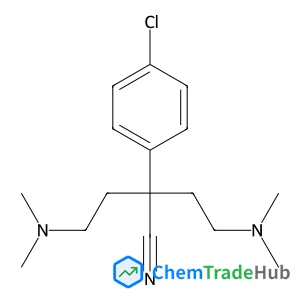
2-(4-Chlorophenyl)-4-(dimethylamino)-2-(2-(dimethylamino)ethyl)butanenitrile
CAS Number:
1246816-57-8
Molecular Formula:
C16H24ClN3

Recommended Suppliers



Disclaimer
This page provides academic journal information for reference and research purposes only. We are not affiliated with any journal publishers and do not handle publication submissions. For publication-related inquiries, please contact the respective journal publishers directly.
If you notice any inaccuracies in the information displayed, please contact us at support@chemtradehub.com. We will promptly review and address your concerns.