












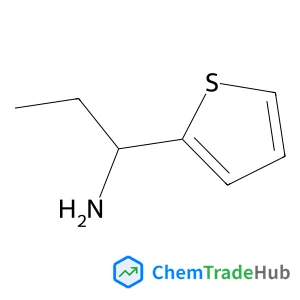
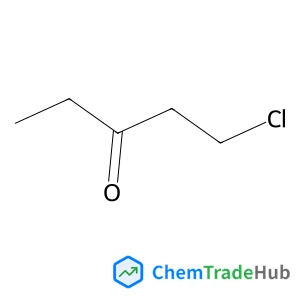
Photochemistry of ethyl chloride caged in amorphous solid water
Literature Information
Publication Date
2008-09-23
DOI
10.1039/B807803N
Impact Factor
3.676
Authors
Yousif Ayoub, Micha Asscher
View Original
Abstract
Caging and photo-induced decomposition of ethyl chloride molecules (EC) within a layer of amorphous solid water (ASW) on top of clean and oxygen-covered Ru(001) under ultra-high vacuum (UHV) conditions are presented. The caged molecules were estimated to reside 1.5 ± 0.2 nm above the solid surface, based on parent molecule thermal decomposition on the clean ruthenium. Dissociative electron attachment (DEA) of the caged molecules following 193 nm laser irradiation, result in initial fragmentation to ethyl radical and chloride anion. It was found that photoreactivity on top of the clean ruthenium surface (Ru) is twenty times faster than on the oxygen-covered surface (O/Ru), with DEA cross sections: σRu = (3.8 ± 1) × 10−19 cm2 and σO/Ru = (2.1 ± 0.3) × 10−20 cm2. This difference is attributed to the higher work function of oxygen-covered ruthenium, leading to smaller electron attachment probability due to mismatch of the ruthenium photo-electron energy with the adsorbed EC excited electron affinity levels. EC molecules fragmented within the cage, result in post-irradiation TPD spectra that reveal primarily C4H8, C3H5 and C3H3, without any oxygen-containing molecules. Unique stabilization of the photoproducts has been observed with the first layer of water molecules in direct contact with the substrate, desorbing near 180 K, a significantly higher temperature than the desorption of fully caged molecules. This study may contribute for understanding stratospheric photochemistry and processes in interstellar space.
Related Literature
Studying NAD(P)H cofactor-binding to alcohol dehydrogenases through global analysis of circular dichroism spectra
Marija Marolt, Steffen Lüdeke
2018-09-28
Paper
DOI: 10.1039/C8CP04869J
Shifted equilibria of organic acids and bases in the aqueous surface region
Ingmar Persson, Olle Björneholm, Delphine Kawecki, Clara-Magdalena Saak, Marie-Madeleine Walz, Victor Ekholm, Isaak Unger, Corina Valtl, Gunnar Öhrwall
2018-08-31
Paper
DOI: 10.1039/C8CP01898G
Correction: Two-dimensional nitrides as highly efficient potential candidates for CO2 capture and activation
Raul Morales-Salvador, Ángel Morales-García, Francesc Viñes, Francesc Illas
2018-09-14
Correction
DOI: 10.1039/C8CP91852J
Charge transport parameters for carbon based nanohoops and donor–acceptor derivatives
Ángel José Pérez-Jiménez, Juan-Carlos Sancho-García
2018-12-17
Paper
DOI: 10.1039/C8CP06727A
Influence of Mn co-doping on the magnetic properties of planar arrays of GaxFe4−xN nanocrystals in a GaN matrix
L. Del Bianco, F. Spizzo, Tian Li, R. Adhikari, A. Bonanni
2018-09-26
Paper
DOI: 10.1039/C8CP04475A
Theoretical study on the reaction mechanism and selectivity of acetylene semi-hydrogenation on Ni–Sn intermetallic catalysts
Tao Sun, Yu-Sen Yang, Pan Yin, Min Pu, Hong Yan, Min Wei
2018-12-12
Paper
DOI: 10.1039/C8CP06032K
Non-touching plasma–liquid interaction – where is aqueous nitric oxide generated?
Helena Jablonowski, Ansgar Schmidt-Bleker, Klaus-Dieter Weltmann, Thomas von Woedtke, Kristian Wende
2018-09-28
Paper
DOI: 10.1039/C8CP02412J
Pronounced changes in atomistic mechanisms for the Cl− + CH3I SN2 reaction with increasing collision energy
Subha Pratihar, Maria Carolina Nicola Barbosa Muniz, Xinyou Ma, Itamar Borges, Jr., William L. Hase
2019-01-03
Paper
DOI: 10.1039/C8CP06198J
TD DFT insights into unusual properties of excited sandwich complexes: structural transformations and vibronic interactions in Rydberg-state bis(η6-benzene)chromium
Sergey Y. Ketkov, Elena A. Rychagova, Sheng-Yuan Tzeng, Wen-Bih Tzeng
2018-09-04
Paper
DOI: 10.1039/C8CP04845B
In situ XPS analysis of the atomic layer deposition of aluminium oxide on titanium dioxide
Robert H. Temperton, Andrew Gibson, James N. O'Shea
2018-12-19
Paper
DOI: 10.1039/C8CP06912C
You might also like
Compound Q&A
How is 3-(2-Bromoimidazo[2,1-b]thiazol-6-yl)propanoic acid hydrochloride (CAS: 1187830-80-3) typically synthesized?
3-(2-Bromoimidazo[2,1-b]thiazol-6-yl)propanoic acid hydrochloride is typically s...
1187830-80-33-(2-Bromoimidazo[2,...
Compound Q&A
How is 2-Isopropyl-1,3-dioxane-5-carboxylic acid (CAS: 116193-72-7) typically synthesized?
2-Isopropyl-1,3-dioxane-5-carboxylic acid is typically synthesized by the carbox...
116193-72-72-Isopropyl-1,3-diox...
Compound Q&A
What is Alisporivir (CAS: 254435-95-5)?
Alisporivir (CAS: 254435-95-5) is an antiviral medication used in the treatment ...
254435-95-5Alisporivir
Compound Q&A
What are the physical and chemical properties of [1,2,4]triazolo[3,4-a]phthalazine (CAS: 234-80-0)?
[1,2,4]triazolo[3,4-a]phthalazine (CAS: 234-80-0) is a crystalline compound with...
234-80-0[1,2,4]triazolo[3,4-...
Compound Q&A
What regulatory guidelines apply to (2S)-5-Hydroxy-2-(4-hydroxyphenyl)-4-oxo-3,4-dihydro-2H-chromen-7-yl methyl beta-D-glucopyranosiduronate (CAS: 1985597-72-5)?
Regulatory guidelines for (2S)-5-Hydroxy-2-(4-hydroxyphenyl)-4-oxo-3,4-dihydro-2...
1985597-72-5(2S)-5-Hydroxy-2-(4-...
Compound Q&A
Is 2,2-Difluorocyclohexanamine hydrochloride (CAS: 921602-83-7) safe?
2,2-Difluorocyclohexanamine hydrochloride is generally safe when handled under p...
921602-83-72,2-Difluorocyclohex...
Compound Q&A
What are the main uses of 3-Nitro-2-phenylthiophene (CAS: 18150-94-2)?
3-Nitro-2-phenylthiophene is primarily used in the synthesis of other organic co...
18150-94-23-Nitro-2-phenylthio...
Compound Q&A
What is 1-(Trifluoroacetyl)-4-piperidinecarbonitrile (CAS: 77940-79-5)?
1-(Trifluoroacetyl)-4-piperidinecarbonitrile (CAS: 77940-79-5) is a colorless to...
77940-79-51-(Trifluoroacetyl)-...
Compound Q&A
What is the market or research trend for 1,3,6,8-Tetranitro-9H-carbazole (CAS: 4543-33-3)?
Research and market trends for 1,3,6,8-Tetranitro-9H-carbazole (CAS: 4543-33-3) ...
4543-33-31,3,6,8-Tetranitro-9...
Compound Q&A
How should waste containing Dibenzo[b,d]thiophen-1-ylboronic acid (CAS: 1245943-60-5) be handled?
Waste containing Dibenzo[b,d]thiophen-1-ylboronic acid (CAS: 1245943-60-5) shoul...
1245943-60-5Dibenzo[b,d]thiophen...
Source Journal
Physical Chemistry Chemical Physics

CiteScore:
5.5
Self-citation Rate:
10.3%
Articles per Year:
3036
Physical Chemistry Chemical Physics (PCCP) is an international journal co-owned by 19 physical chemistry and physics societies from around the world. This journal publishes original, cutting-edge research in physical chemistry, chemical physics and biophysical chemistry. To be suitable for publication in PCCP, articles must include significant innovation and/or insight into physical chemistry; this is the most important criterion that reviewers and Editors will judge against when evaluating submissions. The journal has a broad scope and welcomes contributions spanning experiment, theory, computation and data science. Topical coverage includes spectroscopy, dynamics, kinetics, statistical mechanics, thermodynamics, electrochemistry, catalysis, surface science, quantum mechanics, quantum computing and machine learning. Interdisciplinary research areas such as polymers and soft matter, materials, nanoscience, energy, surfaces/interfaces, and biophysical chemistry are welcomed if they demonstrate significant innovation and/or insight into physical chemistry. Joined experimental/theoretical studies are particularly appreciated when complementary and based on up-to-date approaches.
Recommended Compounds
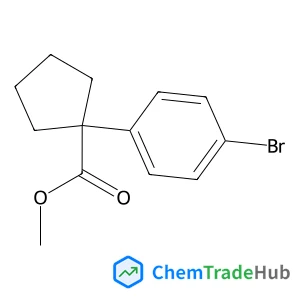
Methyl 1-(4-bromophenyl)cyclopentanecarboxylate
CAS Number:
1236357-64-4
Molecular Formula:
C13H15BrO2
Recommended Suppliers




Disclaimer
This page provides academic journal information for reference and research purposes only. We are not affiliated with any journal publishers and do not handle publication submissions. For publication-related inquiries, please contact the respective journal publishers directly.
If you notice any inaccuracies in the information displayed, please contact us at support@chemtradehub.com. We will promptly review and address your concerns.