












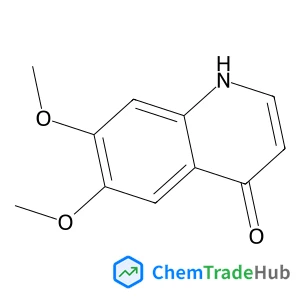
Quantum dot probes for bacteria distinguish Escherichia coli mutants and permit in vivo imaging
Literature Information
Publication Date
2008-04-10
DOI
10.1039/B803590C
Impact Factor
6.222
Authors
W. Matthew Leevy, Timothy N. Lambert, James R. Johnson, Joshua Morris, Bradley D. Smith
View Original
Abstract
Fluorescent quantum dots coated with zinc(II)-dipicolylamine coordination complexes can selectively stain a rough Escherichia coli mutant that lacks an O-antigen element and permit optical detection in a living mouse leg infection model.
Related Literature
Pentavalent uranium chemistry—synthetic pursuit of a rare oxidation state
Christopher R. Graves, Jaqueline L. Kiplinger
2009-06-08
Feature Article
DOI: 10.1039/B902969A
Synthesis and structure of [{N(CH2CH2NSiMe3)3}URe(η5-C5H5)2]: a heterobimetallic complex with an unsupported uranium–rhenium bond
Benedict M. Gardner, Jonathan McMaster, William Lewis, Stephen T. Liddle
2009-04-24
Communication
DOI: 10.1039/B906554G
Chimeric polymers formed from a monomer capable of free radical, oxidative and electrochemical polymerisation
Dhana Lakshmi, Michael J. Whitcombe, Frank Davis, Iva Chianella, Elena V. Piletska, Antonio Guerreiro, Sreenath Subrahmanyam, Paula S. Brito, Steven A. Fowler, Sergey A. Piletsky
2009-03-25
Communication
DOI: 10.1039/B821409C
Two-phase dynamic combinatorial discovery of a spermine transporter
Ruth Pérez-Fernández, Michael Pittelkow, Ana M. Belenguer, Laura A. Lane, Carol V. Robinson, Jeremy K. M. Sanders
2009-05-28
Communication
DOI: 10.1039/B902842K
Membrane blotting for rapid detection of mercury(ii) in water
Jishan Li, Jingjing Yao, Wenwan Zhong
2009-07-22
Communication
DOI: 10.1039/B910251E
Cell-induced intracellular controlled release of membrane impermeable cysteine from a mesoporous silica nanoparticle-based drug delivery system
Renato Mortera, Juan Vivero-Escoto, Igor I. Slowing, Edoardo Garrone, Barbara Onida, Victor S.-Y. Lin
2009-05-07
Communication
DOI: 10.1039/B900559E
Fast, copper-free click chemistry: a convenient solid-phase approach to oligonucleotide conjugation
Ishwar Singh, Joseph S. Vyle, Frances Heaney
2009-04-22
Communication
DOI: 10.1039/B904185K
Iron–sulfur clusterbiosynthesis: role of a semi-conserved histidine
Jia Huang, J. A. Cowan
2009-04-24
Communication
DOI: 10.1039/B902676B
You might also like
Compound Q&A
How should waste containing (6-Bromo-2-naphthyl)oxy](dimethyl)(2-methyl-2-propanyl)silane be handled?
Waste containing (6-Bromo-2-naphthyl)oxy](dimethyl)(2-methyl-2-propanyl)silane (...
100751-65-3[(6-Bromo-2-naphthyl...
Compound Q&A
How is 7-Fluoro-4-isoquinolinecarboxylic acid (CAS: 1841081-40-0) typically synthesized?
7-Fluoro-4-isoquinolinecarboxylic acid can be synthesized via a multi-step proce...
1841081-40-07-Fluoro-4-isoquinol...
Compound Q&A
What are the physical and chemical properties of 2,3,5,6-Tetrabromothieno[3,2-b]thiophene (CAS: 124638-53-5)?
2,3,5,6-Tetrabromothieno[3,2-b]thiophene is a crystalline compound with a high m...
124638-53-52,3,5,6-Tetrabromoth...
Compound Q&A
Is 1-[4-(Benzylamino)-7,8-dihydro-5H-pyrano[4,3-d]pyrimidin-2-yl]-2-methyl-1H-indole-4-carboxamide (CAS: 1542705-92-9) safe?
1-[4-(Benzylamino)-7,8-dihydro-5H-pyrano[4,3-d]pyrimidin-2-yl]-2-methyl-1H-indol...
1542705-92-91-[4-(Benzylamino)-7...
Compound Q&A
What is the market or research trend for imidazo[5,1-d]-1,2,3,5-tetrazine-8-carboxylic acid, 3,4-dihydro-3-methyl-4-oxo- (CAS: 113942-30-6)?
The market for imidazo[5,1-d]-1,2,3,5-tetrazine-8-carboxylic acid, 3,4-dihydro-3...
113942-30-6Imidazo[5,1-d]-1,2,3...
Compound Q&A
What is 3-(Triisopropylsilyl)propiolaldehyde (CAS: 163271-80-5)?
3-(Triisopropylsilyl)propiolaldehyde is a synthetic organic compound with the CA...
163271-80-53-(Triisopropylsilyl...
Compound Q&A
What regulatory guidelines apply to 6-Nitro-2H-1,4-benzoxazin-3(4H)-one (CAS: 81721-87-1)?
6-Nitro-2H-1,4-benzoxazin-3(4H)-one (CAS: 81721-87-1) is subject to various regu...
81721-87-16-Nitro-2H-1,4-benzo...
Compound Q&A
How should waste containing (3-Fluorophenyl)(4-{[(2-methyl-2-propanyl)oxy]carbonyl}-1-piperazinyl)acetic acid (CAS: 885272-91-3) be handled?
Waste containing (3-Fluorophenyl)(4-{[(2-methyl-2-propanyl)oxy]carbonyl}-1-piper...
885272-91-3(3-Fluorophenyl)(4-{...
Compound Q&A
What are the physical and chemical properties of N,N'-4,4'-Biphenyldiyldiisonicotinamide (CAS: 55119-40-9)?
N,N'-4,4'-Biphenyldiyldiisonicotinamide is a white crystalline solid with a mole...
55119-40-9N,N'-4,4'-Biphenyldi...
Compound Q&A
What industries use 6-Bromo-8-fluoro-2-quinazolinol (CAS: 1036756-15-6)?
6-Bromo-8-fluoro-2-quinazolinol is primarily used in the pharmaceutical industry...
1036756-15-66-Bromo-8-fluoro-2-q...
Source Journal
Chemical Communications

CiteScore:
8.6
Self-citation Rate:
4.7%
Articles per Year:
2458
ChemComm publishes urgent research which is of outstanding significance and interest to experts in the field, while also appealing to the journal’s broad chemistry readership. Our communication format is ideally suited to short, urgent studies that are of such importance that they require accelerated publication. Our scope covers all topics in chemistry, and research at the interface of chemistry and other disciplines (such as materials science, nanoscience, physics, engineering and biology) where there is a significant novelty in the chemistry aspects. Major topic areas covered include: Analytical Chemistry Catalysis Chemical Biology and medicinal chemistry Computational Chemistry and Machine Learning Energy and sustainable chemistry Environmental Chemistry Green Chemistry Inorganic Chemistry Materials Chemistry Nanoscience Organic Chemistry Physical Chemistry Polymer Chemistry Supramolecular Chemistry
Recommended Compounds



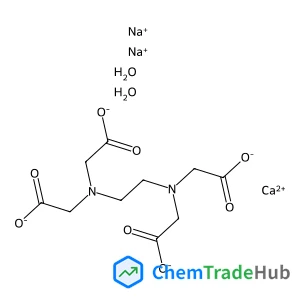
EthylenediaminetetraaceticacidcalciumDisodiumsalthydrate
CAS Number:
23411-34-9
Molecular Formula:
C10H16CaN2Na2O10
Recommended Suppliers






Disclaimer
This page provides academic journal information for reference and research purposes only. We are not affiliated with any journal publishers and do not handle publication submissions. For publication-related inquiries, please contact the respective journal publishers directly.
If you notice any inaccuracies in the information displayed, please contact us at support@chemtradehub.com. We will promptly review and address your concerns.