












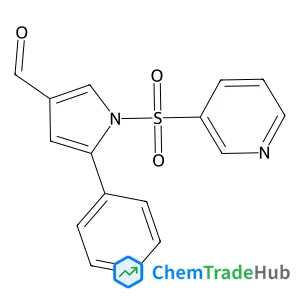
5-Phenyl-1-(pyridin-3-ylsulfonyl)-1H-pyrrole-3-carbaldehyde
CAS Number:
881676-90-0
Molecular Formula:
C16H12N2O3S
Qiao Jin, Jian-Ping Xu, Jian Ji, Jia-Cong Shen
Zwitterionic phosphorylcholine showed better stabilization than oligo(ethylene glycol) in protecting big gold nanoparticles.
Peng Lv, Shuo Li, Dongwei Ma, Ruqian Wu
DOI: 10.1039/C7CP02430D
Jongsik Kim, Jason C. Hicks
DOI: 10.1039/C7CP01322A
Maciej Ptak, Anna Gągor, Adam Sieradzki, Bartosz Bondzior, Przemysław Dereń, Aneta Ciupa, M. Trzebiatowska, Mirosław Mączka
DOI: 10.1039/C7CP01336A
Danilo Loche, Claudia Marras, Daniela Carta, Maria Francesca Casula, Gavin Mountjoy, Anna Corrias
DOI: 10.1039/C7CP02260C
Pedro P. Madeira, Helena Passos, Joana Gomes, João A. P. Coutinho, Mara G. Freire
DOI: 10.1039/C6CP08210F
DOI: 10.1039/C7CP01864A
Yuan Yuan, Yawen Huang, Hongtao Yu, Junxiao Yang
DOI: 10.1039/C7CP02678A
Nabanita Saikia, Shashi P. Karna, Ravindra Pandey
DOI: 10.1039/C7CP02944F
Long Van Duong
DOI: 10.1039/C7CP01740E
DOI: 10.1039/C7CP02568H
When considering alternatives to 1-(4-Chlorophenyl)-N-hydroxymethanimine (CAS: 3...
This compound should be stored in a cool, dry place away from direct sunlight. I...
3-(4-Bromophenyl)-5-(2-fluorophenyl)-1,2,4-oxadiazole is synthesized through a m...
5-Chloro-2-(4-chlorophenyl)-4-methyl-6-[3-(1-piperidinyl)propoxy]pyrimidine (CAS...
2-Chloro-4-(difluoromethoxy)pyridine is used in the pharmaceutical industry for ...
3-Chloro-6-methylpyridazine (CAS: 1121-79-5) is classified under the Globally Ha...
Several alternatives can be used in the synthesis of Methyl 4,5-dimethyl-2-nitro...
Alternatives to (2E,2'E)-3,3'-(1,4-Phenylene)bisacrylaldehyde include other acry...
3-Amino-5-chloropyridin-2-ol hydrochloride is an organic compound with the CAS n...
When handling 6,7-Difluoro-2,3-dihydro-4H-chromen-4-one, it is essential to wear...

ChemComm publishes urgent research which is of outstanding significance and interest to experts in the field, while also appealing to the journal’s broad chemistry readership. Our communication format is ideally suited to short, urgent studies that are of such importance that they require accelerated publication. Our scope covers all topics in chemistry, and research at the interface of chemistry and other disciplines (such as materials science, nanoscience, physics, engineering and biology) where there is a significant novelty in the chemistry aspects. Major topic areas covered include: Analytical Chemistry Catalysis Chemical Biology and medicinal chemistry Computational Chemistry and Machine Learning Energy and sustainable chemistry Environmental Chemistry Green Chemistry Inorganic Chemistry Materials Chemistry Nanoscience Organic Chemistry Physical Chemistry Polymer Chemistry Supramolecular Chemistry
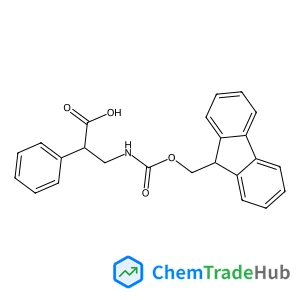
![6-Bromo-2,3-dihydro-1H-pyrido[2,3-b][1,4]oxazine structure](https://static.chemtradehub.com/structs/120/1203499-17-5-b4d1.webp "6-Bromo-2,3-dihydro-1H-pyrido[2,3-b][1,4]oxazine structure")
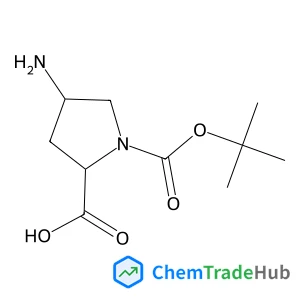
![[4-(Isobutyrylamino)phenyl]boronic acid structure](https://static.chemtradehub.com/structs/874/874219-50-8-6ab5.webp "[4-(Isobutyrylamino)phenyl]boronic acid structure")





