


A promising single atom catalyst for CO oxidation: Ag on boron vacancies of h-BN sheets
Literature Information
Publication Date
2017-06-02
DOI
10.1039/C7CP02430D
Impact Factor
3.676
Authors
Peng Lv, Shuo Li, Dongwei Ma, Ruqian Wu
View Original
Abstract
Single atom catalysts (SACs) have attracted broad research interest in recent years due to their importance in various fields, such as environmental protection and energy conversion. Here, we discuss the mechanisms of CO oxidation to CO2 over single Ag atoms supported on hexagonal boron-nitride sheets (Ag1/BN) through systematic van der Waals inclusive density functional theory (DFT-D) calculations. The Ag adatom can be anchored onto a boron defect (VB), as suggested by the large energy barrier of 3.12 eV for Ag diffusion away from the VB site. Three possible mechanisms (i.e., Eley–Rideal, Langmuir–Hinshelwood, and termolecular Eley–Rideal) of CO oxidation over Ag1/BN are investigated. Due to “CO-Promoted O2 Activation”, the termolecular Eley–Rideal (TER) mechanism is the most relevant one for CO oxidation over Ag1/BN and the rate-limiting reaction barrier is only 0.33 eV. More importantly, the first principles molecular dynamics simulations confirm that CO oxidation via the TER mechanism may easily occur at room temperature. Analyses with the inclusion of temperature and entropy effects further indicate that the CO oxidation via the TER mechanism over Ag1/BN is thermodynamically favorable in a broad range of temperatures.
Recommended Journals

Organic Process Research & Development

Russian Journal of General Chemistry

Journal of Saudi Chemical Society

Drug Discovery Today

Current Opinion in Solid State & Materials Science

Journal of Peptide Science

Chemical Communications

Russian Journal of Coordination Chemistry

Acta Materialia

New Journal of Chemistry
Related Literature
Triplet depletion forces from density functional optimization
2000-06-30
Paper
DOI: 10.1039/B001801P
Dual sulfonated poly(arylene ether ketone) membrane grafted with 15-crown-5-ether for enhanced proton conductivity and anti-oxidation stability
Dinh Cong Tinh Vo, Minh Dat Thinh Nguyen, Dukjoon Kim
2019-04-16
Paper
DOI: 10.1039/C9ME00009G
Direct C–H arylation: a “Greener” approach towards facile synthesis of organic semiconducting molecules and polymers
Hassan Bohra, Mingfeng Wang
2017-05-02
Review Article
DOI: 10.1039/C7TA00617A
Poly(phenylene) block copolymers bearing tri-sulfonated aromatic pendant groups for polymer electrolyte fuel cell applications
Ryousuke Hara, Kangcheng Chen, Nobutaka Endo, Mitsuru Higa, Ken-ichi Okamoto, Lianjun Wang
2013-05-08
Paper
DOI: 10.1039/C3TA11190C
Critical factors governing vertical phase separation in polymer–PCBM blend films for organic solar cells
Min Kim, Jaewon Lee, Sae Byeok Jo, Dong Hun Sin, Hyomin Ko, Hansol Lee, Seung Goo Lee, Kilwon Cho
2016-09-16
Paper
DOI: 10.1039/C6TA06508B
Microwave-assisted simultaneous reduction and titanate treatment of graphene oxide
Jing Li, Zhenzhen Yang, Hanxun Qiu, Yigang Dai, Qingbin Zheng, Guang-Ping Zheng, Junhe Yang
2013-07-25
Paper
DOI: 10.1039/C3TA12228J
Block copolymers based on 2-methyl- and 2-phenyl-oxazoline by metallocene-mediated cationic ring-opening polymerization: synthesis and characterization
Maria-Evgenia Kourti, Eirini Fega, Marinos Pitsikalis
2016-03-28
Paper
DOI: 10.1039/C6PY00405A
You might also like
Compound Q&A
Are there alternatives to 1-(4-Chlorophenyl)-N-hydroxymethanimine (CAS: 3848-36-0) in synthesis?
When considering alternatives to 1-(4-Chlorophenyl)-N-hydroxymethanimine (CAS: 3...
3848-36-01-(4-Chlorophenyl)-N...
Compound Q&A
How should (1R,9S,10S,12S,14E,16S,19R,20R,21S,22R)-3,9,21-Trihydroxy-5,10,12,14,16,20,22-heptamethyl-23,24-dioxatetracyclo[17.3.1.1~6,9~.0~2,7~]tetracosa-2,5,7,14-tetraen-4-one (CAS: 183202-73-5) be stored?
This compound should be stored in a cool, dry place away from direct sunlight. I...
183202-73-5(1R,9S,10S,12S,14E,1...
Compound Q&A
How is 3-(4-Bromophenyl)-5-(2-fluorophenyl)-1,2,4-oxadiazole (CAS: 419553-16-5) typically synthesized?
3-(4-Bromophenyl)-5-(2-fluorophenyl)-1,2,4-oxadiazole is synthesized through a m...
419553-16-53-(4-Bromophenyl)-5-...
Compound Q&A
How is 5-Chloro-2-(4-chlorophenyl)-4-methyl-6-[3-(1-piperidinyl)propoxy]pyrimidine (CAS: 1639220-19-1) typically synthesized?
5-Chloro-2-(4-chlorophenyl)-4-methyl-6-[3-(1-piperidinyl)propoxy]pyrimidine (CAS...
1639220-19-15-Chloro-2-(4-chloro...
Compound Q&A
What industries use 2-Chloro-4-(difluoromethoxy)pyridine (CAS: 1206978-15-5)?
2-Chloro-4-(difluoromethoxy)pyridine is used in the pharmaceutical industry for ...
1206978-15-52-Chloro-4-(difluoro...
Compound Q&A
What regulatory guidelines apply to 3-Chloro-6-methylpyridazine (CAS: 1121-79-5)?
3-Chloro-6-methylpyridazine (CAS: 1121-79-5) is classified under the Globally Ha...
1121-79-53-Chloro-6-methylpyr...
Compound Q&A
Are there alternatives to Methyl 4,5-dimethyl-2-nitrobenzoate in synthesis?
Several alternatives can be used in the synthesis of Methyl 4,5-dimethyl-2-nitro...
90922-74-0Methyl 4,5-dimethyl-...
Compound Q&A
Are there alternatives to (2E,2'E)-3,3'-(1,4-Phenylene)bisacrylaldehyde in synthesis?
Alternatives to (2E,2'E)-3,3'-(1,4-Phenylene)bisacrylaldehyde include other acry...
63405-68-5(2E,2'E)-3,3'-(1,4-P...
Compound Q&A
What is 3-Amino-5-chloropyridin-2-ol hydrochloride (CAS: 1261906-29-9)?
3-Amino-5-chloropyridin-2-ol hydrochloride is an organic compound with the CAS n...
1261906-29-93-Amino-5-chloropyri...
Compound Q&A
What precautions should be taken when handling 6,7-Difluoro-2,3-dihydro-4H-chromen-4-one (CAS: 1092349-93-3)?
When handling 6,7-Difluoro-2,3-dihydro-4H-chromen-4-one, it is essential to wear...
1092349-93-36,7-Difluoro-2,3-dih...
Source Journal
Physical Chemistry Chemical Physics

CiteScore:
5.5
Self-citation Rate:
10.3%
Articles per Year:
3036
Physical Chemistry Chemical Physics (PCCP) is an international journal co-owned by 19 physical chemistry and physics societies from around the world. This journal publishes original, cutting-edge research in physical chemistry, chemical physics and biophysical chemistry. To be suitable for publication in PCCP, articles must include significant innovation and/or insight into physical chemistry; this is the most important criterion that reviewers and Editors will judge against when evaluating submissions. The journal has a broad scope and welcomes contributions spanning experiment, theory, computation and data science. Topical coverage includes spectroscopy, dynamics, kinetics, statistical mechanics, thermodynamics, electrochemistry, catalysis, surface science, quantum mechanics, quantum computing and machine learning. Interdisciplinary research areas such as polymers and soft matter, materials, nanoscience, energy, surfaces/interfaces, and biophysical chemistry are welcomed if they demonstrate significant innovation and/or insight into physical chemistry. Joined experimental/theoretical studies are particularly appreciated when complementary and based on up-to-date approaches.
Recommended Compounds
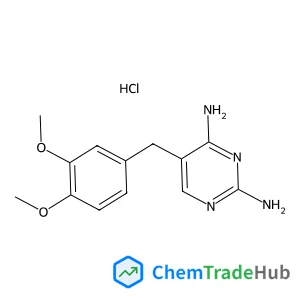
5-(3,4-Dimethoxybenzyl)-2,4-pyrimidinediamine hydrochloride (1:1)
CAS Number:
2507-23-5
Molecular Formula:
C13H17ClN4O2
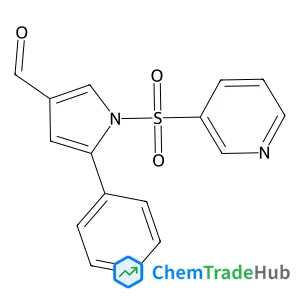
5-Phenyl-1-(pyridin-3-ylsulfonyl)-1H-pyrrole-3-carbaldehyde
CAS Number:
881676-90-0
Molecular Formula:
C16H12N2O3S
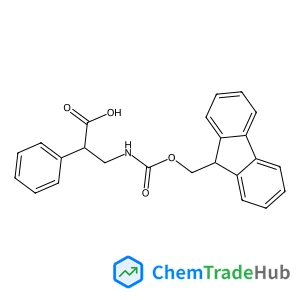
(S)-3-((((9H-Fluoren-9-yl)methoxy)carbonyl)amino)-2-phenylpropanoic acid
CAS Number:
1217663-60-9
Molecular Formula:
C24H21NO4
Recommended Suppliers








Disclaimer
This page provides academic journal information for reference and research purposes only. We are not affiliated with any journal publishers and do not handle publication submissions. For publication-related inquiries, please contact the respective journal publishers directly.
If you notice any inaccuracies in the information displayed, please contact us at support@chemtradehub.com. We will promptly review and address your concerns.