












Methanol oxidation on a Pt(111)–OH/O surface
Literature Information
Publication Date
2008-02-28
DOI
10.1039/B800243F
Impact Factor
3.676
Authors
Akiyoshi Kuzume, Yosuke Mochiduki, Tetsuyuki Tsuchida, Masatoki Ito
View Original
Abstract
The methanol oxidation on a hydroxylated Pt (Pt(111)–OH) surface has been investigated by means of infrared reflection absorption spectroscopy (IRAS) in ultra-high vacuum (UHV) and in acidic solution. The Pt(111)–OH surface in UHV was prepared by introducing water molecules on a Pt(111)–(2×2)–O surface and annealed at temperature higher than 160 K. Methanol was then, introduced to the Pt(111)–OH surface to show the dependence of the reaction intermediate on the annealing temperature. At an annealing temperature below 160 K, IR bands assignable to methanol overlayer were observed and no detectable intermediates, such as CO, formaldehyde and formate, were formed, suggesting that methanol molecules remain stable on Pt(111) surface without dissociation at this temperature region. At an annealing temperature above 160 K, on the other hand, CO and formate were observed. In addition, the oxidation of CO on Pt(111)–OH showed no sign of formate formation, indicating that formate is not derived from CO, but from a direct oxidation of methanol. Methanol oxidation was carried out in 0.1 mol dm−3 HClO4 solution on Pt(111) with a flow cell configuration and showed the formation of formate. These results indicate that the formate is the dominant non-CO intermediate both in UHV and in acidic solution, and the preadsorbed oxygen-containing species, in particular OH adsorbates, on Pt(111) surface plays a very important role in the formate formation process in methanol oxidation reaction.
Related Literature
Fabrication of oriented zeolite L monolayers employing luminescent perylenediimide-bridged silsesquioxane precursor as the covalent linker
Huanrong Li, Yige Wang, Wenjun Zhang, Binyuan Liu, Gion Calzaferri
2007-04-27
Communication
DOI: 10.1039/B702175E
Synthesis of α-keto esters by the rhodium-catalysed reaction of cyanoformate with arylboronic acids
Hiroshi Shimizu, Masahiro Murakami
2007-04-26
Communication
DOI: 10.1039/B704105E
Synthesis of allyl selenides by palladium-catalyzed decarboxylative coupling
Shelli R. Waetzig, Jon A. Tunge
2008-06-10
Communication
DOI: 10.1039/B806949B
Monovalent indium in a sulfur-rich coordination environment: synthesis, structure and reactivity of tris(2-mercapto-1-tert-butylimidazolyl)hydroborato indium, [TmBut]In
Kevin Yurkerwich, Daniela Buccella, Jonathan G. Melnick, Gerard Parkin
2008-06-02
Communication
DOI: 10.1039/B803037E
Nickel-catalyzed cross-coupling reactions of benzylic zinc reagents with aromatic bromides, chlorides and tosylates
Matthias A. Schade, Albrecht Metzger, Stephan Hug, Paul Knochel
2008-04-24
Communication
DOI: 10.1039/B803072C
A new molybdenum-oxide-based organic–inorganic hybrid framework templated by double-Keggin anions
Yang-Guang Li, Yong-Hui Wang, Xin-Long Wang, En-Bo Wang, Zhong-Min Su, Lin Xu
2007-04-11
Communication
DOI: 10.1039/B700511C
The selective trimerisation of isoprene with chromium N,N-bis(diarylphosphino)amine catalysts
Lucy E. Bowen, Manutsavin Charernsuk, Duncan F. Wass
2007-05-01
Communication
DOI: 10.1039/B702331F
Rhenium-based molecular rectangular boxes with large inner cavity and high shape selectivity towards benzene molecule
Rong-Tang Liao, Woei-Chyuan Yang, P. Thanasekaran, Chen-Chuan Tsai, M. Sathiyendiran, Yen-Hsiang Liu, T. Rajendran, Hsiu-Mei Lin, Tien-Wen Tseng, Kuang-Lieh Lu
2008-05-09
Communication
DOI: 10.1039/B802777C
You might also like
Compound Q&A
Are there alternatives to 1-(4-Chlorophenyl)-N-hydroxymethanimine (CAS: 3848-36-0) in synthesis?
When considering alternatives to 1-(4-Chlorophenyl)-N-hydroxymethanimine (CAS: 3...
3848-36-01-(4-Chlorophenyl)-N...
Compound Q&A
How should (1R,9S,10S,12S,14E,16S,19R,20R,21S,22R)-3,9,21-Trihydroxy-5,10,12,14,16,20,22-heptamethyl-23,24-dioxatetracyclo[17.3.1.1~6,9~.0~2,7~]tetracosa-2,5,7,14-tetraen-4-one (CAS: 183202-73-5) be stored?
This compound should be stored in a cool, dry place away from direct sunlight. I...
183202-73-5(1R,9S,10S,12S,14E,1...
Compound Q&A
How is 3-(4-Bromophenyl)-5-(2-fluorophenyl)-1,2,4-oxadiazole (CAS: 419553-16-5) typically synthesized?
3-(4-Bromophenyl)-5-(2-fluorophenyl)-1,2,4-oxadiazole is synthesized through a m...
419553-16-53-(4-Bromophenyl)-5-...
Compound Q&A
How is 5-Chloro-2-(4-chlorophenyl)-4-methyl-6-[3-(1-piperidinyl)propoxy]pyrimidine (CAS: 1639220-19-1) typically synthesized?
5-Chloro-2-(4-chlorophenyl)-4-methyl-6-[3-(1-piperidinyl)propoxy]pyrimidine (CAS...
1639220-19-15-Chloro-2-(4-chloro...
Compound Q&A
What industries use 2-Chloro-4-(difluoromethoxy)pyridine (CAS: 1206978-15-5)?
2-Chloro-4-(difluoromethoxy)pyridine is used in the pharmaceutical industry for ...
1206978-15-52-Chloro-4-(difluoro...
Compound Q&A
What regulatory guidelines apply to 3-Chloro-6-methylpyridazine (CAS: 1121-79-5)?
3-Chloro-6-methylpyridazine (CAS: 1121-79-5) is classified under the Globally Ha...
1121-79-53-Chloro-6-methylpyr...
Compound Q&A
Are there alternatives to Methyl 4,5-dimethyl-2-nitrobenzoate in synthesis?
Several alternatives can be used in the synthesis of Methyl 4,5-dimethyl-2-nitro...
90922-74-0Methyl 4,5-dimethyl-...
Compound Q&A
Are there alternatives to (2E,2'E)-3,3'-(1,4-Phenylene)bisacrylaldehyde in synthesis?
Alternatives to (2E,2'E)-3,3'-(1,4-Phenylene)bisacrylaldehyde include other acry...
63405-68-5(2E,2'E)-3,3'-(1,4-P...
Compound Q&A
What is 3-Amino-5-chloropyridin-2-ol hydrochloride (CAS: 1261906-29-9)?
3-Amino-5-chloropyridin-2-ol hydrochloride is an organic compound with the CAS n...
1261906-29-93-Amino-5-chloropyri...
Compound Q&A
What precautions should be taken when handling 6,7-Difluoro-2,3-dihydro-4H-chromen-4-one (CAS: 1092349-93-3)?
When handling 6,7-Difluoro-2,3-dihydro-4H-chromen-4-one, it is essential to wear...
1092349-93-36,7-Difluoro-2,3-dih...
Source Journal
Physical Chemistry Chemical Physics

CiteScore:
5.5
Self-citation Rate:
10.3%
Articles per Year:
3036
Physical Chemistry Chemical Physics (PCCP) is an international journal co-owned by 19 physical chemistry and physics societies from around the world. This journal publishes original, cutting-edge research in physical chemistry, chemical physics and biophysical chemistry. To be suitable for publication in PCCP, articles must include significant innovation and/or insight into physical chemistry; this is the most important criterion that reviewers and Editors will judge against when evaluating submissions. The journal has a broad scope and welcomes contributions spanning experiment, theory, computation and data science. Topical coverage includes spectroscopy, dynamics, kinetics, statistical mechanics, thermodynamics, electrochemistry, catalysis, surface science, quantum mechanics, quantum computing and machine learning. Interdisciplinary research areas such as polymers and soft matter, materials, nanoscience, energy, surfaces/interfaces, and biophysical chemistry are welcomed if they demonstrate significant innovation and/or insight into physical chemistry. Joined experimental/theoretical studies are particularly appreciated when complementary and based on up-to-date approaches.
Recommended Compounds
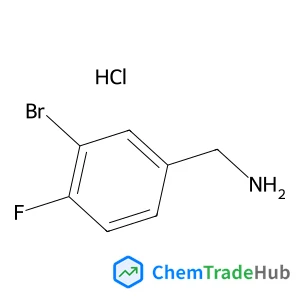
1-(3-Bromo-4-fluorophenyl)methanamine hydrochloride (1:1)
CAS Number:
202865-68-7
Molecular Formula:
C7H8BrClFN
Recommended Suppliers





Disclaimer
This page provides academic journal information for reference and research purposes only. We are not affiliated with any journal publishers and do not handle publication submissions. For publication-related inquiries, please contact the respective journal publishers directly.
If you notice any inaccuracies in the information displayed, please contact us at support@chemtradehub.com. We will promptly review and address your concerns.