













Binuclear Robson type Ni(ii) complex as a reactant supplementing our knowledge of the orientation effects in electrochemical kinetics
Literature Information
Publication Date
2008-03-03
DOI
10.1039/B713481A
Impact Factor
3.676
Authors
Alexander G. Krivenko, Alexander S. Kotkin, Galina V. Simbirtseva, Renat R. Nazmutdinov, Dmitry V. Glukhov, Nataliya V. Roznyatovskaya, Galina A. Tsirlina
View Original
Abstract
The multistep reduction of a binuclear Ni(II) Robson-type complex with a multidentate template-like organic ligand (formed from 4-tert-butyl-2,6-diformylphenol and 1,3-diaminopropane), Ni2L, is studied using the electron photoemission technique. The number of transferred electrons corresponding to a single reduction wave is found to be 8 per complex species. This value is attributed to both complete Ni(II) reduction (with Ni metal formation) and ligand reduction. Contributions of Ni(II) and ligand to acceptor orbital were estimated. Three initial subsequent steps correspond to electron transfer to mixed metal–ligand orbital with comparable contributions. For more deep reduction, ligand contribution predominates. The first single-electron step is evidenced to be rate-determining, with the rate constant of 0.03 cm2 s−1. The latter value is discussed in the framework of a semiquantitative analysis of the rate constants estimated in the framework of quantum-mechanical electron transfer theory for different orientations of Ni2L in the reaction layer. The analysis includes estimations of key kinetic parameters (electronic transmission coefficient, solvent- and intramolecular contributions to the total reorganization energy) which strongly rest on the results of quantum chemical modeling. The transmission coefficients at realistic electrode-reactant distances of the closest approach are below 0.001. This means that despite of the noticeable delocalization of Ni2L acceptor orbital, the electron transfer is diabatic. Predominating contribution to reorganization energy results from solvent and does not exceed 0.5 eV for any reactant orientation. The highest reactivity is predicted for a planar orientation located mostly outside the compact part of electric double layer. The Ni2L adsorption in planar and vertical orientations on mercury is addressed as well. The results give a clear explanation of the previously observed self-inhibition of “dark” reduction of Ni2L on mercury and independent data on the adsorption of these species. The discovered combination of various orientation effects is compared with effects observed for other reactants.
Related Literature
A low-shrinkage-stress and anti-bacterial adherent dental resin composite: physicochemical properties and biocompatibility
Shengcan Zhang, Fang Liu, Jingwei He
2024-01-08
Paper
DOI: 10.1039/D3TB01556D
2D nanomaterial-based 3D network hydrogels for anti-infection therapy
Mingji Jiang, Yingnan Zhu, Qingsi Li, Wenxin Liu, Alideertu Dong, Lei Zhang
2023-12-19
Review Article
DOI: 10.1039/D3TB02244G
Recent advances in stimuli-responsive tailored nanogels for cancer therapy; from bench to personalized treatment
Charan Singh, Shakir Saleem, Arun Kumar
2023-12-14
Review Article
DOI: 10.1039/D3TB02650G
Electrochemical and kinetic studies on the electrolytic extraction of Gd on Bi electrode in LiCl–KCl melt
Xin Kong, Yan Gong, Shanxin Yang, Yun Xue, Kai Zhu, Fuqiu Ma, Wei Liu
2023-12-19
Paper
DOI: 10.1039/D3NJ04927B
Solution-processed filamentous copper phthalocyanine films for enhanced NO2 gas sensing at room temperature
Ziyang Cui, Lu Wang, Yangyang Zhu, Yiqun Zhang, Li Juan Wang
2023-12-07
Paper
DOI: 10.1039/D3NJ05597C
Sensitive monitoring of NAD(P)H levels within cancer cells using mitochondria-targeted near-infrared cyanine dyes with optimized electron-withdrawing acceptors
Daniel R. Tucker, Micaela Geborkoff, Thomas Werner, Rudy L. Luck, Bhaskar Godugu
2023-12-08
Paper
DOI: 10.1039/D3TB02124F
Probing the effect of substituents and solvent on [Mn(R-sal-N-1,5,8,12)]BPh4: a systematic investigation of SCO properties
Sen-Yu Zhang, Hao-Ze Zhang, Hua-wei Zhou, Sheng-Ze Zhao, Yong-Hua Li, Chao Tang, Shi Wang
2023-12-20
Paper
DOI: 10.1039/D3NJ03277A
Heterogeneous electrocatalysts of MoS2/NiCoP for highly stable hydrogen evolution
Minmin Wang, Hao Xu, Li Zhou, Tongming Sun, Yanfeng Tang
2023-12-05
Paper
DOI: 10.1039/D3NJ03913G
Development of a novel Cd(ii) metal complex for solvent-sensitive detection of Zn(ii) and Mg(ii) with the formation of Cd(ii)–Zn(ii)/Cd(ii)–Mg(ii) complexes and their application in effective Schottky devices
Dibyendu Sathapat, Mainak Das, Manik Das, Uttam Kumar Das, Arijit Bag, Soumik Laha, Partha Pratim Ray, Bidhan Chandra Samanta, Tithi Maity
2023-12-20
Paper
DOI: 10.1039/D3NJ04660E
You might also like
Compound Q&A
How should waste containing (6-Bromo-2-naphthyl)oxy](dimethyl)(2-methyl-2-propanyl)silane be handled?
Waste containing (6-Bromo-2-naphthyl)oxy](dimethyl)(2-methyl-2-propanyl)silane (...
100751-65-3[(6-Bromo-2-naphthyl...
Compound Q&A
How is 7-Fluoro-4-isoquinolinecarboxylic acid (CAS: 1841081-40-0) typically synthesized?
7-Fluoro-4-isoquinolinecarboxylic acid can be synthesized via a multi-step proce...
1841081-40-07-Fluoro-4-isoquinol...
Compound Q&A
What are the physical and chemical properties of 2,3,5,6-Tetrabromothieno[3,2-b]thiophene (CAS: 124638-53-5)?
2,3,5,6-Tetrabromothieno[3,2-b]thiophene is a crystalline compound with a high m...
124638-53-52,3,5,6-Tetrabromoth...
Compound Q&A
Is 1-[4-(Benzylamino)-7,8-dihydro-5H-pyrano[4,3-d]pyrimidin-2-yl]-2-methyl-1H-indole-4-carboxamide (CAS: 1542705-92-9) safe?
1-[4-(Benzylamino)-7,8-dihydro-5H-pyrano[4,3-d]pyrimidin-2-yl]-2-methyl-1H-indol...
1542705-92-91-[4-(Benzylamino)-7...
Compound Q&A
What is the market or research trend for imidazo[5,1-d]-1,2,3,5-tetrazine-8-carboxylic acid, 3,4-dihydro-3-methyl-4-oxo- (CAS: 113942-30-6)?
The market for imidazo[5,1-d]-1,2,3,5-tetrazine-8-carboxylic acid, 3,4-dihydro-3...
113942-30-6Imidazo[5,1-d]-1,2,3...
Compound Q&A
What is 3-(Triisopropylsilyl)propiolaldehyde (CAS: 163271-80-5)?
3-(Triisopropylsilyl)propiolaldehyde is a synthetic organic compound with the CA...
163271-80-53-(Triisopropylsilyl...
Compound Q&A
What regulatory guidelines apply to 6-Nitro-2H-1,4-benzoxazin-3(4H)-one (CAS: 81721-87-1)?
6-Nitro-2H-1,4-benzoxazin-3(4H)-one (CAS: 81721-87-1) is subject to various regu...
81721-87-16-Nitro-2H-1,4-benzo...
Compound Q&A
How should waste containing (3-Fluorophenyl)(4-{[(2-methyl-2-propanyl)oxy]carbonyl}-1-piperazinyl)acetic acid (CAS: 885272-91-3) be handled?
Waste containing (3-Fluorophenyl)(4-{[(2-methyl-2-propanyl)oxy]carbonyl}-1-piper...
885272-91-3(3-Fluorophenyl)(4-{...
Compound Q&A
What are the physical and chemical properties of N,N'-4,4'-Biphenyldiyldiisonicotinamide (CAS: 55119-40-9)?
N,N'-4,4'-Biphenyldiyldiisonicotinamide is a white crystalline solid with a mole...
55119-40-9N,N'-4,4'-Biphenyldi...
Compound Q&A
What industries use 6-Bromo-8-fluoro-2-quinazolinol (CAS: 1036756-15-6)?
6-Bromo-8-fluoro-2-quinazolinol is primarily used in the pharmaceutical industry...
1036756-15-66-Bromo-8-fluoro-2-q...
Source Journal
Physical Chemistry Chemical Physics

CiteScore:
5.5
Self-citation Rate:
10.3%
Articles per Year:
3036
Physical Chemistry Chemical Physics (PCCP) is an international journal co-owned by 19 physical chemistry and physics societies from around the world. This journal publishes original, cutting-edge research in physical chemistry, chemical physics and biophysical chemistry. To be suitable for publication in PCCP, articles must include significant innovation and/or insight into physical chemistry; this is the most important criterion that reviewers and Editors will judge against when evaluating submissions. The journal has a broad scope and welcomes contributions spanning experiment, theory, computation and data science. Topical coverage includes spectroscopy, dynamics, kinetics, statistical mechanics, thermodynamics, electrochemistry, catalysis, surface science, quantum mechanics, quantum computing and machine learning. Interdisciplinary research areas such as polymers and soft matter, materials, nanoscience, energy, surfaces/interfaces, and biophysical chemistry are welcomed if they demonstrate significant innovation and/or insight into physical chemistry. Joined experimental/theoretical studies are particularly appreciated when complementary and based on up-to-date approaches.
Recommended Compounds
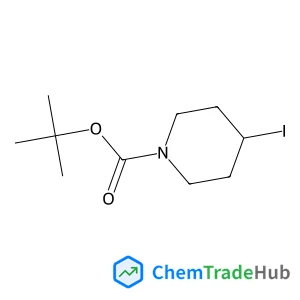
2-Methyl-2-propanyl 4-iodo-1-piperidinecarboxylate
CAS Number:
301673-14-3
Molecular Formula:
C10H18INO2

Recommended Suppliers






Disclaimer
This page provides academic journal information for reference and research purposes only. We are not affiliated with any journal publishers and do not handle publication submissions. For publication-related inquiries, please contact the respective journal publishers directly.
If you notice any inaccuracies in the information displayed, please contact us at support@chemtradehub.com. We will promptly review and address your concerns.