












![5-Bromoimidazo[1,2-a]pyridine structure](https://static.chemtradehub.com/structs/692/69214-09-1-d8e2.webp "5-Bromoimidazo[1,2-a]pyridine structure")
Probing the effect of substituents and solvent on [Mn(R-sal-N-1,5,8,12)]BPh4: a systematic investigation of SCO properties
Literature Information
Publication Date
2023-12-20
DOI
10.1039/D3NJ03277A
Impact Factor
3.591
Authors
Sen-Yu Zhang, Hao-Ze Zhang, Hua-wei Zhou, Sheng-Ze Zhao, Yong-Hua Li, Chao Tang, Shi Wang
View Original
Abstract
In manganese(III) complexes with BPh4− as the counter anion, the ligand field strength and non-covalent interactions between cations and anions of the flexible Schiff-base ligands (R-sal-N-1,5,8,12)2− are tuned by modifying the different substituents at the 5-position or 3,5-positions on the phenyl rings of the salicylaldehyde, and the magneto-structural properties of complexes 5-I-BPh4 (1), 5-tBu-BPh4 (2), 5-OCH3-BPh4 (3), naphth-BPh4 (4) and 5-Br-3-OCH3-BPh4 (5) are investigated. Complex 1 undergoes an incomplete SCO with two different Mn(III) sites, while complexes 2 and 3 remain in the HS state throughout the entire temperature range, suggesting the absence of magnetic state conversion. Under the effect of solvent, complex 4 shows different magnetic properties. Upon solvent loss, 4 displays a more complete SCO with a T1/2 of 140 K. In contrast to the complexes described above, complex 5 possesses two substituents, namely 5-Br and 3-OCH3. As a result, it exhibits an abrupt SCO effect due to the significantly stronger intermolecular cooperativity.
Related Literature
Construction of efficacious hepatoma-targeted nanomicelles non-covalently functionalized with galactose for drug delivery
Hao Yu, Yucheng Liu, Xinyu Hu, Junjian Li, Aming Xie, Jianfa Zhang
2014-09-03
Paper
DOI: 10.1039/C4PY01022A
Dual stimuli-responsive supramolecular hydrogel of bionanoparticles and hyaluronan
Limin Chen, Xia Zhao, Yuan Lin, Zhaohui Su
2014-08-07
Paper
DOI: 10.1039/C4PY00819G
RAFT-prepared α-difunctional poly(2-vinyl-4,4-dimethylazlactone)s and their derivatives: synthesis and effect of end-groups on aqueous inverse temperature solubility
Jing Yang Quek, Xuechao Liu, Peter J. Roth, Andrew B. Lowe
2014-09-15
Paper
DOI: 10.1039/C4PY01108B
Synthesis of highly refractive and highly fluorescent rigid cyanuryl polyimines with polycyclic aromatic hydrocarbon pendants
T. Kotaki, N. Nishimura, M. Ozawa, A. Fujimori, H. Muraoka, S. Ogawa, T. Korenaga, E. Suzuki, Y. Oishi, Y. Shibasaki
2015-12-23
Paper
DOI: 10.1039/C5PY01920F
Correction: Synergistic effects of hydrophobicity and gas barrier properties on the anticorrosion property of PMMA nanocomposite coatings embedded with graphene nanosheets
Kung-Chin Chang, Wei-Fu Ji, Mei-Chun Lai, You-Rong Hsiao, Chien-Hua Hsu, Tsao-Li Chuang, Yen Wei, Jui-Ming Yeh, Wei-Ren Liu
2014-10-21
Correction
DOI: 10.1039/C4PY90078B
“One-pot” synthesis and characterisation of novel P(3HB)–ethyl cellulose based graft composites through lipase catalysed esterification
Hafiz M. N. Iqbal, Godfrey Kyazze, Thierry Tron, Tajalli Keshavarz
2014-08-20
Paper
DOI: 10.1039/C4PY00857J
Efficient synthesis and photovoltaic properties of highly rigid perylene-embedded benzothiazolyls
Runfeng Chen, Chunhua Zheng, Cong Li, Huanhuan Li, Zhixiang Wang, Yuting Tang, Hongji Jiang, Zhanao Tan
2015-12-09
Communication
DOI: 10.1039/C5PY01791B
Degradable cross-linked polymer vesicles for the efficient delivery of platinum drugs
Q. Fu, J. Xu, K. Ladewig, T. M. A. Henderson, G. G. Qiao
2014-09-16
Paper
DOI: 10.1039/C4PY01123F
You might also like
Compound Q&A
How should waste containing (6-Bromo-2-naphthyl)oxy](dimethyl)(2-methyl-2-propanyl)silane be handled?
Waste containing (6-Bromo-2-naphthyl)oxy](dimethyl)(2-methyl-2-propanyl)silane (...
100751-65-3[(6-Bromo-2-naphthyl...
Compound Q&A
How is 7-Fluoro-4-isoquinolinecarboxylic acid (CAS: 1841081-40-0) typically synthesized?
7-Fluoro-4-isoquinolinecarboxylic acid can be synthesized via a multi-step proce...
1841081-40-07-Fluoro-4-isoquinol...
Compound Q&A
What are the physical and chemical properties of 2,3,5,6-Tetrabromothieno[3,2-b]thiophene (CAS: 124638-53-5)?
2,3,5,6-Tetrabromothieno[3,2-b]thiophene is a crystalline compound with a high m...
124638-53-52,3,5,6-Tetrabromoth...
Compound Q&A
Is 1-[4-(Benzylamino)-7,8-dihydro-5H-pyrano[4,3-d]pyrimidin-2-yl]-2-methyl-1H-indole-4-carboxamide (CAS: 1542705-92-9) safe?
1-[4-(Benzylamino)-7,8-dihydro-5H-pyrano[4,3-d]pyrimidin-2-yl]-2-methyl-1H-indol...
1542705-92-91-[4-(Benzylamino)-7...
Compound Q&A
What is the market or research trend for imidazo[5,1-d]-1,2,3,5-tetrazine-8-carboxylic acid, 3,4-dihydro-3-methyl-4-oxo- (CAS: 113942-30-6)?
The market for imidazo[5,1-d]-1,2,3,5-tetrazine-8-carboxylic acid, 3,4-dihydro-3...
113942-30-6Imidazo[5,1-d]-1,2,3...
Compound Q&A
What is 3-(Triisopropylsilyl)propiolaldehyde (CAS: 163271-80-5)?
3-(Triisopropylsilyl)propiolaldehyde is a synthetic organic compound with the CA...
163271-80-53-(Triisopropylsilyl...
Compound Q&A
What regulatory guidelines apply to 6-Nitro-2H-1,4-benzoxazin-3(4H)-one (CAS: 81721-87-1)?
6-Nitro-2H-1,4-benzoxazin-3(4H)-one (CAS: 81721-87-1) is subject to various regu...
81721-87-16-Nitro-2H-1,4-benzo...
Compound Q&A
How should waste containing (3-Fluorophenyl)(4-{[(2-methyl-2-propanyl)oxy]carbonyl}-1-piperazinyl)acetic acid (CAS: 885272-91-3) be handled?
Waste containing (3-Fluorophenyl)(4-{[(2-methyl-2-propanyl)oxy]carbonyl}-1-piper...
885272-91-3(3-Fluorophenyl)(4-{...
Compound Q&A
What are the physical and chemical properties of N,N'-4,4'-Biphenyldiyldiisonicotinamide (CAS: 55119-40-9)?
N,N'-4,4'-Biphenyldiyldiisonicotinamide is a white crystalline solid with a mole...
55119-40-9N,N'-4,4'-Biphenyldi...
Compound Q&A
What industries use 6-Bromo-8-fluoro-2-quinazolinol (CAS: 1036756-15-6)?
6-Bromo-8-fluoro-2-quinazolinol is primarily used in the pharmaceutical industry...
1036756-15-66-Bromo-8-fluoro-2-q...
Source Journal
New Journal of Chemistry

CiteScore:
5.3
Self-citation Rate:
3.7%
Articles per Year:
2153
NJC (New Journal of Chemistry) is a broad-based primary journal encompassing all branches of chemistry and its sub-disciplines. It contains full research articles, communications, perspectives and focus articles. This well-established journal, owned by the Centre National de la Recherche Scientifique (CNRS) of France, has been co-published with the Royal Society of Chemistry since January 1998. NJC is the forum for the publication of high-quality, original and significant work that opens new directions in chemistry or other scientific disciplines. In addition to having a significant chemical component, work published in NJC must demonstrate that it will have an impact on areas of research other than that of the reported work.
Recommended Compounds
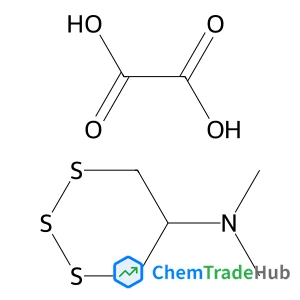
Oxalic acid compound with cyclohexylsulfamothioic O-acid (11)
CAS Number:
31895-22-4
Molecular Formula:
C7H13NO4S3
![2,9-Dichloro-5,12-dihydroquinolino[2,3-b]acridine-7,14-dione structure](https://static.chemtradehub.com/structs/308/3089-17-6-750b.webp "2,9-Dichloro-5,12-dihydroquinolino[2,3-b]acridine-7,14-dione structure")
2,9-Dichloro-5,12-dihydroquinolino[2,3-b]acridine-7,14-dione
CAS Number:
3089-17-6
Molecular Formula:
C20H10Cl2N2O2
Recommended Suppliers





Disclaimer
This page provides academic journal information for reference and research purposes only. We are not affiliated with any journal publishers and do not handle publication submissions. For publication-related inquiries, please contact the respective journal publishers directly.
If you notice any inaccuracies in the information displayed, please contact us at support@chemtradehub.com. We will promptly review and address your concerns.