


Direct 1H NMR spectroscopy of dissolved organic matter in natural waters
Literature Information
Publication Date
2007-12-17
DOI
10.1039/B713457F
Impact Factor
4.616
Authors
Buuan Lam, André J. Simpson
View Original
Abstract
Nuclear magnetic resonance (NMR) spectroscopy arguably provides the greatest insight into the overall chemical composition of dissolved organic matter (DOM). However, in a standard 5 mm NMR probe, a sample of sea water at natural abundance only contains ca. 500–600 ng of organic matter, distributed among the heterogeneous components of DOM. Additionally, the intensity of the water signal, which may be many orders of magnitude greater than the signals from DOM, makes the detection and analysis of DOM at natural abundance extremely demanding. Here, we demonstrate, that although challenging, the application of an improved water suppression technique allows NMR spectra of DOM to be obtained directly (i.e without pre-concentration) for major bodies of water, including rivers, lakes and the ocean. The technique described here provides a compositional overview of an intact sample, permitting researchers to investigate and assess the impact of concentration, isolation and extraction procedures that are employed routinely. Also the technique permits NMR to be performed on ‘precious’ samples for which traditional isolations are not possible, for example, water from ice cores and pore water, which are key in hydrology and for paleoclimatic reconstruction.
Recommended Journals

Organic Process Research & Development

Current Opinion in Colloid & Interface Science

Journal of Peptide Science

Chemistry Education Research and Practice

Nature Medicine

New Journal of Chemistry

Journal of Natural Medicines

Russian Journal of General Chemistry

Russian Journal of Applied Chemistry

Drug Discovery Today
Related Literature
Order and disorder around Cr3+ in chromium doped persistent luminescent AB2O4 spinels
Neelima Basavaraju, Kaustubh R. Priolkar, Didier Gourier, Aurélie Bessière, Bruno Viana
2015-03-24
Paper
DOI: 10.1039/C5CP01097G
A computational and conceptual DFT study on the mechanism of hydrogen activation by novel frustrated Lewis pairs
2015-03-13
Paper
DOI: 10.1039/C5CP00306G
Electrolyte ion adsorption and charge blocking effect at the hematite/aqueous solution interface: an electrochemical impedance study using multivariate data analysis
K. Shimizu, J. Nyström, P. Geladi, B. Lindholm-Sethson, J.-F. Boily
2015-03-31
Paper
DOI: 10.1039/C4CP05927A
XPS of guanidinium ionic liquids: a comparison of charge distribution in nitrogenous cations
Ana R. Santos, Rebecca K. Blundell, Peter Licence
2015-04-02
Paper
DOI: 10.1039/C5CP01069A
Infrared spectroscopy of N2 adsorption on size selected cobalt cluster cations in isolation
2015-03-18
Communication
DOI: 10.1039/C5CP00047E
Optical properties of irradiated imidazolium based room temperature ionic liquids: new microscopic insights into the radiation induced mutations
Apurav Guleria, Ajay K Singh, Soumyakanti Adhikari
2015-03-25
Paper
DOI: 10.1039/C4CP06070A
Phase transitions in free water nanoparticles. Theoretical modeling of [H2O]48 and [H2O]118
Aleš Vítek, René Kalus
2015-03-06
Paper
DOI: 10.1039/C4CP04909H
Formation of 5- and 6-methyl-1H-indene (C10H10) via the reactions of the para-tolyl radical (C6H4CH3) with allene (H2CCCH2) and methylacetylene (HCCCH3) under single collision conditions
Tao Yang, Dorian S. N. Parker, Beni B. Dangi, Ralf I. Kaiser, Alexander M. Mebel
2015-03-03
Paper
DOI: 10.1039/C4CP04288C
Nitric oxide activation by caa3 oxidoreductase from Thermus thermophilus
Takehiro Ohta, Tewfik Soulimane, Teizo Kitagawa, Constantinos Varotsis
2015-03-23
Paper
DOI: 10.1039/C5CP01013F
On the role of gold nanoparticles in the selective photooxidation of 2-propanol over Au/TiO2
Alexander Lüken, Martin Muhler, Jennifer Strunk
2015-03-13
Paper
DOI: 10.1039/C4CP05423G
You might also like
Compound Q&A
Is 2-(2-chloroacetamido)-3-phenylpropanoic acid (CAS: 7765-11-9) safe?
2-(2-Chloroacetamido)-3-phenylpropanoic acid (CAS: 7765-11-9) is generally consi...
7765-11-92-(2-chloroacetamido...
Compound Q&A
Is 2-(Benzyloxy)-5-bromobenzoic acid (CAS: 62176-31-2) safe?
2-(Benzyloxy)-5-bromobenzoic acid can be handled safely if appropriate precautio...
62176-31-22-(Benzyloxy)-5-brom...
Compound Q&A
What is (4-Methyl-1,2,5-oxadiazol-3-yl)methanamine hydrochloride (CAS: 1159825-48-5)?
(4-Methyl-1,2,5-oxadiazol-3-yl)methanamine hydrochloride is a chemical compound ...
1159825-48-5(4-Methyl-1,2,5-oxad...
Compound Q&A
What is 2-(5-Hexylthiophen-2-yl)-4,4,5,5-tetramethyl-1,3,2-dioxaborolane (CAS: 917985-54-7)?
2-(5-Hexylthiophen-2-yl)-4,4,5,5-tetramethyl-1,3,2-dioxaborolane (CAS: 917985-54...
917985-54-72-(5-Hexylthiophen-2...
Compound Q&A
Are there alternatives to 4-(8-Methyl-9H-1,3-dioxolo[4,5-h][2,3]benzodiazepin-5-yl)benzenamine (CAS: 102771-26-6) in synthesis?
While 4-(8-Methyl-9H-1,3-dioxolo[4,5-h][2,3]benzodiazepin-5-yl)benzenamine (CAS:...
102771-26-64-(8-Methyl-9H-1,3-d...
Compound Q&A
What is the market or research trend for tert-butyl 3-hydroxy-4,5,7,8-tetrahydro-2H-pyrazolo[3,4-d]azepine-6-carboxylate (CAS: 851376-80-2)?
The market for tert-butyl 3-hydroxy-4,5,7,8-tetrahydro-2H-pyrazolo[3,4-d]azepine...
851376-80-2tert-butyl 3-hydroxy...
Compound Q&A
How should waste containing 3,5-Diamino-1H-pyrazole-4-carbonitrile (CAS: 6844-58-2) be handled?
Waste containing 3,5-Diamino-1H-pyrazole-4-carbonitrile (CAS: 6844-58-2) should ...
6844-58-23,5-Diamino-1H-pyraz...
Compound Q&A
How is (6-Fluoro-3-pyridinyl)boronic acid (CAS: 351019-18-6) typically synthesized?
(6-Fluoro-3-pyridinyl)boronic acid can be synthesized through the reaction of 6-...
351019-18-6(6-Fluoro-3-pyridiny...
Compound Q&A
What industries use Dibenzyl carbonimidoylbiscarbamate (CAS: 10065-79-9)?
Dibenzyl carbonimidoylbiscarbamate (CAS: 10065-79-9) finds applications in vario...
10065-79-9Dibenzyl carbonimido...
Compound Q&A
What is the market or research trend for (beta,beta,2,3,4,5,6-~2~H_7_)Phenylalanine (CAS: 74228-83-4)?
The market for (beta,beta,2,3,4,5,6-~2~H_7_)Phenylalanine (CAS: 74228-83-4) is g...
74228-83-4(beta,beta,2,3,4,5,6...
Source Journal
Analyst

CiteScore:
7.8
Self-citation Rate:
5.6%
Articles per Year:
653
Analyst publishes analytical and bioanalytical research that reports premier fundamental discoveries and inventions, and the applications of those discoveries, unconfined by traditional discipline barriers.
Recommended Compounds
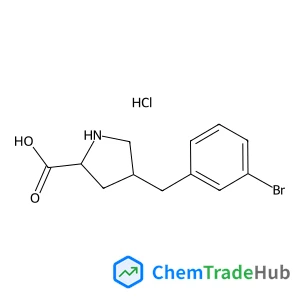
(2S,4R)-4-(3-Bromobenzyl)pyrrolidine-2-carboxylic acid hydrochloride
CAS Number:
1049734-10-2
Molecular Formula:
C12H15BrClNO2
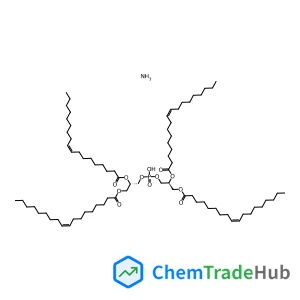
![(1S)-1,5-Anhydro-2-O-alpha-L-arabinopyranosyl-1-[5-hydroxy-7-({6-O-[3-(4-hydroxy-3-methoxyphenyl)propanoyl]-beta-D-glucopyranosyl}oxy)-2-(4-hydroxyphenyl)-4-oxo-4H-chromen-6-yl]-D-glucitol structure](https://static.chemtradehub.com/structs/225/2252345-81-4-bcff.webp "(1S)-1,5-Anhydro-2-O-alpha-L-arabinopyranosyl-1-[5-hydroxy-7-({6-O-[3-(4-hydroxy-3-methoxyphenyl)propanoyl]-beta-D-glucopyranosyl}oxy)-2-(4-hydroxyphenyl)-4-oxo-4H-chromen-6-yl]-D-glucitol structure")
Recommended Suppliers






Disclaimer
This page provides academic journal information for reference and research purposes only. We are not affiliated with any journal publishers and do not handle publication submissions. For publication-related inquiries, please contact the respective journal publishers directly.
If you notice any inaccuracies in the information displayed, please contact us at support@chemtradehub.com. We will promptly review and address your concerns.