












Changes in interfacial properties of α-synuclein preceding its aggregation
Literature Information
Publication Date
2007-10-15
DOI
10.1039/B712812F
Impact Factor
4.616
Authors
Emil Paleček, Veronika Ostatná, Michal Masařík, Carlos W. Bertoncini, Thomas M. Jovin
View Original
Abstract
Parkinson's disease (PD) is associated with the formation and deposition of amyloid fibrils of the protein α-synuclein (AS). It has been proposed that oligomeric intermediates on the pathway to fibrilization rather than the fibrils themselves are the pathogenic agents of PD, but efficient methods for their detection are lacking. We have studied the interfacial properties of wild-type AS and the course of its aggregation in vitro using electrochemical analysis and dynamic light scattering. The oxidation signals of tyrosine residues of AS at carbon electrodes and the ability of fibrils to adsorb and catalyze hydrogen evolution at hanging mercury drop electrodes (HMDEs) decreased during incubation. HMDEs were particularly sensitive to pre-aggregation changes in AS. Already after 1 h of a standard aggregation assayin vitro (stirring at 37 °C), the electrocatalytic peak H increased greatly and shifted to less negative potentials. Between 3 and 9 h of incubation, an interval during which dynamic light scattering indicated AS oligomerization, peak H diminished and shifted to more negative potentials, and AS adsorbability decreased. We tentatively attribute the very early changes in the interfacial behavior of the protein after the first few hours of incubation to protein destabilization with disruption of long-range interactions. The subsequent changes can be related to the onset of oligomerization. Our results demonstrate the utility of electrochemical methods as new and simple tools for the investigation of amyloid formation.
Related Literature
Post-polymerization ‘click’ end-capping of polyglyoxylate self-immolative polymers
Peter G. Maschmeyer, Xiaoli Liang, Allison Hung, Oksana Ahmadzai, Annmaree L. Kenny, Yuan C. Luong, Timothy N. Forder, Haoxiang Zeng
2021-10-26
Paper
DOI: 10.1039/D1PY01169C
Isolated-alkene-linked porous organic polymers (BIT-POPs): facile synthesis via ROMP and distinguishing overlapping signals in solid-state 13C NMR
Zhi-Hao Zhang, Shan-Qing Peng, Shumeng Chi, Hanyuan Chen, Lei Fan, Yan Liu, Xiaohua Ma, Mu-Hua Huang
2021-11-03
Paper
DOI: 10.1039/D1PY01120K
The role of the electrostatic potential, electric field and electric field gradient on the acidity of AFI and CHA zeotypes
Dewi W. Lewis
1999-12-22
Paper
DOI: 10.1039/A907464C
Efficient calculation of femtosecond time-resolved photoelectron spectra: method and application to the ionization of pyrazine
2001-03-14
Paper
DOI: 10.1039/B100168J
Influence of the distance between ionizable groups on the protonation behavior of various hexaamines
Paper
DOI: 10.1039/A907397C
The gas-phase reaction of silylene with acetaldehyde Part 1. Direct rate studies, isotope effects, RRKM modelling and ab initio studies of the potential energy surface
R. Becerra, J. P. Cannady, R. Walsh
2001-02-14
Paper
DOI: 10.1039/B009600H
Organic contribution to sub-micron aerosol evolution over a boreal forest—a case study
Paper
DOI: 10.1039/A904441H
Precision synthesis of a fluorene-thiophene alternating copolymer by means of the Suzuki–Miyaura catalyst-transfer condensation polymerization: the importance of the position of an alkyl substituent on thiophene of the biaryl monomer to suppress disproportionation
Yu Tokita, Masaru Katoh, Kentaro Kosaka, Yoshihiro Ohta, Tsutomu Yokozawa
2021-11-19
Paper
DOI: 10.1039/D1PY01184G
You might also like
Compound Q&A
How should waste containing (6-Bromo-2-naphthyl)oxy](dimethyl)(2-methyl-2-propanyl)silane be handled?
Waste containing (6-Bromo-2-naphthyl)oxy](dimethyl)(2-methyl-2-propanyl)silane (...
100751-65-3[(6-Bromo-2-naphthyl...
Compound Q&A
How is 7-Fluoro-4-isoquinolinecarboxylic acid (CAS: 1841081-40-0) typically synthesized?
7-Fluoro-4-isoquinolinecarboxylic acid can be synthesized via a multi-step proce...
1841081-40-07-Fluoro-4-isoquinol...
Compound Q&A
What are the physical and chemical properties of 2,3,5,6-Tetrabromothieno[3,2-b]thiophene (CAS: 124638-53-5)?
2,3,5,6-Tetrabromothieno[3,2-b]thiophene is a crystalline compound with a high m...
124638-53-52,3,5,6-Tetrabromoth...
Compound Q&A
Is 1-[4-(Benzylamino)-7,8-dihydro-5H-pyrano[4,3-d]pyrimidin-2-yl]-2-methyl-1H-indole-4-carboxamide (CAS: 1542705-92-9) safe?
1-[4-(Benzylamino)-7,8-dihydro-5H-pyrano[4,3-d]pyrimidin-2-yl]-2-methyl-1H-indol...
1542705-92-91-[4-(Benzylamino)-7...
Compound Q&A
What is the market or research trend for imidazo[5,1-d]-1,2,3,5-tetrazine-8-carboxylic acid, 3,4-dihydro-3-methyl-4-oxo- (CAS: 113942-30-6)?
The market for imidazo[5,1-d]-1,2,3,5-tetrazine-8-carboxylic acid, 3,4-dihydro-3...
113942-30-6Imidazo[5,1-d]-1,2,3...
Compound Q&A
What is 3-(Triisopropylsilyl)propiolaldehyde (CAS: 163271-80-5)?
3-(Triisopropylsilyl)propiolaldehyde is a synthetic organic compound with the CA...
163271-80-53-(Triisopropylsilyl...
Compound Q&A
What regulatory guidelines apply to 6-Nitro-2H-1,4-benzoxazin-3(4H)-one (CAS: 81721-87-1)?
6-Nitro-2H-1,4-benzoxazin-3(4H)-one (CAS: 81721-87-1) is subject to various regu...
81721-87-16-Nitro-2H-1,4-benzo...
Compound Q&A
How should waste containing (3-Fluorophenyl)(4-{[(2-methyl-2-propanyl)oxy]carbonyl}-1-piperazinyl)acetic acid (CAS: 885272-91-3) be handled?
Waste containing (3-Fluorophenyl)(4-{[(2-methyl-2-propanyl)oxy]carbonyl}-1-piper...
885272-91-3(3-Fluorophenyl)(4-{...
Compound Q&A
What are the physical and chemical properties of N,N'-4,4'-Biphenyldiyldiisonicotinamide (CAS: 55119-40-9)?
N,N'-4,4'-Biphenyldiyldiisonicotinamide is a white crystalline solid with a mole...
55119-40-9N,N'-4,4'-Biphenyldi...
Compound Q&A
What industries use 6-Bromo-8-fluoro-2-quinazolinol (CAS: 1036756-15-6)?
6-Bromo-8-fluoro-2-quinazolinol is primarily used in the pharmaceutical industry...
1036756-15-66-Bromo-8-fluoro-2-q...
Source Journal
Analyst

CiteScore:
7.8
Self-citation Rate:
5.6%
Articles per Year:
653
Analyst publishes analytical and bioanalytical research that reports premier fundamental discoveries and inventions, and the applications of those discoveries, unconfined by traditional discipline barriers.
Recommended Compounds
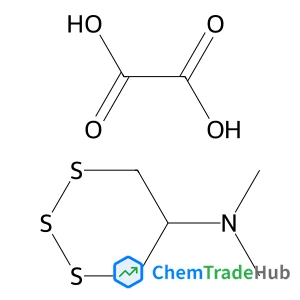
Oxalic acid compound with cyclohexylsulfamothioic O-acid (11)
CAS Number:
31895-22-4
Molecular Formula:
C7H13NO4S3
![5-Bromoimidazo[1,2-a]pyridine structure](https://static.chemtradehub.com/structs/692/69214-09-1-d8e2.webp "5-Bromoimidazo[1,2-a]pyridine structure")
Recommended Suppliers





Disclaimer
This page provides academic journal information for reference and research purposes only. We are not affiliated with any journal publishers and do not handle publication submissions. For publication-related inquiries, please contact the respective journal publishers directly.
If you notice any inaccuracies in the information displayed, please contact us at support@chemtradehub.com. We will promptly review and address your concerns.