












Polymorph selection in 2D crystals by phase transition blocking
Literature Information
Publication Date
2009-08-14
DOI
10.1039/B911056A
Impact Factor
6.222
Authors
Leo Merz, Tobias Bauert, Manfred Parschau, Georg Koller, Jay S. Siegel
View Original
Abstract
A phase transition between two-dimensional polymorphs of the buckybowl corannulene on a Cu(111) surface can be suppressed by spatial confinement, allowing stabilisation of the metastable polymorph over the stable one.
Related Literature
Design of one-to-one recognition triple Au nanoparticlesDNA probe and its application in the electrochemical DNAbiosensor
Hua Zhong, Xi Lei, Xu Hun, Shusheng Zhang
2009-10-16
Communication
DOI: 10.1039/B913922B
Synthesis of oligoribonucleotides with phosphonate-modified linkages
Ondřej Páv, Ivana Košiová, Ivan Barvík, Radek Pohl, Miloš Buděšínský, Ivan Rosenberg
2011-06-15
Paper
DOI: 10.1039/C1OB05488K
Abiesatrines A–J: anti-inflammatory and antitumor triterpenoids from Abies georgei Orr
Su-Mei Li, Liang Wu, Yong-Li Li, Lin Feng, Yun-Heng Shen, Jun-Mian Tian, Jian Tang, Ning Wang, Yonghong Liu, Wei-Dong Zhang
2010-04-07
Paper
DOI: 10.1039/C001885F
Syntheses of ylidenbutenolide-modified derivatives of peridinin and their stereochemical and spectral characteristics
Takayuki Kajikawa, Kazuyoshi Aoki, Takashi Iwashita, Dariusz M. Niedzwiedzki, Harry A. Frank, Shigeo Katsumura
2010-04-23
Communication
DOI: 10.1039/C002006K
Combination of chiroptical, absorption and fluorescence spectroscopic methods reveals multiple, hydrophobicity-driven human serum albumin binding of the antimalarial atovaquone and related hydroxynaphthoquinone compounds
Ferenc Zsila, Ilona Fitos
2010-08-24
Paper
DOI: 10.1039/C0OB00124D
Site-specific incorporation of perylene into an N-terminally modified light-harvesting complex II‡
Kalina Peneva, Kristina Gundlach, Andreas Herrmann, Harald Paulsen, Klaus Müllen
2010-09-06
Communication
DOI: 10.1039/C0OB00492H
Towards understanding secondary structure transitions: phosphorylation and metal coordination in model peptides
Malgorzata Broncel, Sara C. Wagner, Kerstin Paul, Christian P. R. Hackenberger, Beate Koksch
2010-03-29
Paper
DOI: 10.1039/C001458C
Copper(i)-catalyzed cycloaddition of silver acetylides and azides: Incorporation of volatile acetylenes into the triazole core
Ilaria Proietti Silvestri, Fikre Andemarian, George N. Khairallah, Su Wan Yap, Tim Quach, Sammi Tsegay, Craig M. Williams, Richard A. J. O'Hair, Paul S. Donnelly, Spencer J. Williams
2011-06-03
Paper
DOI: 10.1039/C1OB05360D
Phosphatediesters cleavage mediated by Ce(iv) complexes self-assembled on gold nanoparticles
Renato Bonomi, Paolo Scrimin, Fabrizio Mancin
2010-03-29
Paper
DOI: 10.1039/B926916A
Molecular recognition of cationic phenothiazinium and phenoxazinium dyes with π-extended 2′-deoxyadenosine nucleotides
Karina Mondragón-Vásquez, Hugo Morales-Rojas
2009-10-06
Communication
DOI: 10.1039/B913315A
You might also like
Compound Q&A
What industries use (1R,3S)-1,3-Cyclopentanediol (CAS: 16326-97-9)?
(1R,3S)-1,3-Cyclopentanediol finds applications in various industries. In the ph...
16326-97-9(1R,3S)-1,3-Cyclopen...
Compound Q&A
What precautions should be taken when handling N'-[4-(Dimethylamino)phenyl]-N,N-dimethyl-1,4-benzenediamine (CAS: 637-31-0)?
When handling N'-[4-(Dimethylamino)phenyl]-N,N-dimethyl-1,4-benzenediamine, it i...
637-31-0N'-[4-(Dimethylamino...
Compound Q&A
Are there alternatives to 5-(2,4-Difluorophenyl)-2-methoxypyrimidine (CAS: 1352318-16-1) in synthesis?
There are several alternatives to 5-(2,4-Difluorophenyl)-2-methoxypyrimidine in ...
1352318-16-15-(2,4-Difluoropheny...
Compound Q&A
What regulatory guidelines apply to 1-(3-Methoxyphenoxy)propan-2-ol (CAS: 382141-68-6)?
1-(3-Methoxyphenoxy)propan-2-ol (CAS: 382141-68-6) must comply with the Globally...
382141-68-61-(3-Methoxyphenoxy)...
Compound Q&A
Is Tetrodotoxin Citrate (CAS: 18660-81-6) safe?
Tetrodotoxin Citrate is extremely dangerous and should be handled with extreme c...
18660-81-6Tetrodotoxin Citrate
Compound Q&A
What are the main uses of 2-Methyl-2-propanyl [(1R,3S)-3-hydroxycyclopentyl]carbamate (CAS: 225641-84-9)?
2-Methyl-2-propanyl [(1R,3S)-3-hydroxycyclopentyl]carbamate (CAS: 225641-84-9) i...
225641-84-92-Methyl-2-propanyl ...
Compound Q&A
How should waste containing 4-(2-Hydroxyhexafluoroisopropyl)Benzoic Acid (CAS: 16261-80-6) be handled?
Waste containing 4-(2-Hydroxyhexafluoroisopropyl)Benzoic Acid (CAS: 16261-80-6) ...
16261-80-64-(2-Hydroxyhexafluo...
Compound Q&A
How is 2-Methyl-2-proanyl {(2S)-1-[(benzyloxy)amino]-3-hydroxy-3-methyl-1-oxo-2-butanyl}carbamate (CAS: 102507-19-7) typically synthesized?
2-Methyl-2-proanyl {(2S)-1-[(benzyloxy)amino]-3-hydroxy-3-methyl-1-oxo-2-butanyl...
102507-19-72-Methyl-2-propanyl ...
Compound Q&A
What is Benzeneethanamine, α-ethyl-, hydrochloride (1:1) (CAS: 20735-15-3)?
Benzeneethanamine, α-ethyl-, hydrochloride (1:1) is an organic compound with the...
20735-15-3Benzeneethanamine, α...
Compound Q&A
Are there alternatives to 3-{(E)-[4-(Dimethylamino)phenyl]diazenyl}benzoic acid (CAS: 20691-84-3) in synthesis?
In the synthesis of compounds similar to 3-{(E)-[4-(Dimethylamino)phenyl]diazeny...
20691-84-33-{(E)-[4-(Dimethyla...
Source Journal
Chemical Communications

CiteScore:
8.6
Self-citation Rate:
4.7%
Articles per Year:
2458
ChemComm publishes urgent research which is of outstanding significance and interest to experts in the field, while also appealing to the journal’s broad chemistry readership. Our communication format is ideally suited to short, urgent studies that are of such importance that they require accelerated publication. Our scope covers all topics in chemistry, and research at the interface of chemistry and other disciplines (such as materials science, nanoscience, physics, engineering and biology) where there is a significant novelty in the chemistry aspects. Major topic areas covered include: Analytical Chemistry Catalysis Chemical Biology and medicinal chemistry Computational Chemistry and Machine Learning Energy and sustainable chemistry Environmental Chemistry Green Chemistry Inorganic Chemistry Materials Chemistry Nanoscience Organic Chemistry Physical Chemistry Polymer Chemistry Supramolecular Chemistry
Recommended Compounds
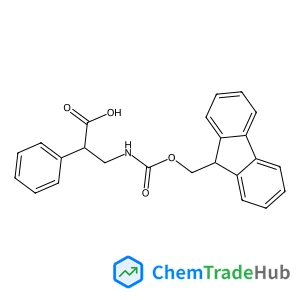
(S)-3-((((9H-Fluoren-9-yl)methoxy)carbonyl)amino)-2-phenylpropanoic acid
CAS Number:
1217663-60-9
Molecular Formula:
C24H21NO4
![(2S)-2-{[(9H-Fluoren-9-ylmethoxy)carbonyl]amino}-4-(methylselanyl)butanoic acid structure](https://static.chemtradehub.com/structs/121/1217852-49-7-f252.webp "(2S)-2-{[(9H-Fluoren-9-ylmethoxy)carbonyl]amino}-4-(methylselanyl)butanoic acid structure")
(2S)-2-{[(9H-Fluoren-9-ylmethoxy)carbonyl]amino}-4-(methylselanyl)butanoic acid
CAS Number:
1217852-49-7
Molecular Formula:
C20H21NO4Se
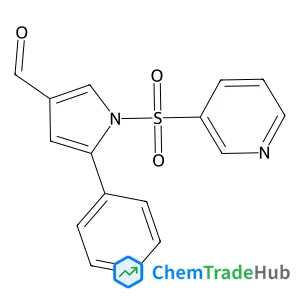
5-Phenyl-1-(pyridin-3-ylsulfonyl)-1H-pyrrole-3-carbaldehyde
CAS Number:
881676-90-0
Molecular Formula:
C16H12N2O3S
Recommended Suppliers





Disclaimer
This page provides academic journal information for reference and research purposes only. We are not affiliated with any journal publishers and do not handle publication submissions. For publication-related inquiries, please contact the respective journal publishers directly.
If you notice any inaccuracies in the information displayed, please contact us at support@chemtradehub.com. We will promptly review and address your concerns.