


Dual reactivity of a photochemically-generated cyclic enyne–allene
Literature Information
Publication Date
2009-08-14
DOI
10.1039/B911871C
Impact Factor
6.222
Authors
Alexander V. Kuzmin, Vladimir V. Popik
View Original
Abstract
A reactive ten-membered ring enyne–allene (τ25 °C = 5–6 min) is efficiently generated (Φ300 nm = 0.57) by UV irradiation of a thermally stable precursor in which a triple bond is masked as a cyclopropenone moiety.
Recommended Journals

Journal of Medicinal Chemistry

Proceedings of the National Academy of Sciences of the United States of America

European Journal of Wood and Wood Products

Journal of Organometallic Chemistry

Organic Preparations and Procedures International

Journal of Catalysis

Science

Pure and Applied Chemistry

Russian Chemical Reviews

Israel Journal of Chemistry
Related Literature
Electrophoretic mobility measurement by laser Doppler velocimetry and capillary electrophoresis of micrometric fluorescent polystyrene beads
Bo Xiong, Antoine Pallandre, Isabelle le Potier, Pierre Audebert, Elias Fattal, Nicolas Tsapis, Gillian Barratt, Myriam Taverna
2011-11-30
Paper
DOI: 10.1039/C1AY05598D
Optimized conditions for liquid-phase microextraction based on solidification of floating organic droplet for extraction of nitrotoluene compounds by using response surface methodology
Laleh Adlnasab, Homeira Ebrahimzadeh, Yadollah Yamini
2011-10-31
Paper
DOI: 10.1039/C1AY05449J
A fluorescence nanoprobe for detecting the effect of different oxygen and nutrient conditions on breast cancer cells’ migration and invasion
Ping Zhou, Bo Liu, Mingming Luan, Na Li, Bo Tang
2021-05-25
Communication
DOI: 10.1039/D1BM00619C
Encapsulated Sb and Sb2O3 particles in waste-tire derived carbon as stable composite anodes for sodium-ion batteries
Manikandan Palanisamy, Vilas G. Pol, Kia Jackson, Charl J. Jafta, Craig A. Bridges, Sheng Dai, Alan M. Levine, Richard J. Lee
2020-05-04
Paper
DOI: 10.1039/D0SE00408A
Plasma-reduced Co(OH)2 with activated hydrogen evolution and overall water splitting performance
Junxiang Jiang, Yuanhao Tang, Lin Dong, Wenhao Zhang, Haobin Wu
2020-03-30
Communication
DOI: 10.1039/D0SE00381F
Recent progress in self-supported two-dimensional transition metal oxides and (oxy)hydroxides as oxygen evolution reaction catalysts
Jie Zhang, Conghui Si, Tianyi Kou, Jianfeng Wang, Zhonghua Zhang
2020-03-23
Review Article
DOI: 10.1039/C9SE01312A
You might also like
Compound Q&A
What industries use (1R,3S)-1,3-Cyclopentanediol (CAS: 16326-97-9)?
(1R,3S)-1,3-Cyclopentanediol finds applications in various industries. In the ph...
16326-97-9(1R,3S)-1,3-Cyclopen...
Compound Q&A
What precautions should be taken when handling N'-[4-(Dimethylamino)phenyl]-N,N-dimethyl-1,4-benzenediamine (CAS: 637-31-0)?
When handling N'-[4-(Dimethylamino)phenyl]-N,N-dimethyl-1,4-benzenediamine, it i...
637-31-0N'-[4-(Dimethylamino...
Compound Q&A
Are there alternatives to 5-(2,4-Difluorophenyl)-2-methoxypyrimidine (CAS: 1352318-16-1) in synthesis?
There are several alternatives to 5-(2,4-Difluorophenyl)-2-methoxypyrimidine in ...
1352318-16-15-(2,4-Difluoropheny...
Compound Q&A
What regulatory guidelines apply to 1-(3-Methoxyphenoxy)propan-2-ol (CAS: 382141-68-6)?
1-(3-Methoxyphenoxy)propan-2-ol (CAS: 382141-68-6) must comply with the Globally...
382141-68-61-(3-Methoxyphenoxy)...
Compound Q&A
Is Tetrodotoxin Citrate (CAS: 18660-81-6) safe?
Tetrodotoxin Citrate is extremely dangerous and should be handled with extreme c...
18660-81-6Tetrodotoxin Citrate
Compound Q&A
What are the main uses of 2-Methyl-2-propanyl [(1R,3S)-3-hydroxycyclopentyl]carbamate (CAS: 225641-84-9)?
2-Methyl-2-propanyl [(1R,3S)-3-hydroxycyclopentyl]carbamate (CAS: 225641-84-9) i...
225641-84-92-Methyl-2-propanyl ...
Compound Q&A
How should waste containing 4-(2-Hydroxyhexafluoroisopropyl)Benzoic Acid (CAS: 16261-80-6) be handled?
Waste containing 4-(2-Hydroxyhexafluoroisopropyl)Benzoic Acid (CAS: 16261-80-6) ...
16261-80-64-(2-Hydroxyhexafluo...
Compound Q&A
How is 2-Methyl-2-proanyl {(2S)-1-[(benzyloxy)amino]-3-hydroxy-3-methyl-1-oxo-2-butanyl}carbamate (CAS: 102507-19-7) typically synthesized?
2-Methyl-2-proanyl {(2S)-1-[(benzyloxy)amino]-3-hydroxy-3-methyl-1-oxo-2-butanyl...
102507-19-72-Methyl-2-propanyl ...
Compound Q&A
What is Benzeneethanamine, α-ethyl-, hydrochloride (1:1) (CAS: 20735-15-3)?
Benzeneethanamine, α-ethyl-, hydrochloride (1:1) is an organic compound with the...
20735-15-3Benzeneethanamine, α...
Compound Q&A
Are there alternatives to 3-{(E)-[4-(Dimethylamino)phenyl]diazenyl}benzoic acid (CAS: 20691-84-3) in synthesis?
In the synthesis of compounds similar to 3-{(E)-[4-(Dimethylamino)phenyl]diazeny...
20691-84-33-{(E)-[4-(Dimethyla...
Source Journal
Chemical Communications

CiteScore:
8.6
Self-citation Rate:
4.7%
Articles per Year:
2458
ChemComm publishes urgent research which is of outstanding significance and interest to experts in the field, while also appealing to the journal’s broad chemistry readership. Our communication format is ideally suited to short, urgent studies that are of such importance that they require accelerated publication. Our scope covers all topics in chemistry, and research at the interface of chemistry and other disciplines (such as materials science, nanoscience, physics, engineering and biology) where there is a significant novelty in the chemistry aspects. Major topic areas covered include: Analytical Chemistry Catalysis Chemical Biology and medicinal chemistry Computational Chemistry and Machine Learning Energy and sustainable chemistry Environmental Chemistry Green Chemistry Inorganic Chemistry Materials Chemistry Nanoscience Organic Chemistry Physical Chemistry Polymer Chemistry Supramolecular Chemistry
Recommended Compounds

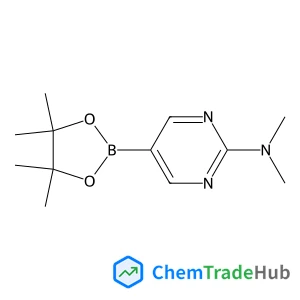
N,N-Dimethyl-5-(4,4,5,5-tetramethyl-1,3,2-dioxaborolan-2-yl)-2-pyrimidinamine
CAS Number:
1032759-30-0
Molecular Formula:
C12H20BN3O2
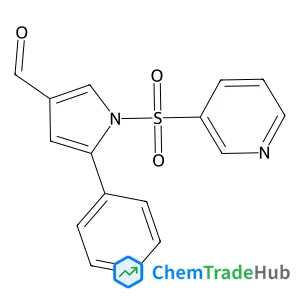
5-Phenyl-1-(pyridin-3-ylsulfonyl)-1H-pyrrole-3-carbaldehyde
CAS Number:
881676-90-0
Molecular Formula:
C16H12N2O3S
Recommended Suppliers




Disclaimer
This page provides academic journal information for reference and research purposes only. We are not affiliated with any journal publishers and do not handle publication submissions. For publication-related inquiries, please contact the respective journal publishers directly.
If you notice any inaccuracies in the information displayed, please contact us at support@chemtradehub.com. We will promptly review and address your concerns.