












Catalytic stereoselective benzylic C–H functionalizations by oxidative C–H activation and organocatalysis
Literature Information
Publication Date
2009-08-18
DOI
10.1039/B910185C
Impact Factor
6.222
Authors
Fides Benfatti, Montse Guiteras Capdevila, Luca Zoli, Elena Benedetto, Pier Giorgio Cozzi
View Original
Abstract
An organocatalytic stereoselective α-alkylation reaction of aldehydes based on C–H activation is presented.
Related Literature
Long wavelength red fluorescent dyes from 3,5-diiodo-BODIPYs
Lijuan Jiao, Changjiang Yu, Timsy Uppal, Mingming Liu, Yan Li, Yunyou Zhou, Erhong Hao, Xiaoke Hu, M. Graça H. Vicente
2010-04-14
Communication
DOI: 10.1039/C001068E
Synthesis of oligoribonucleotides with phosphonate-modified linkages
Ondřej Páv, Ivana Košiová, Ivan Barvík, Radek Pohl, Miloš Buděšínský, Ivan Rosenberg
2011-06-15
Paper
DOI: 10.1039/C1OB05488K
Selective inhibition of ADAR2-catalyzed editing of the serotonin 2c receptor pre-mRNA by a helix-threading peptide
Nicole T. Schirle, Rena A. Goodman, Malathy Krishnamurthy, Peter A. Beal
2010-08-31
Paper
DOI: 10.1039/C0OB00309C
Two-dimensional self-organization of rectangular OPE amphiphiles into microcrystalline lamellae
Gustavo Fernández, Fátima García, Fátima Aparicio, Emilio Matesanz, Luis Sánchez
2009-10-14
Communication
DOI: 10.1039/B916418A
An efficient entry to 1,2-benzisoxazoles via1,3-dipolar cycloaddition of in situ generated nitrile oxides and benzyne
Christopher Mason, Fengzhi Zhang, Dougal J. Ritson, Steve Keeling, John E. Moses
2010-04-07
Paper
DOI: 10.1039/B927235F
Synthesis of new pentacyclic chromophores through a highly regio- and diastereoselective cascade process‡
Zein el abidine Chamas, Emmanuel Aubert, Yves Fort, Victor Mamane
2010-09-16
Communication
DOI: 10.1039/C0OB00390E
Asymmetric epoxidation of 2-arylidene-1,3-diketones: facile access to synthetically useful epoxides
Alessio Russo, Alessandra Lattanzi
2010-04-01
Paper
DOI: 10.1039/C002587A
Theoretical investigations on the formation of nitrobenzanthrone-DNA Adducts
Volker M. Arlt, David H. Phillips, Jóhannes Reynisson
2011-05-26
Paper
DOI: 10.1039/C1OB05570D
Redox rich dicobalt macrocycles as templates for multi-electron transformations
Nathaniel K. Szymczak, Louise A. Berben, Jonas C. Peters
2009-10-06
Communication
DOI: 10.1039/B913946J
You might also like
Compound Q&A
What industries use (1R,3S)-1,3-Cyclopentanediol (CAS: 16326-97-9)?
(1R,3S)-1,3-Cyclopentanediol finds applications in various industries. In the ph...
16326-97-9(1R,3S)-1,3-Cyclopen...
Compound Q&A
What precautions should be taken when handling N'-[4-(Dimethylamino)phenyl]-N,N-dimethyl-1,4-benzenediamine (CAS: 637-31-0)?
When handling N'-[4-(Dimethylamino)phenyl]-N,N-dimethyl-1,4-benzenediamine, it i...
637-31-0N'-[4-(Dimethylamino...
Compound Q&A
Are there alternatives to 5-(2,4-Difluorophenyl)-2-methoxypyrimidine (CAS: 1352318-16-1) in synthesis?
There are several alternatives to 5-(2,4-Difluorophenyl)-2-methoxypyrimidine in ...
1352318-16-15-(2,4-Difluoropheny...
Compound Q&A
What regulatory guidelines apply to 1-(3-Methoxyphenoxy)propan-2-ol (CAS: 382141-68-6)?
1-(3-Methoxyphenoxy)propan-2-ol (CAS: 382141-68-6) must comply with the Globally...
382141-68-61-(3-Methoxyphenoxy)...
Compound Q&A
Is Tetrodotoxin Citrate (CAS: 18660-81-6) safe?
Tetrodotoxin Citrate is extremely dangerous and should be handled with extreme c...
18660-81-6Tetrodotoxin Citrate
Compound Q&A
What are the main uses of 2-Methyl-2-propanyl [(1R,3S)-3-hydroxycyclopentyl]carbamate (CAS: 225641-84-9)?
2-Methyl-2-propanyl [(1R,3S)-3-hydroxycyclopentyl]carbamate (CAS: 225641-84-9) i...
225641-84-92-Methyl-2-propanyl ...
Compound Q&A
How should waste containing 4-(2-Hydroxyhexafluoroisopropyl)Benzoic Acid (CAS: 16261-80-6) be handled?
Waste containing 4-(2-Hydroxyhexafluoroisopropyl)Benzoic Acid (CAS: 16261-80-6) ...
16261-80-64-(2-Hydroxyhexafluo...
Compound Q&A
How is 2-Methyl-2-proanyl {(2S)-1-[(benzyloxy)amino]-3-hydroxy-3-methyl-1-oxo-2-butanyl}carbamate (CAS: 102507-19-7) typically synthesized?
2-Methyl-2-proanyl {(2S)-1-[(benzyloxy)amino]-3-hydroxy-3-methyl-1-oxo-2-butanyl...
102507-19-72-Methyl-2-propanyl ...
Compound Q&A
What is Benzeneethanamine, α-ethyl-, hydrochloride (1:1) (CAS: 20735-15-3)?
Benzeneethanamine, α-ethyl-, hydrochloride (1:1) is an organic compound with the...
20735-15-3Benzeneethanamine, α...
Compound Q&A
Are there alternatives to 3-{(E)-[4-(Dimethylamino)phenyl]diazenyl}benzoic acid (CAS: 20691-84-3) in synthesis?
In the synthesis of compounds similar to 3-{(E)-[4-(Dimethylamino)phenyl]diazeny...
20691-84-33-{(E)-[4-(Dimethyla...
Source Journal
Chemical Communications

CiteScore:
8.6
Self-citation Rate:
4.7%
Articles per Year:
2458
ChemComm publishes urgent research which is of outstanding significance and interest to experts in the field, while also appealing to the journal’s broad chemistry readership. Our communication format is ideally suited to short, urgent studies that are of such importance that they require accelerated publication. Our scope covers all topics in chemistry, and research at the interface of chemistry and other disciplines (such as materials science, nanoscience, physics, engineering and biology) where there is a significant novelty in the chemistry aspects. Major topic areas covered include: Analytical Chemistry Catalysis Chemical Biology and medicinal chemistry Computational Chemistry and Machine Learning Energy and sustainable chemistry Environmental Chemistry Green Chemistry Inorganic Chemistry Materials Chemistry Nanoscience Organic Chemistry Physical Chemistry Polymer Chemistry Supramolecular Chemistry
Recommended Compounds
![(2S)-2-{[(9H-Fluoren-9-ylmethoxy)carbonyl]amino}-4-(methylselanyl)butanoic acid structure](https://static.chemtradehub.com/structs/121/1217852-49-7-f252.webp "(2S)-2-{[(9H-Fluoren-9-ylmethoxy)carbonyl]amino}-4-(methylselanyl)butanoic acid structure")
(2S)-2-{[(9H-Fluoren-9-ylmethoxy)carbonyl]amino}-4-(methylselanyl)butanoic acid
CAS Number:
1217852-49-7
Molecular Formula:
C20H21NO4Se
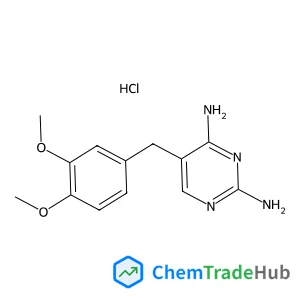
5-(3,4-Dimethoxybenzyl)-2,4-pyrimidinediamine hydrochloride (1:1)
CAS Number:
2507-23-5
Molecular Formula:
C13H17ClN4O2
Recommended Suppliers





Disclaimer
This page provides academic journal information for reference and research purposes only. We are not affiliated with any journal publishers and do not handle publication submissions. For publication-related inquiries, please contact the respective journal publishers directly.
If you notice any inaccuracies in the information displayed, please contact us at support@chemtradehub.com. We will promptly review and address your concerns.