












Optimization of hydrophilic/hydrophobic phase separation in sPEEK membranes by hydrothermal treatments
Literature Information
Publication Date
2017-05-22
DOI
10.1039/C7CP00087A
Impact Factor
3.676
Authors
H. Mendil-Jakani, I. Zamanillo López, V. H. Mareau, L. Gonon
View Original
Abstract
Via SAXS, herein, we studied how a sPEEK microstructure evolves when it is immersed in water at a wide range of temperatures (20–100 °C) and time scales (from a few hours to dozens of days). In particular, we scrutinized the behavior of sPEEK at the temperature and time associated with the appearance of a well-defined nanosegregated morphology. At 80 °C, we observed nanoscale swelling along with smoothing of the water/polymer interface over a long period of time (several days). Herein, two of the main membrane properties, i.e., water uptake and proton conductivity, were studied for different immersion times and temperatures. It was found that the abovementioned properties were remarkably correlated with the evolution of the membrane microstructure, which was partly conserved after drying. The present findings helped us to understand that the thermally activated evolutions observed at both the nanoscale and macroscale were associated with the sPEEK β-relaxation crossover. Therefore, the very different swelling behaviors of sPEEK and Nafion are correlated to the much higher β-relaxation of sPEEK vs. Nafion (75 °C vs. −20 °C – dry state). From a practical viewpoint, this study emphasizes, for membranes alternative to Nafion, the importance and impact of the membrane pretreatment on their functional properties.
Recommended Journals
Related Literature
Tailor-made compositional gradient copolymer by a many-shot RAFT emulsion polymerization method
Yunlong Guo, Jianhua Zhang, Peile Xie, Xiang Gao, Yingwu Luo
2014-01-24
Paper
DOI: 10.1039/C4PY00003J
Rapid Wolff–Kishner reductions in a silicon carbide microreactor
Stephen G. Newman, Lei Gu, Christoph Lesniak, Georg Victor, Frank Meschke, Lahbib Abahmane, Klavs F. Jensen
2013-11-12
Paper
DOI: 10.1039/C3GC41942H
Retrieval of the complex refractive index of aerosol droplets from optical tweezers measurements
Rachael E. H. Miles, Jim S. Walker, Daniel R. Burnham, Jonathan P. Reid
2012-01-11
Paper
DOI: 10.1039/C2CP23999J
Macromolecular structure evolution toward giant molecules of complex structure: tandem synthesis of asymmetric giant gemini surfactants
Hao Su, Yiwen Li, Kan Yue, Zhao Wang, Pengtao Lu, Xueyan Feng, Xue-Hui Dong, Shuo Zhang, Stephen Z. D. Cheng
2014-03-24
Paper
DOI: 10.1039/C4PY00107A
In situ confocal microscopic observation on inhibiting the dendrite formation of a-CNx/Li electrode
Yi-jun Zhang, Wen-qi Bai, Xiu-li Wang, Xin-hui Xia, Chang-dong Gu, Jiang-ping Tu
2016-09-12
Paper
DOI: 10.1039/C6TA06612G
Stimuli-responsive perallyloxycucurbit[6]uril-based nanoparticles for selective drug delivery in melanoma cells
Qian Cheng, Shengke Li, Chen Sun, Ludan Yue, Ruibing Wang
2018-09-29
Research Article
DOI: 10.1039/C8QM00460A
Kinetics of α hydrogen abstractions from thiols, sulfides and thiocarbonyl compounds
Aäron G. Vandeputte, Maarten K. Sabbe, Marie-Françoise Reyniers, Guy B. Marin
2012-06-29
Paper
DOI: 10.1039/C2CP41114H
Poly(phenylene) block copolymers bearing tri-sulfonated aromatic pendant groups for polymer electrolyte fuel cell applications
Ryousuke Hara, Kangcheng Chen, Nobutaka Endo, Mitsuru Higa, Ken-ichi Okamoto, Lianjun Wang
2013-05-08
Paper
DOI: 10.1039/C3TA11190C
Film morphology evolution during solvent vapor annealing of highly efficient small molecule donor/acceptor blends
Sebastian Engmann, Hyun Wook Ro, Andrew Herzing, Chad R. Snyder, Lee J. Richter, Paul B. Geraghty, David J. Jones
2016-09-15
Paper
DOI: 10.1039/C6TA05056E
You might also like
Compound Q&A
Are there alternatives to 1-(4-Chlorophenyl)-N-hydroxymethanimine (CAS: 3848-36-0) in synthesis?
When considering alternatives to 1-(4-Chlorophenyl)-N-hydroxymethanimine (CAS: 3...
3848-36-01-(4-Chlorophenyl)-N...
Compound Q&A
How should (1R,9S,10S,12S,14E,16S,19R,20R,21S,22R)-3,9,21-Trihydroxy-5,10,12,14,16,20,22-heptamethyl-23,24-dioxatetracyclo[17.3.1.1~6,9~.0~2,7~]tetracosa-2,5,7,14-tetraen-4-one (CAS: 183202-73-5) be stored?
This compound should be stored in a cool, dry place away from direct sunlight. I...
183202-73-5(1R,9S,10S,12S,14E,1...
Compound Q&A
How is 3-(4-Bromophenyl)-5-(2-fluorophenyl)-1,2,4-oxadiazole (CAS: 419553-16-5) typically synthesized?
3-(4-Bromophenyl)-5-(2-fluorophenyl)-1,2,4-oxadiazole is synthesized through a m...
419553-16-53-(4-Bromophenyl)-5-...
Compound Q&A
How is 5-Chloro-2-(4-chlorophenyl)-4-methyl-6-[3-(1-piperidinyl)propoxy]pyrimidine (CAS: 1639220-19-1) typically synthesized?
5-Chloro-2-(4-chlorophenyl)-4-methyl-6-[3-(1-piperidinyl)propoxy]pyrimidine (CAS...
1639220-19-15-Chloro-2-(4-chloro...
Compound Q&A
What industries use 2-Chloro-4-(difluoromethoxy)pyridine (CAS: 1206978-15-5)?
2-Chloro-4-(difluoromethoxy)pyridine is used in the pharmaceutical industry for ...
1206978-15-52-Chloro-4-(difluoro...
Compound Q&A
What regulatory guidelines apply to 3-Chloro-6-methylpyridazine (CAS: 1121-79-5)?
3-Chloro-6-methylpyridazine (CAS: 1121-79-5) is classified under the Globally Ha...
1121-79-53-Chloro-6-methylpyr...
Compound Q&A
Are there alternatives to Methyl 4,5-dimethyl-2-nitrobenzoate in synthesis?
Several alternatives can be used in the synthesis of Methyl 4,5-dimethyl-2-nitro...
90922-74-0Methyl 4,5-dimethyl-...
Compound Q&A
Are there alternatives to (2E,2'E)-3,3'-(1,4-Phenylene)bisacrylaldehyde in synthesis?
Alternatives to (2E,2'E)-3,3'-(1,4-Phenylene)bisacrylaldehyde include other acry...
63405-68-5(2E,2'E)-3,3'-(1,4-P...
Compound Q&A
What is 3-Amino-5-chloropyridin-2-ol hydrochloride (CAS: 1261906-29-9)?
3-Amino-5-chloropyridin-2-ol hydrochloride is an organic compound with the CAS n...
1261906-29-93-Amino-5-chloropyri...
Compound Q&A
What precautions should be taken when handling 6,7-Difluoro-2,3-dihydro-4H-chromen-4-one (CAS: 1092349-93-3)?
When handling 6,7-Difluoro-2,3-dihydro-4H-chromen-4-one, it is essential to wear...
1092349-93-36,7-Difluoro-2,3-dih...
Source Journal
Physical Chemistry Chemical Physics

CiteScore:
5.5
Self-citation Rate:
10.3%
Articles per Year:
3036
Physical Chemistry Chemical Physics (PCCP) is an international journal co-owned by 19 physical chemistry and physics societies from around the world. This journal publishes original, cutting-edge research in physical chemistry, chemical physics and biophysical chemistry. To be suitable for publication in PCCP, articles must include significant innovation and/or insight into physical chemistry; this is the most important criterion that reviewers and Editors will judge against when evaluating submissions. The journal has a broad scope and welcomes contributions spanning experiment, theory, computation and data science. Topical coverage includes spectroscopy, dynamics, kinetics, statistical mechanics, thermodynamics, electrochemistry, catalysis, surface science, quantum mechanics, quantum computing and machine learning. Interdisciplinary research areas such as polymers and soft matter, materials, nanoscience, energy, surfaces/interfaces, and biophysical chemistry are welcomed if they demonstrate significant innovation and/or insight into physical chemistry. Joined experimental/theoretical studies are particularly appreciated when complementary and based on up-to-date approaches.
Recommended Compounds
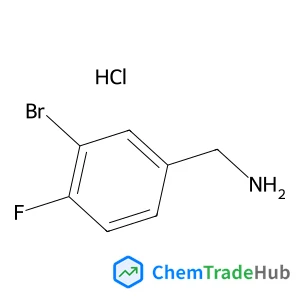
1-(3-Bromo-4-fluorophenyl)methanamine hydrochloride (1:1)
CAS Number:
202865-68-7
Molecular Formula:
C7H8BrClFN
![[4-(Isobutyrylamino)phenyl]boronic acid structure](https://static.chemtradehub.com/structs/874/874219-50-8-6ab5.webp "[4-(Isobutyrylamino)phenyl]boronic acid structure")
![2-{[(1R,2S)-2-Aminocyclohexyl]amino}-4-{[3-(2H-1,2,3-triazol-2-yl)phenyl]amino}-5-pyrimidinecarboxamide structure](https://static.chemtradehub.com/structs/137/1370261-96-3-40df.webp "2-{[(1R,2S)-2-Aminocyclohexyl]amino}-4-{[3-(2H-1,2,3-triazol-2-yl)phenyl]amino}-5-pyrimidinecarboxamide structure")
2-{[(1R,2S)-2-Aminocyclohexyl]amino}-4-{[3-(2H-1,2,3-triazol-2-yl)phenyl]amino}-5-pyrimidinecarboxamide
CAS Number:
1370261-96-3
Molecular Formula:
C19H23N9O
Recommended Suppliers






Disclaimer
This page provides academic journal information for reference and research purposes only. We are not affiliated with any journal publishers and do not handle publication submissions. For publication-related inquiries, please contact the respective journal publishers directly.
If you notice any inaccuracies in the information displayed, please contact us at support@chemtradehub.com. We will promptly review and address your concerns.