












Revealing the structure and functionality of graphene oxide and reduced graphene oxide/pyrene carboxylic acid interfaces by correlative spectral and imaging analysis
Literature Information
Publication Date
2017-05-24
DOI
10.1039/C7CP02443F
Impact Factor
3.676
Authors
M. Potara, A. M. Craciun, R. Boukherroub
View Original
Abstract
A high-end correlated spectral and imaging multianalysis, adapted for bidimensional systems, is presented here to analyze graphene oxide (GO) and reduced GO (rGO) modified with pyrene carboxylic acid (PCA). Confocal Raman mapping was used next to two-photon excited Fluorescence Lifetime Imaging Microscopy (FLIM) to characterize the distribution of PCA on GO and rGO and compared to UV-vis and X-ray Photoelectron Spectroscopy (XPS) analysis of the materials. Raman imaging clearly highlights the difference in the spatial distribution of PCA molecules on GO and rGO. Two-photon excited FLIM helped in gaining insight into the elusive phenomena and effects occurring at the GO–PCA interface level. Apart from the charge transfer effects from PCA molecules to GO, the GO structure depends on the molecular orientation and the spatial distribution of PCA molecules identified by different sp2 network domains in Raman mapping. Heating of GO–PCA results in an enhancement of the sp2 network presumably as the PCA aromatic core becomes fused into the GO nanosheets whilst enriching the resulting rGO nanosheets with carboxyl functionalities. This “healing” effect observed in rGO–PCA might be of high importance for applications using rGO–PCA matrices and interfaces in particular for electrical devices.
Recommended Journals
Related Literature
Preparation and characterization of silica confined ionic liquids as chromatographic stationary phases through surface radical chain-transfer reaction
Hongdeng Qiu, Licheng Wang, Xia Liu, Shengxiang Jiang
2008-11-27
Paper
DOI: 10.1039/B809125K
Hadamard transform spectral microscopy for single cell imaging using organic and quantum dotfluorescent probes
Hao Xu, Jun Peng, Hong-Wu Tang, Ying Li, Qiong-Shui Wu, Zhi-Ling Zhang, Gang Zhou, Chuang Chen, Yan Li
2008-12-08
Paper
DOI: 10.1039/B807251E
Covalent immobilization of carbohydrates on sol–gel-coated microplates‡
Hei-Leung Pang, Pak-Ho Chan, Zhi-Shu Huang, Lian-Quan Gu, Kwok-Yin Wong
2008-05-06
Paper
DOI: 10.1039/B805346D
Rapid and quantitative detection of the microbial spoilage in milk using Fourier transform infrared spectroscopy and chemometrics
Nicoletta Nicolaou, Royston Goodacre
2008-07-11
Paper
DOI: 10.1039/B804439B
Use of the thyrocyte sodium iodide symporter as the basis for a perchlorate cell-based assay
Irene E. MacAllister, Michael G. Jakoby IV, Bruce Geryk, Roger L. Schneider, Donald M. Cropek
2008-10-30
Paper
DOI: 10.1039/B802710B
High throughput screening arrays of rhodium and iridium complexes as catalysts for intramolecular hydroamination using parallel factor analysis‡
Diako Ebrahimi, Danielle F. Kennedy, Barbara A. Messerle, D. Brynn Hibbert
2008-03-13
Paper
DOI: 10.1039/B719501J
Labeling strategies in mass spectrometry-based protein quantitation
Randi L. Gant-Branum, Thomas J. Kerr, John A. McLean
2009-06-09
Minireview
DOI: 10.1039/B904643G
Viral detection using DNA functionalized gold filaments
Jonas W. Perez, Frederick R. Haselton, David W. Wright
2009-05-15
Paper
DOI: 10.1039/B904191E
You might also like
Compound Q&A
Are there alternatives to 1-(4-Chlorophenyl)-N-hydroxymethanimine (CAS: 3848-36-0) in synthesis?
When considering alternatives to 1-(4-Chlorophenyl)-N-hydroxymethanimine (CAS: 3...
3848-36-01-(4-Chlorophenyl)-N...
Compound Q&A
How should (1R,9S,10S,12S,14E,16S,19R,20R,21S,22R)-3,9,21-Trihydroxy-5,10,12,14,16,20,22-heptamethyl-23,24-dioxatetracyclo[17.3.1.1~6,9~.0~2,7~]tetracosa-2,5,7,14-tetraen-4-one (CAS: 183202-73-5) be stored?
This compound should be stored in a cool, dry place away from direct sunlight. I...
183202-73-5(1R,9S,10S,12S,14E,1...
Compound Q&A
How is 3-(4-Bromophenyl)-5-(2-fluorophenyl)-1,2,4-oxadiazole (CAS: 419553-16-5) typically synthesized?
3-(4-Bromophenyl)-5-(2-fluorophenyl)-1,2,4-oxadiazole is synthesized through a m...
419553-16-53-(4-Bromophenyl)-5-...
Compound Q&A
How is 5-Chloro-2-(4-chlorophenyl)-4-methyl-6-[3-(1-piperidinyl)propoxy]pyrimidine (CAS: 1639220-19-1) typically synthesized?
5-Chloro-2-(4-chlorophenyl)-4-methyl-6-[3-(1-piperidinyl)propoxy]pyrimidine (CAS...
1639220-19-15-Chloro-2-(4-chloro...
Compound Q&A
What industries use 2-Chloro-4-(difluoromethoxy)pyridine (CAS: 1206978-15-5)?
2-Chloro-4-(difluoromethoxy)pyridine is used in the pharmaceutical industry for ...
1206978-15-52-Chloro-4-(difluoro...
Compound Q&A
What regulatory guidelines apply to 3-Chloro-6-methylpyridazine (CAS: 1121-79-5)?
3-Chloro-6-methylpyridazine (CAS: 1121-79-5) is classified under the Globally Ha...
1121-79-53-Chloro-6-methylpyr...
Compound Q&A
Are there alternatives to Methyl 4,5-dimethyl-2-nitrobenzoate in synthesis?
Several alternatives can be used in the synthesis of Methyl 4,5-dimethyl-2-nitro...
90922-74-0Methyl 4,5-dimethyl-...
Compound Q&A
Are there alternatives to (2E,2'E)-3,3'-(1,4-Phenylene)bisacrylaldehyde in synthesis?
Alternatives to (2E,2'E)-3,3'-(1,4-Phenylene)bisacrylaldehyde include other acry...
63405-68-5(2E,2'E)-3,3'-(1,4-P...
Compound Q&A
What is 3-Amino-5-chloropyridin-2-ol hydrochloride (CAS: 1261906-29-9)?
3-Amino-5-chloropyridin-2-ol hydrochloride is an organic compound with the CAS n...
1261906-29-93-Amino-5-chloropyri...
Compound Q&A
What precautions should be taken when handling 6,7-Difluoro-2,3-dihydro-4H-chromen-4-one (CAS: 1092349-93-3)?
When handling 6,7-Difluoro-2,3-dihydro-4H-chromen-4-one, it is essential to wear...
1092349-93-36,7-Difluoro-2,3-dih...
Source Journal
Physical Chemistry Chemical Physics

CiteScore:
5.5
Self-citation Rate:
10.3%
Articles per Year:
3036
Physical Chemistry Chemical Physics (PCCP) is an international journal co-owned by 19 physical chemistry and physics societies from around the world. This journal publishes original, cutting-edge research in physical chemistry, chemical physics and biophysical chemistry. To be suitable for publication in PCCP, articles must include significant innovation and/or insight into physical chemistry; this is the most important criterion that reviewers and Editors will judge against when evaluating submissions. The journal has a broad scope and welcomes contributions spanning experiment, theory, computation and data science. Topical coverage includes spectroscopy, dynamics, kinetics, statistical mechanics, thermodynamics, electrochemistry, catalysis, surface science, quantum mechanics, quantum computing and machine learning. Interdisciplinary research areas such as polymers and soft matter, materials, nanoscience, energy, surfaces/interfaces, and biophysical chemistry are welcomed if they demonstrate significant innovation and/or insight into physical chemistry. Joined experimental/theoretical studies are particularly appreciated when complementary and based on up-to-date approaches.
Recommended Compounds
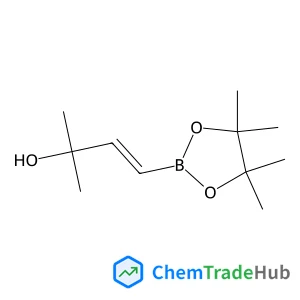
(E)-2-methyl-4-(4,4,5,5-tetramethyl-1,3,2-dioxaborolan-2-yl)but-3-en-2-ol
CAS Number:
581802-26-8
Molecular Formula:
C11H21BO3
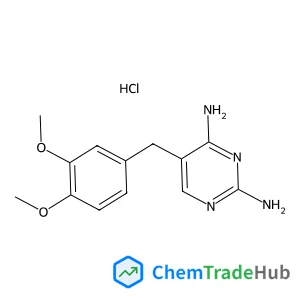
5-(3,4-Dimethoxybenzyl)-2,4-pyrimidinediamine hydrochloride (1:1)
CAS Number:
2507-23-5
Molecular Formula:
C13H17ClN4O2
Recommended Suppliers



Disclaimer
This page provides academic journal information for reference and research purposes only. We are not affiliated with any journal publishers and do not handle publication submissions. For publication-related inquiries, please contact the respective journal publishers directly.
If you notice any inaccuracies in the information displayed, please contact us at support@chemtradehub.com. We will promptly review and address your concerns.