












Aqueous-biphasic hydroformylation of higher alkenes promoted by alkylimidazolium salts
Literature Information
Publication Date
2007-04-10
DOI
10.1039/B618785D
Impact Factor
6.222
Authors
Simon L. Desset, David J. Cole-Hamilton, Douglas F. Foster
View Original
Abstract
Aqueous-biphasic hydroformylation of higher alkenes (>C5) can be greatly accelerated by addition of 1-octyl-3-methylimidazolium bromide without affecting the phase separation and with good catalyst retention in the aqueous phase.
Related Literature
Molecular dynamics simulations of polystyrene brushes in dry conditions and in toluene solution
P. Träskelin, T. L. Kuhl, R. Faller
2009-10-21
Paper
DOI: 10.1039/B911311H
Electromotive force measurements in the combustion wave front during layer-by-layer surface laser sintering of exothermic powder compositions
Igor V. Shishkovskiy, Yury G. Morozov, Maxim V. Kuznetsov, Ivan P. Parkin
2009-03-06
Paper
DOI: 10.1039/B819810A
Micro-ionics: next generation power sources
Harry L. Tuller, Scott J. Litzelman, WooChul Jung
2009-03-25
Perspective
DOI: 10.1039/B901906E
Facilitated search of proteins on DNA: correlations are important
Rahul K. Das, Anatoly B. Kolomeisky
2010-02-05
Paper
DOI: 10.1039/B921303A
Impact of vibrational excitation on the kinetics of a nascent ketene
Thomas Schmierer, Wolfgang J. Schreier, Florian O. Koller, Tobias E. Schrader
2009-11-05
Paper
DOI: 10.1039/B915451E
Theoretical analysis of carbon nanotube wetting in polystyrene nanocomposites
Gregory Van Lier, Guy Van Assche, Hans E. Miltner, Nadia Grossiord, Cor E. Koning, Paul Geerlings, Bruno Van Mele
2009-10-16
Paper
DOI: 10.1039/B912991J
Polarizable continuum model associated with the self-consistent-reaction field for molecular adsorbates at the interface
Jing-Bo Wang, Jian-Yi Ma, Xiang-Yuan Li
2009-11-07
Paper
DOI: 10.1039/B914652K
An investigation of slow charge separation in a Tyrosine M210 to Tryptophan mutant of the Rhodobacter sphaeroidesreaction center by femtosecond mid-infrared spectroscopy
Natalia P. Pawlowicz, Ivo H. M. van Stokkum, Jacques Breton, Rienk van Grondelle, Michael R. Jones
2010-01-28
Paper
DOI: 10.1039/B905934B
You might also like
Compound Q&A
What precautions should be taken when handling 2-Chloro-1,2-bis(4-methylphenyl)ethanone (CAS: 71193-32-3)?
When handling 2-Chloro-1,2-bis(4-methylphenyl)ethanone (CAS: 71193-32-3), it is ...
71193-32-32-Chloro-1,2-bis(4-m...
Compound Q&A
What industries use 4-Ethoxy-3-(5-methyl-4-oxo-7-propyl-1,4-dihydroimidazo[5,1-f][1,2,4]triazin-2-yl)benzenesulfonyl chloride (CAS: 224789-26-8)?
4-Ethoxy-3-(5-methyl-4-oxo-7-propyl-1,4-dihydroimidazo[5,1-f][1,2,4]triazin-2-yl...
224789-26-84-Ethoxy-3-(5-methyl...
Compound Q&A
How should Methyl 3-Oxo-4-Androsten-17-Carboxylate (CAS: 2681-55-2) be stored?
Methyl 3-Oxo-4-Androsten-17-Carboxylate (CAS: 2681-55-2) should be stored in a c...
2681-55-2Methyl 3-Oxo-4-Andro...
Compound Q&A
What are the main uses of (R)-3-Amino-4-(3-hexylphenylamino)-4-oxobutylphosphonic acid (CAS: 909725-61-7)?
(R)-3-Amino-4-(3-hexylphenylamino)-4-oxobutylphosphonic acid is primarily used i...
909725-61-7(R)-3-Amino-4-(3-hex...
Compound Q&A
What regulatory guidelines apply to 2-Methyl-2-propanyl 3-amino-3-carbamoyl-1-azetidinecarboxylate (CAS: 1254120-14-3)?
2-Methyl-2-propanyl 3-amino-3-carbamoyl-1-azetidinecarboxylate (CAS: 1254120-14-...
1254120-14-32-Methyl-2-propanyl ...
Compound Q&A
Are there alternatives to (E)-4-(tert-Butoxy)-4-oxobut-2-enoic acid (CAS: 135355-96-3) in synthesis?
There are alternative reagents that can be used in synthesis instead of (E)-4-(t...
135355-96-3(E)-4-(tert-Butoxy)-...
Compound Q&A
What are the physical and chemical properties of [2-(3-Chlorophenyl)-1,3-thiazol-4-yl]methanol (CAS: 121202-20-8)?
[2-(3-Chlorophenyl)-1,3-thiazol-4-yl]methanol (CAS: 121202-20-8) is a crystallin...
121202-20-8[2-(3-Chlorophenyl)-...
Compound Q&A
What is the market or research trend for Methyl (2S)-[(4S)-2,2-dimethyl-1,3-dioxolan-4-yl]{[(4-methylphenyl)sulfonyl]oxy}acetate (CAS: 166249-17-8)?
The market and research trends for Methyl (2S)-[(4S)-2,2-dimethyl-1,3-dioxolan-4...
166249-17-8Methyl (2S)-[(4S)-2,...
Compound Q&A
What is the market or research trend for 1-Bromo-2-isocyanatoethane (CAS: 42865-19-0)?
The market for 1-Bromo-2-isocyanatoethane (CAS: 42865-19-0) is driven by its use...
42865-19-01-Bromo-2-isocyanato...
Compound Q&A
What are the main uses of 4-Nitro-D-phenylalanine hydrochloride (CAS: 147065-06-3)?
4-Nitro-D-phenylalanine hydrochloride (CAS: 147065-06-3) is primarily used in re...
147065-06-34-Nitro-D-phenylalan...
Source Journal
Chemical Communications

CiteScore:
8.6
Self-citation Rate:
4.7%
Articles per Year:
2458
ChemComm publishes urgent research which is of outstanding significance and interest to experts in the field, while also appealing to the journal’s broad chemistry readership. Our communication format is ideally suited to short, urgent studies that are of such importance that they require accelerated publication. Our scope covers all topics in chemistry, and research at the interface of chemistry and other disciplines (such as materials science, nanoscience, physics, engineering and biology) where there is a significant novelty in the chemistry aspects. Major topic areas covered include: Analytical Chemistry Catalysis Chemical Biology and medicinal chemistry Computational Chemistry and Machine Learning Energy and sustainable chemistry Environmental Chemistry Green Chemistry Inorganic Chemistry Materials Chemistry Nanoscience Organic Chemistry Physical Chemistry Polymer Chemistry Supramolecular Chemistry
Recommended Compounds
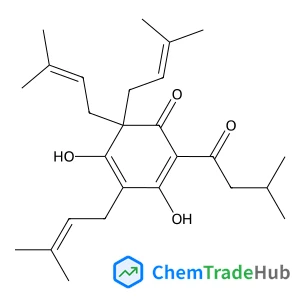
3,5-Dihydroxy-4-(3-methylbutanoyl)-2,6,6-tris(3-methyl-2-buten-1-yl)-2,4-cyclohexadien-1-one
CAS Number:
468-28-0
Molecular Formula:
C26H38O4
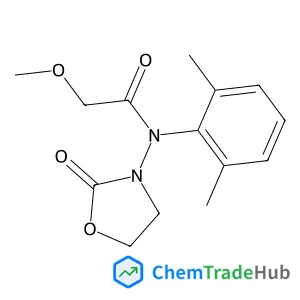
N-(2,6-Dimethylphenyl)-2-methoxy-N-(2-oxo-1,3-oxazolidin-3-yl)acetamide
CAS Number:
77732-09-3
Molecular Formula:
C14H18N2O4
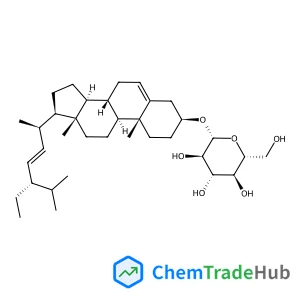
(3beta,22E)-Stigmasta-5,22-dien-3-yl beta-D-glucopyranoside
CAS Number:
19716-26-8
Molecular Formula:
C35H58O6
Recommended Suppliers



Disclaimer
This page provides academic journal information for reference and research purposes only. We are not affiliated with any journal publishers and do not handle publication submissions. For publication-related inquiries, please contact the respective journal publishers directly.
If you notice any inaccuracies in the information displayed, please contact us at support@chemtradehub.com. We will promptly review and address your concerns.