












First hypervalent iodine(iii)-catalyzed C–N bond forming reaction: catalytic spirocyclization of amides to N-fused spirolactams
Literature Information
Publication Date
2006-12-22
DOI
10.1039/B616510A
Impact Factor
6.222
Authors
Toshifumi Dohi, Akinobu Maruyama, Yutaka Minamitsuji, Naoko Takenaga, Yasuyuki Kita
View Original
Abstract
A protic solvent, 2,2,2-trifluoroethanol (CF3CH2OH), was successfully introduced into hypervalent iodine(III)-involved catalytic cycles as an effective solvent, and the first iodoarene-catalyzed intramolecular carbon–nitrogen bond forming reaction was achieved under strong acid-free and mild conditions.
Recommended Journals
Related Literature
Elastic strain at interfaces and its influence on ionic conductivity in nanoscaled solid electrolyte thin films—theoretical considerations and experimental studies
N. Schichtel, C. Korte, D. Hesse, J. Janek
2009-03-20
Paper
DOI: 10.1039/B900148D
Dynamics of multi-channel dissociation of tetrahydrofuran photoexcited at 193 nm: distributions of kinetic energy, angular anisotropies and branching ratios
2010-01-27
Paper
DOI: 10.1039/B921219A
Direct calorimetric measurement of grain boundary and surface enthalpies in yttria-stabilized zirconia
Hugo J. Avila-Paredes, Jinfeng Zhao, Zuhair A. Munir
2009-01-12
Communication
DOI: 10.1039/B819740G
Spectroscopic characterization of Fe-doped synthetic chrysotile by EPR, DRS and magnetic susceptibility measurements
Elena Borghi, Manlio Occhiuzzi, Elisabetta Foresti, Isidoro Giorgio Lesci, Norberto Roveri
2009-11-09
Paper
DOI: 10.1039/B915182F
Enhanced dihydrogen adsorption in symmetry-lowered metal–porphyrin-containing frameworks
Y. Y. Sun, Woon Ih Choi, Joongoo Kang, S. B. Zhang
2009-09-25
Paper
DOI: 10.1039/B913711D
Preferential solvation of glucose and talose in water–acetonitrile mixtures: a molecular dynamics simulation study
Giacomo Saielli, Alessandro Bagno
2010-02-03
Paper
DOI: 10.1039/B922550A
Integral and differential cross sections for the S(1D)+HD reaction employing the ground adiabatic electronic state
H. Yang, K.-L. Han, G. C. Schatz, S.-H. Lee, K. Liu, S. C. Smith, M. Hankel
2009-11-05
Paper
DOI: 10.1039/B917972K
Formation entropies of intrinsic point defects in cubic In2O3 from first-principles density functional theory calculations
Péter Ágoston, Karsten Albe
2009-03-13
Paper
DOI: 10.1039/B900280D
The influence of alkaline earth ions on the structural organization of acetone probed by the noncoincidence effect of the ν(CO) band: experimental and quantum chemical results
Maria Grazia Giorgini, Hajime Torii, Maurizio Musso
2009-11-07
Paper
DOI: 10.1039/B912164A
Partial oxidation of methanol on well-ordered V2O5(001)/Au(111) thin films
J. M. Sturm, D. Göbke, H. Kuhlenbeck, J. Döbler, U. Reinhardt, M. V. Ganduglia-Pirovano, J. Sauer, H.-J. Freund
2009-03-11
Paper
DOI: 10.1039/B822384J
You might also like
Compound Q&A
What precautions should be taken when handling 2-Chloro-1,2-bis(4-methylphenyl)ethanone (CAS: 71193-32-3)?
When handling 2-Chloro-1,2-bis(4-methylphenyl)ethanone (CAS: 71193-32-3), it is ...
71193-32-32-Chloro-1,2-bis(4-m...
Compound Q&A
What industries use 4-Ethoxy-3-(5-methyl-4-oxo-7-propyl-1,4-dihydroimidazo[5,1-f][1,2,4]triazin-2-yl)benzenesulfonyl chloride (CAS: 224789-26-8)?
4-Ethoxy-3-(5-methyl-4-oxo-7-propyl-1,4-dihydroimidazo[5,1-f][1,2,4]triazin-2-yl...
224789-26-84-Ethoxy-3-(5-methyl...
Compound Q&A
How should Methyl 3-Oxo-4-Androsten-17-Carboxylate (CAS: 2681-55-2) be stored?
Methyl 3-Oxo-4-Androsten-17-Carboxylate (CAS: 2681-55-2) should be stored in a c...
2681-55-2Methyl 3-Oxo-4-Andro...
Compound Q&A
What are the main uses of (R)-3-Amino-4-(3-hexylphenylamino)-4-oxobutylphosphonic acid (CAS: 909725-61-7)?
(R)-3-Amino-4-(3-hexylphenylamino)-4-oxobutylphosphonic acid is primarily used i...
909725-61-7(R)-3-Amino-4-(3-hex...
Compound Q&A
What regulatory guidelines apply to 2-Methyl-2-propanyl 3-amino-3-carbamoyl-1-azetidinecarboxylate (CAS: 1254120-14-3)?
2-Methyl-2-propanyl 3-amino-3-carbamoyl-1-azetidinecarboxylate (CAS: 1254120-14-...
1254120-14-32-Methyl-2-propanyl ...
Compound Q&A
Are there alternatives to (E)-4-(tert-Butoxy)-4-oxobut-2-enoic acid (CAS: 135355-96-3) in synthesis?
There are alternative reagents that can be used in synthesis instead of (E)-4-(t...
135355-96-3(E)-4-(tert-Butoxy)-...
Compound Q&A
What are the physical and chemical properties of [2-(3-Chlorophenyl)-1,3-thiazol-4-yl]methanol (CAS: 121202-20-8)?
[2-(3-Chlorophenyl)-1,3-thiazol-4-yl]methanol (CAS: 121202-20-8) is a crystallin...
121202-20-8[2-(3-Chlorophenyl)-...
Compound Q&A
What is the market or research trend for Methyl (2S)-[(4S)-2,2-dimethyl-1,3-dioxolan-4-yl]{[(4-methylphenyl)sulfonyl]oxy}acetate (CAS: 166249-17-8)?
The market and research trends for Methyl (2S)-[(4S)-2,2-dimethyl-1,3-dioxolan-4...
166249-17-8Methyl (2S)-[(4S)-2,...
Compound Q&A
What is the market or research trend for 1-Bromo-2-isocyanatoethane (CAS: 42865-19-0)?
The market for 1-Bromo-2-isocyanatoethane (CAS: 42865-19-0) is driven by its use...
42865-19-01-Bromo-2-isocyanato...
Compound Q&A
What are the main uses of 4-Nitro-D-phenylalanine hydrochloride (CAS: 147065-06-3)?
4-Nitro-D-phenylalanine hydrochloride (CAS: 147065-06-3) is primarily used in re...
147065-06-34-Nitro-D-phenylalan...
Source Journal
Chemical Communications

CiteScore:
8.6
Self-citation Rate:
4.7%
Articles per Year:
2458
ChemComm publishes urgent research which is of outstanding significance and interest to experts in the field, while also appealing to the journal’s broad chemistry readership. Our communication format is ideally suited to short, urgent studies that are of such importance that they require accelerated publication. Our scope covers all topics in chemistry, and research at the interface of chemistry and other disciplines (such as materials science, nanoscience, physics, engineering and biology) where there is a significant novelty in the chemistry aspects. Major topic areas covered include: Analytical Chemistry Catalysis Chemical Biology and medicinal chemistry Computational Chemistry and Machine Learning Energy and sustainable chemistry Environmental Chemistry Green Chemistry Inorganic Chemistry Materials Chemistry Nanoscience Organic Chemistry Physical Chemistry Polymer Chemistry Supramolecular Chemistry
Recommended Compounds
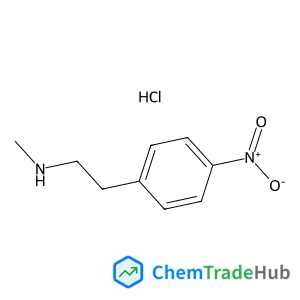
N-Methyl-2-(4-nitrophenyl)ethanamine hydrochloride (1:1)
CAS Number:
166943-39-1
Molecular Formula:
C9H13ClN2O2
Recommended Suppliers


Disclaimer
This page provides academic journal information for reference and research purposes only. We are not affiliated with any journal publishers and do not handle publication submissions. For publication-related inquiries, please contact the respective journal publishers directly.
If you notice any inaccuracies in the information displayed, please contact us at support@chemtradehub.com. We will promptly review and address your concerns.