












The influence of alkaline earth ions on the structural organization of acetone probed by the noncoincidence effect of the ν(CO) band: experimental and quantum chemical results
Literature Information
Publication Date
2009-11-07
DOI
10.1039/B912164A
Impact Factor
3.676
Authors
Maria Grazia Giorgini, Hajime Torii, Maurizio Musso
View Original
Abstract
We have investigated the Raman noncoincidence effect (NCE = aniso − iso, where aniso and iso are the anisotropic and the isotropic Raman frequencies) of the ν(CO) band of acetone arising from the interactions of this solvent with the metal ions in acetone electrolytic solutions of alkaline earth metal (Mg, Ca, Sr, Ba) perchlorates. Assisted by the results of ab initio molecular orbital (MO) calculations carried out at the Hartree–Fock (HF) level with the 6-31+G(2df,p) and LanL2DZ basis sets, we have been able to attribute the anisotropic and isotropic components of this band to the formation of acetone–metal ion clusters, (acetone)nM2+, and to interpret its high and negative NCE, opposed to the positive NCE of the bulk liquid, as the consequence of the large separation between the higher frequency of the in-phase mode (active in the Raman isotropic spectrum) and the lower (average) frequency of the n − 1 out-of-phase modes (predominantly active in the Raman anisotropic spectrum). The negative sign of the NCE is compatible with the transition dipole coupling (TDC) mechanism. The comparison between the observed NCE for each electrolytic solution at the concentrations used in this study and those calculated for the different solvation numbers n of each (acetone)nM2+cluster gives a clear indication of the highest stability of the hexa-coordinated cluster for the Mg2+ ion, but leaving uncertain (n = 6 or 8) this conclusion for the acetone clusters of the remaining M2+ ions. We have interpreted the observed and calculated decrease of the magnitude of NCE with the ion size through the ion polarizing power in the light of the ion effective charge and its distance (M2+⋯OC) from the CO oscillators.
Related Literature
Hydrogen quenches the size effects in carbon clusters
José I. Martínez, Julio A. Alonso
2019-05-02
Paper
DOI: 10.1039/C9CP01114E
Superior spin-polarized electronic structure in MoS2/MnO2 heterostructures with an efficient hole injection
Baozeng Zhou, Zheng Li, Jiaming Wang, Kangqiang Wang
2019-04-27
Paper
DOI: 10.1039/C9CP01146C
Alkaline manganese electrochemistry studied by in situ and operando spectroscopic methods – metal dissolution, oxide formation and oxygen evolution
Martin Rabe, Cigdem Toparli, Ying-Hsuan Chen, Olga Kasian
2019-04-08
Paper
DOI: 10.1039/C9CP00911F
Covalent capture of supramolecular species in an aqueous solution of water-miscible small organic molecules
Yongchao Yao, Chuanqi Li, Fangqin Liu, Pengxiang Zhao
2019-04-23
Paper
DOI: 10.1039/C9CP01427F
Design of arginine-based therapeutic deep eutectic solvents as drug solubilization vehicles for active pharmaceutical ingredients
Alberto Gutiérrez, Santiago Aparicio
2019-04-30
Paper
DOI: 10.1039/C9CP01408J
The effect of methylation on the intrinsic photophysical properties of simple rhodamines
Jocky C. K. Kung, Adam Forman, Rebecca A. Jockusch
2019-04-22
Paper
DOI: 10.1039/C9CP00730J
Tuning the electronic structure properties of MoS2 monolayers with carbon doping
Wiliam Ferreira da Cunha, Ramiro Marcelo dos Santos, Rafael Timóteo de Sousa Júnior, Renato Batista Santos, Geraldo Magela e Silva, Luiz Antônio Ribeiro Júnior
2019-05-08
Paper
DOI: 10.1039/C9CP00980A
Redox-probe-free scanning electrochemical microscopy combined with fast Fourier transform electrochemical impedance spectroscopy
Aušra Valiūnienė, Jurate Petroniene, Georgi Popkirov, Almira Ramanaviciene, Arunas Ramanavicius
2019-04-05
Paper
DOI: 10.1039/C9CP00187E
Improving the accuracy of Cu(ii)–nitroxide RIDME in the presence of orientation correlation in water-soluble Cu(ii)–nitroxide rulers
Irina Ritsch, Henrik Hintz, Gunnar Jeschke, Adelheid Godt, Maxim Yulikov
2019-04-18
Paper
DOI: 10.1039/C8CP06573J
You might also like
Compound Q&A
What precautions should be taken when handling 2-Chloro-1,2-bis(4-methylphenyl)ethanone (CAS: 71193-32-3)?
When handling 2-Chloro-1,2-bis(4-methylphenyl)ethanone (CAS: 71193-32-3), it is ...
71193-32-32-Chloro-1,2-bis(4-m...
Compound Q&A
What industries use 4-Ethoxy-3-(5-methyl-4-oxo-7-propyl-1,4-dihydroimidazo[5,1-f][1,2,4]triazin-2-yl)benzenesulfonyl chloride (CAS: 224789-26-8)?
4-Ethoxy-3-(5-methyl-4-oxo-7-propyl-1,4-dihydroimidazo[5,1-f][1,2,4]triazin-2-yl...
224789-26-84-Ethoxy-3-(5-methyl...
Compound Q&A
How should Methyl 3-Oxo-4-Androsten-17-Carboxylate (CAS: 2681-55-2) be stored?
Methyl 3-Oxo-4-Androsten-17-Carboxylate (CAS: 2681-55-2) should be stored in a c...
2681-55-2Methyl 3-Oxo-4-Andro...
Compound Q&A
What are the main uses of (R)-3-Amino-4-(3-hexylphenylamino)-4-oxobutylphosphonic acid (CAS: 909725-61-7)?
(R)-3-Amino-4-(3-hexylphenylamino)-4-oxobutylphosphonic acid is primarily used i...
909725-61-7(R)-3-Amino-4-(3-hex...
Compound Q&A
What regulatory guidelines apply to 2-Methyl-2-propanyl 3-amino-3-carbamoyl-1-azetidinecarboxylate (CAS: 1254120-14-3)?
2-Methyl-2-propanyl 3-amino-3-carbamoyl-1-azetidinecarboxylate (CAS: 1254120-14-...
1254120-14-32-Methyl-2-propanyl ...
Compound Q&A
Are there alternatives to (E)-4-(tert-Butoxy)-4-oxobut-2-enoic acid (CAS: 135355-96-3) in synthesis?
There are alternative reagents that can be used in synthesis instead of (E)-4-(t...
135355-96-3(E)-4-(tert-Butoxy)-...
Compound Q&A
What are the physical and chemical properties of [2-(3-Chlorophenyl)-1,3-thiazol-4-yl]methanol (CAS: 121202-20-8)?
[2-(3-Chlorophenyl)-1,3-thiazol-4-yl]methanol (CAS: 121202-20-8) is a crystallin...
121202-20-8[2-(3-Chlorophenyl)-...
Compound Q&A
What is the market or research trend for Methyl (2S)-[(4S)-2,2-dimethyl-1,3-dioxolan-4-yl]{[(4-methylphenyl)sulfonyl]oxy}acetate (CAS: 166249-17-8)?
The market and research trends for Methyl (2S)-[(4S)-2,2-dimethyl-1,3-dioxolan-4...
166249-17-8Methyl (2S)-[(4S)-2,...
Compound Q&A
What is the market or research trend for 1-Bromo-2-isocyanatoethane (CAS: 42865-19-0)?
The market for 1-Bromo-2-isocyanatoethane (CAS: 42865-19-0) is driven by its use...
42865-19-01-Bromo-2-isocyanato...
Compound Q&A
What are the main uses of 4-Nitro-D-phenylalanine hydrochloride (CAS: 147065-06-3)?
4-Nitro-D-phenylalanine hydrochloride (CAS: 147065-06-3) is primarily used in re...
147065-06-34-Nitro-D-phenylalan...
Source Journal
Physical Chemistry Chemical Physics

CiteScore:
5.5
Self-citation Rate:
10.3%
Articles per Year:
3036
Physical Chemistry Chemical Physics (PCCP) is an international journal co-owned by 19 physical chemistry and physics societies from around the world. This journal publishes original, cutting-edge research in physical chemistry, chemical physics and biophysical chemistry. To be suitable for publication in PCCP, articles must include significant innovation and/or insight into physical chemistry; this is the most important criterion that reviewers and Editors will judge against when evaluating submissions. The journal has a broad scope and welcomes contributions spanning experiment, theory, computation and data science. Topical coverage includes spectroscopy, dynamics, kinetics, statistical mechanics, thermodynamics, electrochemistry, catalysis, surface science, quantum mechanics, quantum computing and machine learning. Interdisciplinary research areas such as polymers and soft matter, materials, nanoscience, energy, surfaces/interfaces, and biophysical chemistry are welcomed if they demonstrate significant innovation and/or insight into physical chemistry. Joined experimental/theoretical studies are particularly appreciated when complementary and based on up-to-date approaches.
Recommended Compounds
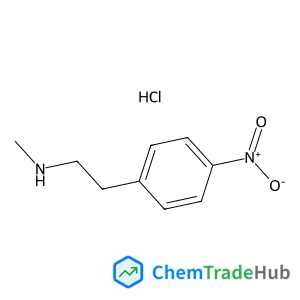
N-Methyl-2-(4-nitrophenyl)ethanamine hydrochloride (1:1)
CAS Number:
166943-39-1
Molecular Formula:
C9H13ClN2O2

Recommended Suppliers





Disclaimer
This page provides academic journal information for reference and research purposes only. We are not affiliated with any journal publishers and do not handle publication submissions. For publication-related inquiries, please contact the respective journal publishers directly.
If you notice any inaccuracies in the information displayed, please contact us at support@chemtradehub.com. We will promptly review and address your concerns.