












Dynamics of multi-channel dissociation of tetrahydrofuran photoexcited at 193 nm: distributions of kinetic energy, angular anisotropies and branching ratios
Literature Information
Publication Date
2010-01-27
DOI
10.1039/B921219A
Impact Factor
3.676
Authors
View Original
Abstract
We investigated the photodissociation dynamics of tetrahydrofuran (c-C4H8O) at 193.3 nm in a molecular-beam apparatus using photofragment-translational spectroscopy and direct vacuum-ultraviolet (VUV) photoionization. Five dissociation channels leading to products with m/z ratios appropriate for CH2CH2CH2 + H2CO, CH2CHCH2 + CH2OH, H + CH2CH2 + CH2CHO, CH2CH2 + CH3 + HCO and CH2CH2 + CH2CO + H2 were identified; their branching ratios were determined to be 0.40, 0.25, 0.04 0.29 and 0.02, respectively. Secondary dissociations from nascent products CH2CH2CH2CHO to CH2CH2 + CH2CHO and from CH2CH2O to CH3 + HCO and likely to CH2CO + H2 were observed. We measured distributions of product kinetic energy, average kinetic-energy release, and fractions in translation for each dissociation channel. The formation of CH2CHCH2 + CH2OH indicates that hydrogen migration occurs before complete fragmentation. All photofragments have nearly isotropic angular distributions, with |β| values less than 0.05. The photodissociation of tetrahydrofuran into five channels is proposed to proceed mainly on the ground state potential-energy surface following ring opening and efficient internal conversions.
Related Literature
Conformational features of the Aβ42 peptide monomer and its interaction with the surrounding solvent
Prabir Khatua, Jaya C. Jose, Neelanjana Sengupta, Sanjoy Bandyopadhyay
2016-10-12
Paper
DOI: 10.1039/C6CP04925G
Interaction between charged nanoparticles and vesicles: coarse-grained molecular dynamics simulations
Linying Liu, Jianhua Zhang, Xiaowei Zhao, Zheng Mao, Na Liu, Youyu Zhang
2016-10-27
Paper
DOI: 10.1039/C6CP05998H
Ionic liquid induced G-quadruplex formation and stabilization: spectroscopic and simulation studies
Sagar Satpathi, Mandar Kulkarni, Arnab Mukherjee, Partha Hazra
2016-10-06
Paper
DOI: 10.1039/C6CP05732B
Electrons, excitons and hydrogen bonding: electron-promoted desorption from molecular ice surfaces
Demian Marchione, Martin R. S. McCoustra
2016-10-17
Paper
DOI: 10.1039/C6CP05814K
On the origin of the great rigidity of self-assembled diphenylalanine nanotubes
Pavel Zelenovskiy, Igor Kornev, Semen Vasilev
2016-10-13
Communication
DOI: 10.1039/C6CP04337B
A comparative study of Ni–Mn layered double hydroxide/carbon composites with different morphologies for supercapacitors
M. Li, F. Liu, X. B. Zhang, J. P. Cheng
2016-10-06
Paper
DOI: 10.1039/C6CP05119G
Transferability of a coarse-grained atactic polystyrene model: the non-bonded potential effect
2016-10-04
Paper
DOI: 10.1039/C6CP03753D
You might also like
Compound Q&A
What precautions should be taken when handling 2-Chloro-1,2-bis(4-methylphenyl)ethanone (CAS: 71193-32-3)?
When handling 2-Chloro-1,2-bis(4-methylphenyl)ethanone (CAS: 71193-32-3), it is ...
71193-32-32-Chloro-1,2-bis(4-m...
Compound Q&A
What industries use 4-Ethoxy-3-(5-methyl-4-oxo-7-propyl-1,4-dihydroimidazo[5,1-f][1,2,4]triazin-2-yl)benzenesulfonyl chloride (CAS: 224789-26-8)?
4-Ethoxy-3-(5-methyl-4-oxo-7-propyl-1,4-dihydroimidazo[5,1-f][1,2,4]triazin-2-yl...
224789-26-84-Ethoxy-3-(5-methyl...
Compound Q&A
How should Methyl 3-Oxo-4-Androsten-17-Carboxylate (CAS: 2681-55-2) be stored?
Methyl 3-Oxo-4-Androsten-17-Carboxylate (CAS: 2681-55-2) should be stored in a c...
2681-55-2Methyl 3-Oxo-4-Andro...
Compound Q&A
What are the main uses of (R)-3-Amino-4-(3-hexylphenylamino)-4-oxobutylphosphonic acid (CAS: 909725-61-7)?
(R)-3-Amino-4-(3-hexylphenylamino)-4-oxobutylphosphonic acid is primarily used i...
909725-61-7(R)-3-Amino-4-(3-hex...
Compound Q&A
What regulatory guidelines apply to 2-Methyl-2-propanyl 3-amino-3-carbamoyl-1-azetidinecarboxylate (CAS: 1254120-14-3)?
2-Methyl-2-propanyl 3-amino-3-carbamoyl-1-azetidinecarboxylate (CAS: 1254120-14-...
1254120-14-32-Methyl-2-propanyl ...
Compound Q&A
Are there alternatives to (E)-4-(tert-Butoxy)-4-oxobut-2-enoic acid (CAS: 135355-96-3) in synthesis?
There are alternative reagents that can be used in synthesis instead of (E)-4-(t...
135355-96-3(E)-4-(tert-Butoxy)-...
Compound Q&A
What are the physical and chemical properties of [2-(3-Chlorophenyl)-1,3-thiazol-4-yl]methanol (CAS: 121202-20-8)?
[2-(3-Chlorophenyl)-1,3-thiazol-4-yl]methanol (CAS: 121202-20-8) is a crystallin...
121202-20-8[2-(3-Chlorophenyl)-...
Compound Q&A
What is the market or research trend for Methyl (2S)-[(4S)-2,2-dimethyl-1,3-dioxolan-4-yl]{[(4-methylphenyl)sulfonyl]oxy}acetate (CAS: 166249-17-8)?
The market and research trends for Methyl (2S)-[(4S)-2,2-dimethyl-1,3-dioxolan-4...
166249-17-8Methyl (2S)-[(4S)-2,...
Compound Q&A
What is the market or research trend for 1-Bromo-2-isocyanatoethane (CAS: 42865-19-0)?
The market for 1-Bromo-2-isocyanatoethane (CAS: 42865-19-0) is driven by its use...
42865-19-01-Bromo-2-isocyanato...
Compound Q&A
What are the main uses of 4-Nitro-D-phenylalanine hydrochloride (CAS: 147065-06-3)?
4-Nitro-D-phenylalanine hydrochloride (CAS: 147065-06-3) is primarily used in re...
147065-06-34-Nitro-D-phenylalan...
Source Journal
Physical Chemistry Chemical Physics

CiteScore:
5.5
Self-citation Rate:
10.3%
Articles per Year:
3036
Physical Chemistry Chemical Physics (PCCP) is an international journal co-owned by 19 physical chemistry and physics societies from around the world. This journal publishes original, cutting-edge research in physical chemistry, chemical physics and biophysical chemistry. To be suitable for publication in PCCP, articles must include significant innovation and/or insight into physical chemistry; this is the most important criterion that reviewers and Editors will judge against when evaluating submissions. The journal has a broad scope and welcomes contributions spanning experiment, theory, computation and data science. Topical coverage includes spectroscopy, dynamics, kinetics, statistical mechanics, thermodynamics, electrochemistry, catalysis, surface science, quantum mechanics, quantum computing and machine learning. Interdisciplinary research areas such as polymers and soft matter, materials, nanoscience, energy, surfaces/interfaces, and biophysical chemistry are welcomed if they demonstrate significant innovation and/or insight into physical chemistry. Joined experimental/theoretical studies are particularly appreciated when complementary and based on up-to-date approaches.
Recommended Compounds

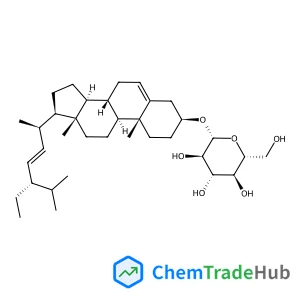
(3beta,22E)-Stigmasta-5,22-dien-3-yl beta-D-glucopyranoside
CAS Number:
19716-26-8
Molecular Formula:
C35H58O6
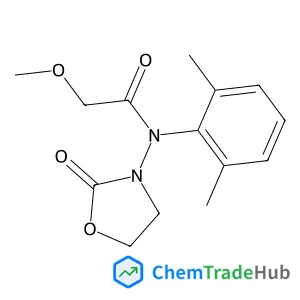
N-(2,6-Dimethylphenyl)-2-methoxy-N-(2-oxo-1,3-oxazolidin-3-yl)acetamide
CAS Number:
77732-09-3
Molecular Formula:
C14H18N2O4
Recommended Suppliers




Disclaimer
This page provides academic journal information for reference and research purposes only. We are not affiliated with any journal publishers and do not handle publication submissions. For publication-related inquiries, please contact the respective journal publishers directly.
If you notice any inaccuracies in the information displayed, please contact us at support@chemtradehub.com. We will promptly review and address your concerns.