












Enhanced dihydrogen adsorption in symmetry-lowered metal–porphyrin-containing frameworks
Literature Information
Publication Date
2009-09-25
DOI
10.1039/B913711D
Impact Factor
3.676
Authors
Y. Y. Sun, Woon Ih Choi, Joongoo Kang, S. B. Zhang
View Original
Abstract
Porphyrin is a very important component of natural and artificial catalysis and oxygen delivery in blood. Here, we report that, based on first-principles density-functional calculations, a hydrogen molecule can be adsorbed non-dissociatively onto Ti-, V-, and Fe-porphyrins, similar to oxygen adsorption in heme-containing proteins, with a significant energy gain, greater than 0.3 eV per H2. The dihydrogen–heme complex will be non-magnetic, as is oxyhemoglobin. In contrast to the backward electron donation of Fe(III)–O2− in oxyhemoglobin, the dihydrogen binding originates from electron donation from H2 to the Fe(II). We have identified that the local symmetry of the transition metal center of porphyrins uniquely determines the binding strength, and, thus, one can even manipulate the strength by intentionally and systematically breaking symmetry.
Related Literature
Predicted low thermal conductivities in antimony films and the role of chemical functionalization
Tian Zhang, Yuan-Yuan Qi, Xiang-Rong Chen, Ling-Cang Cai
2016-10-24
Paper
DOI: 10.1039/C6CP05908B
Salt gradient driven ion transport in solid-state nanopores: the crucial role of reservoir geometry and size
Chih-Yuan Lin, Fu Chen, Li-Hsien Yeh, Jyh-Ping Hsu
2016-10-12
Paper
DOI: 10.1039/C6CP06459K
Convective heat transfer in a measurement cell for scanning electrochemical microscopy
Javor K. Novev, Richard G. Compton
2016-10-14
Paper
DOI: 10.1039/C6CP06121D
Electrons, excitons and hydrogen bonding: electron-promoted desorption from molecular ice surfaces
Demian Marchione, Martin R. S. McCoustra
2016-10-17
Paper
DOI: 10.1039/C6CP05814K
The segregation resistance of the Pt2ML/Os/Pd3Al sandwich catalyst for oxygen reduction reaction: a density functional theory study
B. B. Xiao, X. B. Jiang, X. L. Yang, Q. Jiang
2016-10-10
Paper
DOI: 10.1039/C6CP05869H
Investigating the coverage dependent behaviour of CO on Gd/Pt(111)
Elisabeth Therese Ulrikkeholm, Jan Rossmeisl, Ib Chorkendorff
2016-09-22
Paper
DOI: 10.1039/C6CP04575H
Solvation free energies for periodic surfaces: comparison of implicit and explicit solvation models‡
Stephan N. Steinmann, Carine Michel
2016-10-28
Paper
DOI: 10.1039/C6CP04094B
Dark states enhance the photocell power via phononic dissipation
Yiteng Zhang, Aaron Wirthwein, Fahhad H. Alharbi, Gregory S. Engel
2016-11-07
Paper
DOI: 10.1039/C6CP06098F
On the origin of the great rigidity of self-assembled diphenylalanine nanotubes
Pavel Zelenovskiy, Igor Kornev, Semen Vasilev
2016-10-13
Communication
DOI: 10.1039/C6CP04337B
Hydrogen abstraction from metal surfaces: when electron–hole pair excitations strongly affect hot-atom recombination
Rémi Pétuya, Fabio Busnengo
2016-10-21
Communication
DOI: 10.1039/C6CP06222A
You might also like
Compound Q&A
What precautions should be taken when handling 2-Chloro-1,2-bis(4-methylphenyl)ethanone (CAS: 71193-32-3)?
When handling 2-Chloro-1,2-bis(4-methylphenyl)ethanone (CAS: 71193-32-3), it is ...
71193-32-32-Chloro-1,2-bis(4-m...
Compound Q&A
What industries use 4-Ethoxy-3-(5-methyl-4-oxo-7-propyl-1,4-dihydroimidazo[5,1-f][1,2,4]triazin-2-yl)benzenesulfonyl chloride (CAS: 224789-26-8)?
4-Ethoxy-3-(5-methyl-4-oxo-7-propyl-1,4-dihydroimidazo[5,1-f][1,2,4]triazin-2-yl...
224789-26-84-Ethoxy-3-(5-methyl...
Compound Q&A
How should Methyl 3-Oxo-4-Androsten-17-Carboxylate (CAS: 2681-55-2) be stored?
Methyl 3-Oxo-4-Androsten-17-Carboxylate (CAS: 2681-55-2) should be stored in a c...
2681-55-2Methyl 3-Oxo-4-Andro...
Compound Q&A
What are the main uses of (R)-3-Amino-4-(3-hexylphenylamino)-4-oxobutylphosphonic acid (CAS: 909725-61-7)?
(R)-3-Amino-4-(3-hexylphenylamino)-4-oxobutylphosphonic acid is primarily used i...
909725-61-7(R)-3-Amino-4-(3-hex...
Compound Q&A
What regulatory guidelines apply to 2-Methyl-2-propanyl 3-amino-3-carbamoyl-1-azetidinecarboxylate (CAS: 1254120-14-3)?
2-Methyl-2-propanyl 3-amino-3-carbamoyl-1-azetidinecarboxylate (CAS: 1254120-14-...
1254120-14-32-Methyl-2-propanyl ...
Compound Q&A
Are there alternatives to (E)-4-(tert-Butoxy)-4-oxobut-2-enoic acid (CAS: 135355-96-3) in synthesis?
There are alternative reagents that can be used in synthesis instead of (E)-4-(t...
135355-96-3(E)-4-(tert-Butoxy)-...
Compound Q&A
What are the physical and chemical properties of [2-(3-Chlorophenyl)-1,3-thiazol-4-yl]methanol (CAS: 121202-20-8)?
[2-(3-Chlorophenyl)-1,3-thiazol-4-yl]methanol (CAS: 121202-20-8) is a crystallin...
121202-20-8[2-(3-Chlorophenyl)-...
Compound Q&A
What is the market or research trend for Methyl (2S)-[(4S)-2,2-dimethyl-1,3-dioxolan-4-yl]{[(4-methylphenyl)sulfonyl]oxy}acetate (CAS: 166249-17-8)?
The market and research trends for Methyl (2S)-[(4S)-2,2-dimethyl-1,3-dioxolan-4...
166249-17-8Methyl (2S)-[(4S)-2,...
Compound Q&A
What is the market or research trend for 1-Bromo-2-isocyanatoethane (CAS: 42865-19-0)?
The market for 1-Bromo-2-isocyanatoethane (CAS: 42865-19-0) is driven by its use...
42865-19-01-Bromo-2-isocyanato...
Compound Q&A
What are the main uses of 4-Nitro-D-phenylalanine hydrochloride (CAS: 147065-06-3)?
4-Nitro-D-phenylalanine hydrochloride (CAS: 147065-06-3) is primarily used in re...
147065-06-34-Nitro-D-phenylalan...
Source Journal
Physical Chemistry Chemical Physics

CiteScore:
5.5
Self-citation Rate:
10.3%
Articles per Year:
3036
Physical Chemistry Chemical Physics (PCCP) is an international journal co-owned by 19 physical chemistry and physics societies from around the world. This journal publishes original, cutting-edge research in physical chemistry, chemical physics and biophysical chemistry. To be suitable for publication in PCCP, articles must include significant innovation and/or insight into physical chemistry; this is the most important criterion that reviewers and Editors will judge against when evaluating submissions. The journal has a broad scope and welcomes contributions spanning experiment, theory, computation and data science. Topical coverage includes spectroscopy, dynamics, kinetics, statistical mechanics, thermodynamics, electrochemistry, catalysis, surface science, quantum mechanics, quantum computing and machine learning. Interdisciplinary research areas such as polymers and soft matter, materials, nanoscience, energy, surfaces/interfaces, and biophysical chemistry are welcomed if they demonstrate significant innovation and/or insight into physical chemistry. Joined experimental/theoretical studies are particularly appreciated when complementary and based on up-to-date approaches.
Recommended Compounds
![4-[2-(Trichlorosilyl)ethyl]benzenesulfonyl chloride structure](https://static.chemtradehub.com/structs/797/79793-00-3-de16.webp "4-[2-(Trichlorosilyl)ethyl]benzenesulfonyl chloride structure")
4-[2-(Trichlorosilyl)ethyl]benzenesulfonyl chloride
CAS Number:
79793-00-3
Molecular Formula:
C8H8Cl4O2SSi
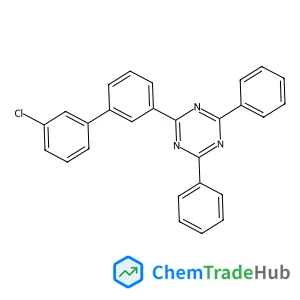
2-(3'-Chlorobiphenyl-3-yl)-4,6-diphenyl-1,3,5-triazine
CAS Number:
1443049-83-9
Molecular Formula:
C27H18ClN3
Recommended Suppliers






Disclaimer
This page provides academic journal information for reference and research purposes only. We are not affiliated with any journal publishers and do not handle publication submissions. For publication-related inquiries, please contact the respective journal publishers directly.
If you notice any inaccuracies in the information displayed, please contact us at support@chemtradehub.com. We will promptly review and address your concerns.