












Switching electrical conductivity in an AOT–isooctane–water microemulsion through photodimerization of solubilized N-methyl-2-quinolone
Literature Information
Publication Date
2006-08-07
DOI
10.1039/B606888J
Impact Factor
3.676
Authors
Markus Bufe, Thomas Wolff
View Original
Abstract
The electrical conductivity of microemulsions composed of Aerosol OT (AOT), isooctane and water as a function of temperature was studied in the absence and presence of N-methyl-2-quinolone (NMQ), and consequences of an in situ photodimerization of NMQ were investigated. A conductivity increase upon raising the temperature of a water-in-oil microemulsion indicates percolation. Percolation temperatures (Tp) can be influenced specifically by the addition of certain substances. Small amounts of solubilized N-methyl-2-quinolone induce lower Tp (by up to 9 K), and photodimerization of NMQ shifts Tp back to higher values. Consequently, the microemulsion can be switched from conducting to non-conducting without varying temperature or composition by exposing samples to UV light at λ > 310 nm. The effect can be reverted in part by irradiation at λ = 250 nm. Coumarin derivatives—structurally related to NMQ—show much slighter effects.
Recommended Journals
Related Literature
Inverse halogen dependence in anion 13C NMR
Renan V. Viesser, Cláudio F. Tormena
2020-12-23
Paper
DOI: 10.1039/D0CP05891B
A physico-chemical investigation of highly concentrated potassium acetate solutions towards applications in electrochemistry
Pierre L. Stigliano, Nicolò Pianta, Simone Bonizzoni, Michele Mauri, Roberto Simonutti, Roberto Lorenzi, Barbara Vigani, Vittorio Berbenni, Silvia Rossi
2020-12-08
Paper
DOI: 10.1039/D0CP04151C
Complexity of a peroxidase–oxidase reaction model
Marcus J. B. Hauser, Lars F. Olsen
2021-01-06
Paper
DOI: 10.1039/D0CP06153K
Structural and optical properties of Be, Mg and Ca nanorods and nanodisks
A. G. Chronis, F. I. Michos, C. S. Garoufalis, M. M. Sigalas
2021-01-07
Paper
DOI: 10.1039/D0CP05780K
New atomic-scale insights into the I/Ni(100) system: phase transitions and growth of an atomically thin NiI2 film
T. V. Pavlova, B. V. Andryushechkin
2021-01-11
Paper
DOI: 10.1039/D0CP06171A
Morphology dependent interaction between Co(ii)-tetraphenylporphyrin and the MgO(100) surface
Silviya Ninova, Osman Barış Malcıoğlu, Philipp Auburger, Matthias Franke, Ole Lytken, Hans-Peter Steinrück
2021-01-04
Paper
DOI: 10.1039/D0CP04859C
Single transition metal anchored C9N4 sheets as an efficient catalyst for CO oxidation: a first-principles study
Junchao Huang, Chun Zhou, Zhaoqin Chu, Xu Liu
2020-12-23
Paper
DOI: 10.1039/D0CP05306F
The Brønsted–Evans–Polanyi relationship in oxygen exchange of fuel cell cathode material SrCo0.9Ta0.1O3−δ with the gas phase
Sergey F. Bychkov, Mikhail P. Popov, Alexander P. Nemudry
2020-12-08
Paper
DOI: 10.1039/D0CP04856A
Ultrafast channel I and channel II charge generation processes at a nonfullerene donor–acceptor PTB7:PDI interface is crucial for its excellent photovoltaic performance
Kai Li, Dong-Hui Xu, Xin Wang, Xiang-Yang Liu
2021-01-05
Paper
DOI: 10.1039/D0CP05362G
Redox-couple investigations in Si-doped Li-rich cathode materials
Leah Nation, Yan Wu, Xiaoming Liu, Miaofang Chi, Yuqin Wu, Yue Qi, Brian W. Sheldon
2021-01-08
Paper
DOI: 10.1039/D0CP05737A
You might also like
Compound Q&A
How is Ethyl 4-chlorothieno[2,3-b]pyridine-5-carboxylate (CAS: 59713-58-5) typically synthesized?
Ethyl 4-chlorothieno[2,3-b]pyridine-5-carboxylate (CAS: 59713-58-5) can be synth...
59713-58-5Ethyl 4-chlorothieno...
Compound Q&A
What regulatory guidelines apply to 5-Methyl-1H-indole-3-carbaldehyde (CAS: 52562-50-2)?
5-Methyl-1H-indole-3-carbaldehyde (CAS: 52562-50-2) is subject to various regula...
52562-50-25-Methyl-1H-indole-3...
Compound Q&A
What are the physical and chemical properties of (1,3-Dimethyl-2,4-dioxo-1,2,3,4-tetrahydro-5-pyrimidinyl)boronic acid (CAS: 223418-73-3)?
(1,3-Dimethyl-2,4-dioxo-1,2,3,4-tetrahydro-5-pyrimidinyl)boronic acid is a white...
223418-73-3(1,3-Dimethyl-2,4-di...
Compound Q&A
How should waste containing Sulfocostunolide A (CAS: 1016983-51-9) be handled?
Waste containing Sulfocostunolide A (CAS: 1016983-51-9) should be handled with c...
1016983-51-9Sulfocostunolide A
Compound Q&A
What precautions should be taken when handling Murraxocin (CAS: 88478-44-8)?
When handling Murraxocin (CAS: 88478-44-8), ensure proper personal protective eq...
88478-44-8Murraxocin
Compound Q&A
What are the physical and chemical properties of Formvar (CAS: 63148-64-1)?
Formvar (CAS: 63148-64-1) is an alkyd resin characterized by a high molecular we...
63148-64-1Formvar(R)
Compound Q&A
Is (S)-4-benzyl-2-((benzyloxy)methyl)morpholine (CAS: 205242-66-6) safe?
(S)-4-benzyl-2-((benzyloxy)methyl)morpholine is generally safe when handled with...
205242-66-6(S)-4-benzyl-2-((ben...
Compound Q&A
What industries use Methyl 1-(5-bromo-2-pyrimidinyl)cyclopropanecarboxylate (CAS: 1447607-69-3)?
Methyl 1-(5-bromo-2-pyrimidinyl)cyclopropanecarboxylate (CAS: 1447607-69-3) is p...
1447607-69-3Methyl 1-(5-bromo-2-...
Compound Q&A
Is 2-Methyl-1-phenyl-1-propanamine hydrochloride (CAS: 24290-47-9) safe?
2-Methyl-1-phenyl-1-propanamine hydrochloride (CAS: 24290-47-9) is generally con...
24290-47-92-Methyl-1-phenyl-1-...
Compound Q&A
How is 3-(4-Bromophenyl)-2-methylpropanoic acid (CAS: 66735-01-1) typically synthesized?
3-(4-Bromophenyl)-2-methylpropanoic acid is synthesized through a multi-step pro...
66735-01-13-(4-Bromophenyl)-2-...
Source Journal
Physical Chemistry Chemical Physics

CiteScore:
5.5
Self-citation Rate:
10.3%
Articles per Year:
3036
Physical Chemistry Chemical Physics (PCCP) is an international journal co-owned by 19 physical chemistry and physics societies from around the world. This journal publishes original, cutting-edge research in physical chemistry, chemical physics and biophysical chemistry. To be suitable for publication in PCCP, articles must include significant innovation and/or insight into physical chemistry; this is the most important criterion that reviewers and Editors will judge against when evaluating submissions. The journal has a broad scope and welcomes contributions spanning experiment, theory, computation and data science. Topical coverage includes spectroscopy, dynamics, kinetics, statistical mechanics, thermodynamics, electrochemistry, catalysis, surface science, quantum mechanics, quantum computing and machine learning. Interdisciplinary research areas such as polymers and soft matter, materials, nanoscience, energy, surfaces/interfaces, and biophysical chemistry are welcomed if they demonstrate significant innovation and/or insight into physical chemistry. Joined experimental/theoretical studies are particularly appreciated when complementary and based on up-to-date approaches.
Recommended Compounds
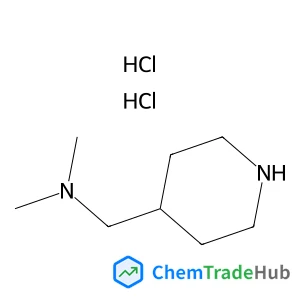
N,N-dimethyl(piperidin-4-yl)methanamine hydrochloride
CAS Number:
172281-72-0
Molecular Formula:
C8H20Cl2N2
Recommended Suppliers





Disclaimer
This page provides academic journal information for reference and research purposes only. We are not affiliated with any journal publishers and do not handle publication submissions. For publication-related inquiries, please contact the respective journal publishers directly.
If you notice any inaccuracies in the information displayed, please contact us at support@chemtradehub.com. We will promptly review and address your concerns.