












Ultrafast channel I and channel II charge generation processes at a nonfullerene donor–acceptor PTB7:PDI interface is crucial for its excellent photovoltaic performance
Literature Information
Publication Date
2021-01-05
DOI
10.1039/D0CP05362G
Impact Factor
3.676
Authors
Kai Li, Dong-Hui Xu, Xin Wang, Xiang-Yang Liu
View Original
Abstract
Nonfullerene organic solar cells have received much attention in recent years due to their low cost, high absorption coefficient and excellent synthetic flexibility. However, the microscopic photoinduced dynamics at corresponding donor–acceptor interfaces remains unclear. In this work, we have firstly employed state-of-the-art TDDFT-based nonadiabatic dynamics simulations in combination with static electronic structure calculations to explore the ultrafast photoinduced dynamics at a typical nonfullerene donor–acceptor PTB7:PDI interface using a minimal model system (172 atoms). Upon excitation with specific wavelength of light, both PTB7 and PDI can be locally excited to generate |PTB7*〉 and |PDI*〉 excitons due to their high absorption ability and significant overlap in absorption spectrum. After that, these localized excitons gradually convert to charge transfer exciton |PTB7+PDI−〉, while another |PTB7−PDI+〉 charge transfer exciton is not involved in the whole process. Along with the exciton conversion, electron transfer from PTB7 to PDI (channel I charge generation) and the hole transfer from PDI to PTB7 (channel II charge generation) occurs simultaneously with time constants of 643 fs and 549 fs respectively. In the same time, D index that measures the centroid distance of electron and hole increases from 1.0 Å to 4.0 Å, which clearly reflects a charge transfer process at the interface. Our present work provides solid evidence that both channel I and channel II charge generation processes play important roles at PTB7:PDI interface, which could be helpful for the design of novel nonfullerene solar cells with better photovoltaic performance.
Related Literature
Low-temperature PROX (preferential oxidation) on novel CeO2-supported Cu-cluster catalysts under fuel-cell operating conditions
Mizuki Tada, Rajaram Bal, Xindong Mu, Rudy Coquet, Seitaro Namba, Yasuhiro Iwasawa
2007-08-31
Communication
DOI: 10.1039/B709176A
An unprecedented heterotrimetallic Fe/Cu/Co core for mild and highly efficient catalytic oxidation of cycloalkanes by hydrogen peroxide
Dmytro S. Nesterov, Volodymyr N. Kokozay, Viktoriya V. Dyakonenko, Oleg V. Shishkin, Julia Jezierska, Andrew Ozarowski, Alexander M. Kirillov, Maximilian N. Kopylovich, Armando J. L. Pombeiro
2006-09-22
Communication
DOI: 10.1039/B608790F
Synthesis and characterization of a trigonal bipyramidal supramolecular cage based upon rhodium and platinum metal centers
Jered C. Garrison, Matthew J. Panzner, Paul D. Custer, D. Venkat Reddy, Peter L. Rinaldi, Claire A. Tessier, Wiley J. Youngs
2006-09-29
Communication
DOI: 10.1039/B608991G
Supramolecular single-walled carbon nanotubes (SWCNTs) network polymer made by hybrids of SWCNTs and water-soluble calix[8]arenes
Tomoki Ogoshi, Tada-aki Yamagishi, Yoshiaki Nakamoto
2007-09-13
Communication
DOI: 10.1039/B711800G
Fluorescent CXCR4 chemokine receptor antagonists: metal activated binding
Abid Khan, Jon D. Silversides, Leigh Madden, John Greenman, Stephen J. Archibald
2006-12-04
Communication
DOI: 10.1039/B614557D
Synthesis and structure of the new complex hydride Li2BH4NH2
Philip A. Chater, William I. F. David, Paul A. Anderson
2007-10-23
Communication
DOI: 10.1039/B711111H
Luminescent logic function of a surfactant-encapsulated polyoxometalate complex
Hui Zhang, Xiankun Lin, Yi Yan, Lixin Wu
2006-07-21
Communication
DOI: 10.1039/B606343H
Development of a pharmaceutical cocrystal of a monophosphate salt with phosphoric acid
Alex M. Chen, Martha E. Ellison, Andrey Peresypkin, Robert M. Wenslow, Narayan Variankaval, Cecile G. Savarin, Theresa K. Natishan, David J. Mathre, Peter G. Dormer, Danielle H. Euler, Richard G. Ball, Zhixiong Ye, Yaling Wang, Ivan Santos
2006-11-01
Communication
DOI: 10.1039/B612353H
Structural elucidation of a nickel boryl complex. A recyclable borylation Ni(ii) reagent of bromobenzene
Debashis Adhikari, John C. Huffman, Daniel J. Mindiola
2007-09-11
Communication
DOI: 10.1039/B709832D
Room temperature synthesis of surface-functionalised boron nanoparticles
Alexandra L. Pickering, Christoph Mitterbauer, Nigel D. Browning, Susan M. Kauzlarich, Philip P. Power
2007-01-11
Communication
DOI: 10.1039/B614363F
You might also like
Compound Q&A
How is Ethyl 4-chlorothieno[2,3-b]pyridine-5-carboxylate (CAS: 59713-58-5) typically synthesized?
Ethyl 4-chlorothieno[2,3-b]pyridine-5-carboxylate (CAS: 59713-58-5) can be synth...
59713-58-5Ethyl 4-chlorothieno...
Compound Q&A
What regulatory guidelines apply to 5-Methyl-1H-indole-3-carbaldehyde (CAS: 52562-50-2)?
5-Methyl-1H-indole-3-carbaldehyde (CAS: 52562-50-2) is subject to various regula...
52562-50-25-Methyl-1H-indole-3...
Compound Q&A
What are the physical and chemical properties of (1,3-Dimethyl-2,4-dioxo-1,2,3,4-tetrahydro-5-pyrimidinyl)boronic acid (CAS: 223418-73-3)?
(1,3-Dimethyl-2,4-dioxo-1,2,3,4-tetrahydro-5-pyrimidinyl)boronic acid is a white...
223418-73-3(1,3-Dimethyl-2,4-di...
Compound Q&A
How should waste containing Sulfocostunolide A (CAS: 1016983-51-9) be handled?
Waste containing Sulfocostunolide A (CAS: 1016983-51-9) should be handled with c...
1016983-51-9Sulfocostunolide A
Compound Q&A
What precautions should be taken when handling Murraxocin (CAS: 88478-44-8)?
When handling Murraxocin (CAS: 88478-44-8), ensure proper personal protective eq...
88478-44-8Murraxocin
Compound Q&A
What are the physical and chemical properties of Formvar (CAS: 63148-64-1)?
Formvar (CAS: 63148-64-1) is an alkyd resin characterized by a high molecular we...
63148-64-1Formvar(R)
Compound Q&A
Is (S)-4-benzyl-2-((benzyloxy)methyl)morpholine (CAS: 205242-66-6) safe?
(S)-4-benzyl-2-((benzyloxy)methyl)morpholine is generally safe when handled with...
205242-66-6(S)-4-benzyl-2-((ben...
Compound Q&A
What industries use Methyl 1-(5-bromo-2-pyrimidinyl)cyclopropanecarboxylate (CAS: 1447607-69-3)?
Methyl 1-(5-bromo-2-pyrimidinyl)cyclopropanecarboxylate (CAS: 1447607-69-3) is p...
1447607-69-3Methyl 1-(5-bromo-2-...
Compound Q&A
Is 2-Methyl-1-phenyl-1-propanamine hydrochloride (CAS: 24290-47-9) safe?
2-Methyl-1-phenyl-1-propanamine hydrochloride (CAS: 24290-47-9) is generally con...
24290-47-92-Methyl-1-phenyl-1-...
Compound Q&A
How is 3-(4-Bromophenyl)-2-methylpropanoic acid (CAS: 66735-01-1) typically synthesized?
3-(4-Bromophenyl)-2-methylpropanoic acid is synthesized through a multi-step pro...
66735-01-13-(4-Bromophenyl)-2-...
Source Journal
Physical Chemistry Chemical Physics

CiteScore:
5.5
Self-citation Rate:
10.3%
Articles per Year:
3036
Physical Chemistry Chemical Physics (PCCP) is an international journal co-owned by 19 physical chemistry and physics societies from around the world. This journal publishes original, cutting-edge research in physical chemistry, chemical physics and biophysical chemistry. To be suitable for publication in PCCP, articles must include significant innovation and/or insight into physical chemistry; this is the most important criterion that reviewers and Editors will judge against when evaluating submissions. The journal has a broad scope and welcomes contributions spanning experiment, theory, computation and data science. Topical coverage includes spectroscopy, dynamics, kinetics, statistical mechanics, thermodynamics, electrochemistry, catalysis, surface science, quantum mechanics, quantum computing and machine learning. Interdisciplinary research areas such as polymers and soft matter, materials, nanoscience, energy, surfaces/interfaces, and biophysical chemistry are welcomed if they demonstrate significant innovation and/or insight into physical chemistry. Joined experimental/theoretical studies are particularly appreciated when complementary and based on up-to-date approaches.
Recommended Compounds
![Imidazo[1,5-a]pyrazine structure](https://static.chemtradehub.com/structs/274/274-49-7-d749.webp "Imidazo[1,5-a]pyrazine structure")
![[2-(Benzyloxy)-3-bromo-5-methylphenyl]boronic acid structure](https://static.chemtradehub.com/structs/870/870777-20-1-24ac.webp "[2-(Benzyloxy)-3-bromo-5-methylphenyl]boronic acid structure")
[2-(Benzyloxy)-3-bromo-5-methylphenyl]boronic acid
CAS Number:
870777-20-1
Molecular Formula:
C14H14BBrO3
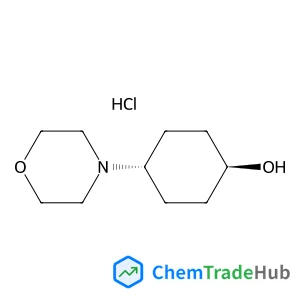
trans-4-(4-Morpholinyl)cyclohexanol hydrochloride (1:1)
CAS Number:
1588441-09-1
Molecular Formula:
C10H20ClNO2
Recommended Suppliers




Disclaimer
This page provides academic journal information for reference and research purposes only. We are not affiliated with any journal publishers and do not handle publication submissions. For publication-related inquiries, please contact the respective journal publishers directly.
If you notice any inaccuracies in the information displayed, please contact us at support@chemtradehub.com. We will promptly review and address your concerns.