













Front cover
Literature Information
Publication Date
DOI
10.1039/B606513A
Impact Factor
6.222
Authors
View Original
Abstract
The first page of this article is displayed as the abstract.
Related Literature
Organocatalytic asymmetric α-bromination of aldehydes and ketones
Søren Bertelsen, Nis Halland, Stephan Bachmann, Mauro Marigo, Alan Braunton, Karl Anker Jørgensen
2005-08-30
Communication
DOI: 10.1039/B509366J
New approach to sulfonated diphosphine complexes: synthesis and amphoteric behaviour of zwitterionic [Mn+(CO4{(PPh2)2C(H)SO3−}]
Javier Ruiz, Mario Ceroni, Marilín Vivanco, Marta P. Gonzalo, Santiago García-Granda, Francisco van der Maelen
2005-09-05
Communication
DOI: 10.1039/B507600E
The first synthesis of organic–inorganic hybrid materials with chiral bis(oxazoline) ligands
José M. Fraile, José I. García, Clara I. Herrerías, José A. Mayoral
2005-08-23
Communication
DOI: 10.1039/B507739G
The synthesis of isostructural Mo2+porphyrin and N-confused porphyrin complexes
John D. Harvey, Janet L. Shaw, Richard S. Herrick, Christopher J. Ziegler
2005-08-23
Communication
DOI: 10.1039/B508913A
NH vs. CH hydrogen bond formation in metal–organic anion receptors containing pyrrolylpyridine ligands
Ismael El Drubi Vega, Philip A. Gale, Mark E. Light, Stephen J. Loeb
2005-09-12
Communication
DOI: 10.1039/B510506D
Aptamer biosensor for label-free impedance spectroscopy detection of proteins based on recognition-induced switching of the surface charge
Marcela C. Rodriguez, Abdel-Nasser Kawde, Joseph Wang
2005-07-12
Communication
DOI: 10.1039/B506571B
Reactivity of electrophilic μ-phosphinidene complexes with heterocumulenes: formation of the first σ-π-aminophosphaimine complexes [Mn2(CO)8{μ-η1,η2-P(NiPr2)NR}] and diazoalkane insertions into metal–phosphorus bonds
Konstantin A. Udachin
2005-07-29
Communication
DOI: 10.1039/B505472A
Plasma-promoted dielectric heating in the microwave synthesis of spinels
David J. Brooks, Richard E. Douthwaite, Lisa J. Gillie
2005-09-05
Communication
DOI: 10.1039/B506569K
Half-rotation in a [2]catenanevia interconvertible Pd(ii) coordination modes
David A. Leigh, Paul J. Lusby, Alexandra M. Z. Slawin, D. Barney Walker
2005-09-13
Communication
DOI: 10.1039/B510663J
First EXAFS studies on aurophilic interactions in solution
Héctor de la Riva, Aranzazu Pintado-Alba, Mark Nieuwenhuyzen, Christopher Hardacre, M. Cristina Lagunas
2005-09-08
Communication
DOI: 10.1039/B508863A
You might also like
Compound Q&A
Is 6-(3-Fluorophenyl)picolinic acid (CAS: 887982-40-3) safe?
6-(3-Fluorophenyl)picolinic acid is generally considered safe for laboratory use...
887982-40-36-(3-Fluorophenyl)pi...
Compound Q&A
What industries use (3R)-3-Pyrrolidinol (CAS: 2799-21-5)?
(3R)-3-Pyrrolidinol is used in the pharmaceutical industry as a precursor for dr...
2799-21-5(3R)-3-Pyrrolidinol
Compound Q&A
What precautions should be taken when handling (4R,5R)-4,5-Diethoxycarbonyl-2,2-dimethyldioxolane (CAS: 59779-75-8)?
When handling (4R,5R)-4,5-Diethoxycarbonyl-2,2-dimethyldioxolane (CAS: 59779-75-...
59779-75-8(4R,5R)-4,5-Diethoxy...
Compound Q&A
How is 1-(6-Chloroimidazo[1,2-b]pyridazin-3-yl)ethanone (CAS: 90734-71-7) typically synthesized?
1-(6-Chloroimidazo[1,2-b]pyridazin-3-yl)ethanone is often synthesized via a mult...
90734-71-71-(6-Chloroimidazo[1...
Compound Q&A
What is the market or research trend for N-Ethyl-3,4-dimethylbenzylamine (CAS: 39180-83-1)?
The market for N-Ethyl-3,4-dimethylbenzylamine (CAS: 39180-83-1) remains steady,...
39180-83-1N-Ethyl-3,4-dimethyl...
Compound Q&A
What is Tert-butyl 3-(pyrrolidin-1-yl)azetidine-1-carboxylate (CAS: 1019008-21-9)?
Tert-butyl 3-(pyrrolidin-1-yl)azetidine-1-carboxylate is a chemical compound wit...
1019008-21-9Tert-butyl 3-(pyrrol...
Compound Q&A
What regulatory guidelines apply to 1-Bromo-3-chloro-2,4-dimethoxybenzene (CAS: 1228956-93-1)?
1-Bromo-3-chloro-2,4-dimethoxybenzene (CAS: 1228956-93-1) falls under the classi...
1228956-93-11-Bromo-3-chloro-2,4...
Compound Q&A
Is 8-Bromo-2-methyl-3,4-dihydroisoquinolin-1(2H)-one (CAS: 1368622-07-4) safe?
The safety of 8-Bromo-2-methyl-3,4-dihydroisoquinolin-1(2H)-one (CAS: 1368622-07...
1368622-07-48-Bromo-2-methyl-3,4...
Compound Q&A
Is Benzyl [(3S)-2,6-dioxo-3-piperidinyl]carbamate (CAS: 22785-43-9) safe?
Benzyl [(3S)-2,6-dioxo-3-piperidinyl]carbamate is generally safe when handled wi...
22785-43-9Benzyl [(3S)-2,6-dio...
Compound Q&A
How should 1-{[4-(4,4,5,5-Tetramethyl-1,3,2-dioxaborolan-2-yl)phenyl]sulfonyl}pyrrolidine (CAS: 928657-21-0) be stored?
1-{[4-(4,4,5,5-Tetramethyl-1,3,2-dioxaborolan-2-yl)phenyl]sulfonyl}pyrrolidine s...
928657-21-01-{[4-(4,4,5,5-Tetra...
Source Journal
Chemical Communications

CiteScore:
8.6
Self-citation Rate:
4.7%
Articles per Year:
2458
ChemComm publishes urgent research which is of outstanding significance and interest to experts in the field, while also appealing to the journal’s broad chemistry readership. Our communication format is ideally suited to short, urgent studies that are of such importance that they require accelerated publication. Our scope covers all topics in chemistry, and research at the interface of chemistry and other disciplines (such as materials science, nanoscience, physics, engineering and biology) where there is a significant novelty in the chemistry aspects. Major topic areas covered include: Analytical Chemistry Catalysis Chemical Biology and medicinal chemistry Computational Chemistry and Machine Learning Energy and sustainable chemistry Environmental Chemistry Green Chemistry Inorganic Chemistry Materials Chemistry Nanoscience Organic Chemistry Physical Chemistry Polymer Chemistry Supramolecular Chemistry
Recommended Compounds
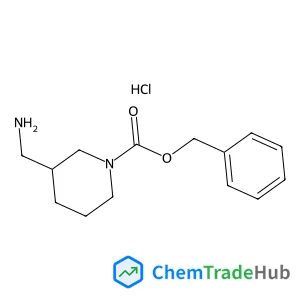
Benzyl 3-(aminomethyl)piperidine-1-carboxylate hydrochloride
CAS Number:
1186663-23-9
Molecular Formula:
C14H21ClN2O2
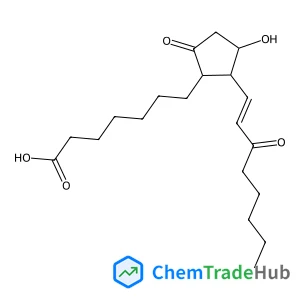
(11alpha,13E)-11-Hydroxy-9,15-dioxoprost-13-en-1-oic acid
CAS Number:
22973-19-9
Molecular Formula:
C20H32O5
Recommended Suppliers




Disclaimer
This page provides academic journal information for reference and research purposes only. We are not affiliated with any journal publishers and do not handle publication submissions. For publication-related inquiries, please contact the respective journal publishers directly.
If you notice any inaccuracies in the information displayed, please contact us at support@chemtradehub.com. We will promptly review and address your concerns.