


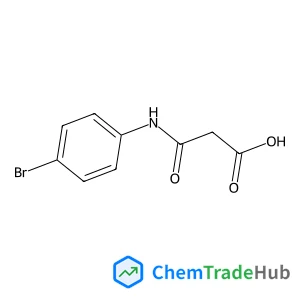
Inside front cover
Literature Information
Publication Date
DOI
10.1039/B605832A
Impact Factor
6.222
Authors
View Original
Abstract
The first page of this article is displayed as the abstract.
Recommended Journals

Acta Metallurgica Sinica-English Letters

Bioorganic & Medicinal Chemistry Letters

Colloid Journal

NDT & E International

Topics in Catalysis

Bioorganic & Medicinal Chemistry

Atomization and Sprays

Critical Reviews in Solid State and Materials Sciences

Herald of the Russian Academy of Sciences

Main Group Chemistry
Related Literature
What is the “best” atomic charge model to describe through-space charge-transfer excitations?
Denis Jacquemin, Tangui Le Bahers, Ilaria Ciofini
2012-02-24
Paper
DOI: 10.1039/C2CP40261K
Facile preparation of nitrogen-doped graphene as a metal-free catalyst for oxygen reduction reaction
Ziyin Lin, Min-kyu Song, Yong Ding, Yan Liu, Meilin Liu
2012-01-17
Paper
DOI: 10.1039/C2CP00032F
Air–liquid interfaces of imidazolium-based [TF2N−] ionic liquids: insight from molecular dynamics simulations
Zbyšek Posel, Pavel Izák
2012-02-02
Paper
DOI: 10.1039/C2CP23572B
Dielectric relaxation and ultrafast transient absorption spectroscopy of [C6mim]+[Tf2N]−/acetonitrile mixtures
Nils Bartels, Alexander Stoppa, Richard Buchner, Thomas Lenzer, Kawon Oum
2012-02-07
Paper
DOI: 10.1039/C2CP23704K
Parahydrogen induced polarization in face of keto–enol tautomerism: proof of concept with hyperpolarized ethanol
Thomas Trantzschel, Johannes Bernarding, Markus Plaumann, Denise Lego, Torsten Gutmann, Tomasz Ratajczyk, Sonja Dillenberger, Gerd Buntkowsky, Joachim Bargon, Ute Bommerich
2012-02-28
Paper
DOI: 10.1039/C2CP40272F
A peroxide-bridged imidazole dimer formed from a photochromic naphthalene-bridged imidazole dimer
Sayaka Hatano
2012-03-01
Paper
DOI: 10.1039/C2CP40239D
Fermi energy level tuning for high performance dye sensitized solar cells using sp2 selective nitrogen-doped carbon nanotube channels
Ga In Lee, Narayan Chandra Deb Nath, Subrata Sarker, Weon Ho Shin, A. J. Saleh Ahammad, Jeung Ku Kang
2012-02-23
Communication
DOI: 10.1039/C2CP40279C
Spin crossover transition of Fe(phen)2(NCS)2: periodic dispersion-corrected density-functional study
Jürgen Hafner, Sébastien Lebègue, János G. Ángyán
2012-02-23
Paper
DOI: 10.1039/C2CP40111H
You might also like
Compound Q&A
Is 6-(3-Fluorophenyl)picolinic acid (CAS: 887982-40-3) safe?
6-(3-Fluorophenyl)picolinic acid is generally considered safe for laboratory use...
887982-40-36-(3-Fluorophenyl)pi...
Compound Q&A
What industries use (3R)-3-Pyrrolidinol (CAS: 2799-21-5)?
(3R)-3-Pyrrolidinol is used in the pharmaceutical industry as a precursor for dr...
2799-21-5(3R)-3-Pyrrolidinol
Compound Q&A
What precautions should be taken when handling (4R,5R)-4,5-Diethoxycarbonyl-2,2-dimethyldioxolane (CAS: 59779-75-8)?
When handling (4R,5R)-4,5-Diethoxycarbonyl-2,2-dimethyldioxolane (CAS: 59779-75-...
59779-75-8(4R,5R)-4,5-Diethoxy...
Compound Q&A
How is 1-(6-Chloroimidazo[1,2-b]pyridazin-3-yl)ethanone (CAS: 90734-71-7) typically synthesized?
1-(6-Chloroimidazo[1,2-b]pyridazin-3-yl)ethanone is often synthesized via a mult...
90734-71-71-(6-Chloroimidazo[1...
Compound Q&A
What is the market or research trend for N-Ethyl-3,4-dimethylbenzylamine (CAS: 39180-83-1)?
The market for N-Ethyl-3,4-dimethylbenzylamine (CAS: 39180-83-1) remains steady,...
39180-83-1N-Ethyl-3,4-dimethyl...
Compound Q&A
What is Tert-butyl 3-(pyrrolidin-1-yl)azetidine-1-carboxylate (CAS: 1019008-21-9)?
Tert-butyl 3-(pyrrolidin-1-yl)azetidine-1-carboxylate is a chemical compound wit...
1019008-21-9Tert-butyl 3-(pyrrol...
Compound Q&A
What regulatory guidelines apply to 1-Bromo-3-chloro-2,4-dimethoxybenzene (CAS: 1228956-93-1)?
1-Bromo-3-chloro-2,4-dimethoxybenzene (CAS: 1228956-93-1) falls under the classi...
1228956-93-11-Bromo-3-chloro-2,4...
Compound Q&A
Is 8-Bromo-2-methyl-3,4-dihydroisoquinolin-1(2H)-one (CAS: 1368622-07-4) safe?
The safety of 8-Bromo-2-methyl-3,4-dihydroisoquinolin-1(2H)-one (CAS: 1368622-07...
1368622-07-48-Bromo-2-methyl-3,4...
Compound Q&A
Is Benzyl [(3S)-2,6-dioxo-3-piperidinyl]carbamate (CAS: 22785-43-9) safe?
Benzyl [(3S)-2,6-dioxo-3-piperidinyl]carbamate is generally safe when handled wi...
22785-43-9Benzyl [(3S)-2,6-dio...
Compound Q&A
How should 1-{[4-(4,4,5,5-Tetramethyl-1,3,2-dioxaborolan-2-yl)phenyl]sulfonyl}pyrrolidine (CAS: 928657-21-0) be stored?
1-{[4-(4,4,5,5-Tetramethyl-1,3,2-dioxaborolan-2-yl)phenyl]sulfonyl}pyrrolidine s...
928657-21-01-{[4-(4,4,5,5-Tetra...
Source Journal
Chemical Communications

CiteScore:
8.6
Self-citation Rate:
4.7%
Articles per Year:
2458
ChemComm publishes urgent research which is of outstanding significance and interest to experts in the field, while also appealing to the journal’s broad chemistry readership. Our communication format is ideally suited to short, urgent studies that are of such importance that they require accelerated publication. Our scope covers all topics in chemistry, and research at the interface of chemistry and other disciplines (such as materials science, nanoscience, physics, engineering and biology) where there is a significant novelty in the chemistry aspects. Major topic areas covered include: Analytical Chemistry Catalysis Chemical Biology and medicinal chemistry Computational Chemistry and Machine Learning Energy and sustainable chemistry Environmental Chemistry Green Chemistry Inorganic Chemistry Materials Chemistry Nanoscience Organic Chemistry Physical Chemistry Polymer Chemistry Supramolecular Chemistry
Recommended Compounds
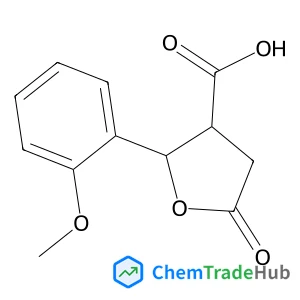
trans-2-(2-Methoxyphenyl)-5-oxotetrahydrofuran-3-carboxylic acid
CAS Number:
99226-02-5
Molecular Formula:
C12H12O5
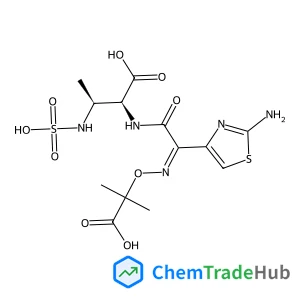
Aztreonam USP Related Compound A (Open-ring Aztreonam)
CAS Number:
87500-74-1
Molecular Formula:
C13H19N5O9S2
Recommended Suppliers





Disclaimer
This page provides academic journal information for reference and research purposes only. We are not affiliated with any journal publishers and do not handle publication submissions. For publication-related inquiries, please contact the respective journal publishers directly.
If you notice any inaccuracies in the information displayed, please contact us at support@chemtradehub.com. We will promptly review and address your concerns.