![2-Methyl-2-propanyl 4-{2-fluoro-5-[(4-oxo-3,4-dihydro-1-phthalazinyl)methyl]benzoyl}-1-piperazinecarboxylate structure](https://static.chemtradehub.com/structs/763/763114-04-1-65a9.webp "2-Methyl-2-propanyl 4-{2-fluoro-5-[(4-oxo-3,4-dihydro-1-phthalazinyl)methyl]benzoyl}-1-piperazinecarboxylate structure")
2-Methyl-2-propanyl 4-{2-fluoro-5-[(4-oxo-3,4-dihydro-1-phthalazinyl)methyl]benzoyl}-1-piperazinecarboxylate
CAS Number:
763114-04-1
Molecular Formula:
C25H27FN4O4
When nanorods of Au, Ag and some other elements are aligned with a preferred orientation with respect to light, their optical extinction characteristics become dependent on the polarization and angle of incidence of the light. This effect is explored here and it is shown that it could potentially be exploited to produce a ‘colour-change coating’. However, particle–particle interactions are also likely to occur in such coatings, with red shifting of extinction spectra occurring for end-on-end configurations of monodisperse rods, and blue shifting for side-by-side configurations. Surprisingly, the particle–particle interactions are attenuated if they are between rods of differing aspect ratios, and this offers a useful new means of control of the optical properties of coatings of nanorods.
Antonio Abate, Tomas Leijtens, Sandeep Pathak, Joël Teuscher, Roberto Avolio, Maria E. Errico, James Kirkpatrik, James M. Ball, Pablo Docampo, Ian McPherson, Henry J. Snaith
DOI: 10.1039/C2CP44397J
Gaëlle Creff, Guilhem Arrachart, Patrick Hermet, Hubert Wadepohl, Robert Almairac, David Maurin, Jean-Louis Sauvajol, Carole Carcel, Joël J. E. Moreau, Philippe Dieudonné, Michel Wong Chi Man, Jean-Louis Bantignies
DOI: 10.1039/C2CP40250E
DOI: 10.1039/C3CP43989E
Minmin Cai, Zhiqiang Gao, Xinhui Zhou, Xupeng Wang, Shufen Chen, Yuezhi Zhao, Yan Qian, Naien Shi, Baoxiu Mi, Linghai Xie, Wei Huang
DOI: 10.1039/C2CP23040B
Gwangseok Yang, Chongmin Lee, Jihyun Kim, Fan Ren, Stephen J. Pearton
DOI: 10.1039/C2CP43717A
Huipeng Chen, Raghavendra Hegde, J. Browning
DOI: 10.1039/C2CP40466D
Evert Vanecht, Koen Binnemans, Sergiy Patskovsky, Michel Meunier, Jin Won Seo, Linda Stappers, Jan Fransaer
DOI: 10.1039/C2CP23677J
Han-Yu Wu, Hai-Sheng Ren, Quan Zhu, Xiang-Yuan Li
DOI: 10.1039/C2CP23759H
Gang Feng, Qian Gou, Luca Evangelisti, Zhining Xia, Walther Caminati
DOI: 10.1039/C2CP44131D
Sylwester Gawinkowski, Łukasz Walewski, Alexander Vdovin, Alkwin Slenczka, Stephane Rols, Mark R. Johnson, Jacek Waluk
DOI: 10.1039/C2CP24098J
6-Bromo-2-methylimidazo[1,2-a]pyrimidine (CAS: 1111638-05-1) falls under various...
While there are no direct alternatives, similar compounds like 1-Pyrrolidineetha...
4-Methyl-2,6-bis(2-methyl-2-propanyl)phenyl methylcarbamate (CAS: 1918-11-2) is ...
2-(3-Bromo-4-fluorophenyl)-1,3-dioxolane (CAS: 77771-04-1) should be stored in a...
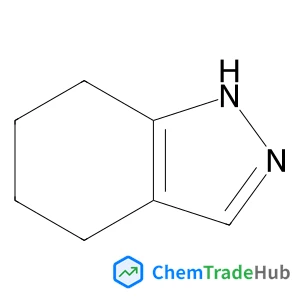
4,5,6,7-Tetrahydro-1H-indazole hydrochloride is a white crystalline solid with a...
(2R)-1-Methoxy-3-phenyl-2-propanamine is a chiral organic compound with the CAS ...
Ethyl 1-(1-phenylethyl)-1H-imidazole-5-carboxylate is used in various industries...
4-[(1E,3S)-1-(4-Hydroxyphenyl)-1,4-pentadien-3-yl]phenol (CAS: 17676-24-3) falls...
(S)-3-Amino-5-phenylpentanoic acid hydrochloride is primarily used in the pharma...
7-Methoxy-1-benzothiophene-2-carboxylic acid is typically synthesized by reactin...

Physical Chemistry Chemical Physics (PCCP) is an international journal co-owned by 19 physical chemistry and physics societies from around the world. This journal publishes original, cutting-edge research in physical chemistry, chemical physics and biophysical chemistry. To be suitable for publication in PCCP, articles must include significant innovation and/or insight into physical chemistry; this is the most important criterion that reviewers and Editors will judge against when evaluating submissions. The journal has a broad scope and welcomes contributions spanning experiment, theory, computation and data science. Topical coverage includes spectroscopy, dynamics, kinetics, statistical mechanics, thermodynamics, electrochemistry, catalysis, surface science, quantum mechanics, quantum computing and machine learning. Interdisciplinary research areas such as polymers and soft matter, materials, nanoscience, energy, surfaces/interfaces, and biophysical chemistry are welcomed if they demonstrate significant innovation and/or insight into physical chemistry. Joined experimental/theoretical studies are particularly appreciated when complementary and based on up-to-date approaches.