












A small change in molecular structure, a big difference in the AIEE mechanism
Literature Information
Publication Date
2012-03-09
DOI
10.1039/C2CP23040B
Impact Factor
3.676
Authors
Minmin Cai, Zhiqiang Gao, Xinhui Zhou, Xupeng Wang, Shufen Chen, Yuezhi Zhao, Yan Qian, Naien Shi, Baoxiu Mi, Linghai Xie, Wei Huang
View Original
Abstract
An anthracene carboxamide derivative of the excited-state intramolecular proton-transfer compound of 2-(2′-hydroxyphenyl)benzothiazole has been newly developed to produce the prominent characteristics of aggregation-induced enhanced emission (AIEE) with a high solid-state fluorescence quantum efficiency of 78.1%. Compared with our previously reported phenyl carboxamide derivatives, a small tailoring of the molecular structure was found to result in a big difference in the dominant factor of the AIEE mechanism. In the phenyl carboxamide derivatives, the dominant factor of the AIEE mechanism is the restriction of the twisted intramolecular charge transfer (TICT) of the enol excited state, regardless of their different aggregation modes. In the anthracene carboxamide derivative, N-(3-(benzo[d]thiazol-2-yl)-4-hydroxyphenyl) anthracene-9-carboxamide, the AIEE characteristics are not dependent on the restriction of TICT, but mainly attributed to the cooperative effects of J-aggregation and the restriction of the cis–trans tautomerization in the keto excited state. A specific N⋯π interaction was found to be the main driving force for this J-aggregation, as revealed by the single crystal analysis. The AIEE mechanism of this anthracene carboxamide derivative was studied in detail through photophysical investigations and theoretical calculations. On the basis of its AIEE characteristics, a stable non-doped organic light-emitting diode was achieved, with high color purity and a remarkably low efficiency roll-off.
Related Literature
Analysis of the effect of changing the a0 parameter of the Becke3-LYP hybrid functional on the transition state geometries and energy barriers in a series of prototypical reactions
Jordi Poater, Miquel Solà, Miquel Duran, Juvencio Robles
2002-01-31
Paper
DOI: 10.1039/B108910M
Characteristic cyclic voltammograms of alkyl viologens at single crystal gold electrodes
Kazuki Arihara, Takeo Ohsaka, Fusao Kitamura
2002-02-13
Communication
DOI: 10.1039/B109879A
The Dieterici alternative to the van der Waals approach for equations of state: second virial coefficients
2002-02-13
Paper
DOI: 10.1039/B108822J
On the structure and coordination of the oxygen-donating species in Ti↑MCM-41/TBHP oxidation catalysts: a density functional theory and EXAFS study
Nikolas Kaltsoyannis
2002-03-04
Paper
DOI: 10.1039/B104735N
Aqueous solutions at pressures up to 2 GPa: gas–gas equilibria, closed loops, high-pressure immiscibility, salt effects and related phenomena
2002-02-12
Paper
DOI: 10.1039/B109277B
Dipole strength effects on the polymorphism in smectic A mesophases
2002-01-23
Paper
DOI: 10.1039/B106788E
Effects of surface tension and rotation on the Rayleigh–Taylor instability
A. H. A. Ayyad
2002-03-13
Paper
DOI: 10.1039/B106242P
Nanostructuring of a sodium dodecyl sulfate-covered Au(111) electrode
Marc Petri, Dieter M. Kolb
2002-02-22
Paper
DOI: 10.1039/B110142K
Mass-selected infrared photodissociation spectroscopy of V4O10+
K. R. Asmis, M. Brümmer, C. Kaposta, G. Santambrogio, G. von Helden, K. Rademann, L. Wöste
2002-02-27
Communication
DOI: 10.1039/B111056J
Preferential solvation of Ca2+ in aqueous ammonia solution: Classical and combined ab initio quantum mechanical/molecular mechanical molecular dynamics simulations
Anan Tongraar, Kritsana Sagarik, Bernd Michael Rode
2002-01-08
Paper
DOI: 10.1039/B107786D
You might also like
Compound Q&A
What regulatory guidelines apply to 6-Bromo-2-methylimidazo[1,2-a]pyrimidine (CAS: 1111638-05-1)?
6-Bromo-2-methylimidazo[1,2-a]pyrimidine (CAS: 1111638-05-1) falls under various...
1111638-05-16-Bromo-2-methylimid...
Compound Q&A
Are there alternatives to 1-Pyrrolidineethanol, β-methyl-α-phenyl-, (αS,βR) (CAS: 123620-80-4) in synthesis?
While there are no direct alternatives, similar compounds like 1-Pyrrolidineetha...
123620-80-41-Pyrrolidineethanol...
Compound Q&A
Is 4-Methyl-2,6-bis(2-methyl-2-propanyl)phenyl methylcarbamate (CAS: 1918-11-2) safe?
4-Methyl-2,6-bis(2-methyl-2-propanyl)phenyl methylcarbamate (CAS: 1918-11-2) is ...
1918-11-24-Methyl-2,6-bis(2-m...
Compound Q&A
How should 2-(3-Bromo-4-fluorophenyl)-1,3-dioxolane (CAS: 77771-04-1) be stored?
2-(3-Bromo-4-fluorophenyl)-1,3-dioxolane (CAS: 77771-04-1) should be stored in a...
77771-04-12-(3-Bromo-4-fluorop...
Compound Q&A
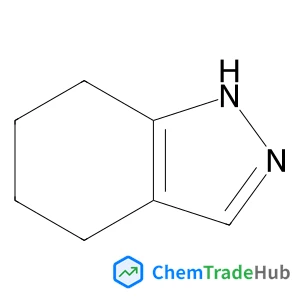
What are the physical and chemical properties of 4,5,6,7-Tetrahydro-1H-indazole hydrochloride (CAS: 18161-11-0)?
4,5,6,7-Tetrahydro-1H-indazole hydrochloride is a white crystalline solid with a...
18161-11-04,5,6,7-Tetrahydro-1...
Compound Q&A
What is (2R)-1-Methoxy-3-phenyl-2-propanamine (CAS: 59919-07-2)?
(2R)-1-Methoxy-3-phenyl-2-propanamine is a chiral organic compound with the CAS ...
59919-07-2(2R)-1-Methoxy-3-phe...
Compound Q&A
What industries use Ethyl 1-(1-phenylethyl)-1H-imidazole-5-carboxylate (CAS: 56649-47-9)?
Ethyl 1-(1-phenylethyl)-1H-imidazole-5-carboxylate is used in various industries...
56649-47-9Ethyl 1-(1-phenyleth...
Compound Q&A
What regulatory guidelines apply to 4-[(1E,3S)-1-(4-Hydroxyphenyl)-1,4-pentadien-3-yl]phenol (CAS: 17676-24-3)?
4-[(1E,3S)-1-(4-Hydroxyphenyl)-1,4-pentadien-3-yl]phenol (CAS: 17676-24-3) falls...
17676-24-34-[(1E,3S)-1-(4-Hydr...
Compound Q&A
What industries use (S)-3-Amino-5-phenylpentanoic acid hydrochloride (CAS: 331846-97-0)?
(S)-3-Amino-5-phenylpentanoic acid hydrochloride is primarily used in the pharma...
331846-97-0(S)-3-Amino-5-phenyl...
Compound Q&A
How is 7-methoxy-1-benzothiophene-2-carboxylic acid (CAS: 88791-07-5) typically synthesized?
7-Methoxy-1-benzothiophene-2-carboxylic acid is typically synthesized by reactin...
88791-07-57-methoxy-1-benzothi...
Source Journal
Physical Chemistry Chemical Physics

CiteScore:
5.5
Self-citation Rate:
10.3%
Articles per Year:
3036
Physical Chemistry Chemical Physics (PCCP) is an international journal co-owned by 19 physical chemistry and physics societies from around the world. This journal publishes original, cutting-edge research in physical chemistry, chemical physics and biophysical chemistry. To be suitable for publication in PCCP, articles must include significant innovation and/or insight into physical chemistry; this is the most important criterion that reviewers and Editors will judge against when evaluating submissions. The journal has a broad scope and welcomes contributions spanning experiment, theory, computation and data science. Topical coverage includes spectroscopy, dynamics, kinetics, statistical mechanics, thermodynamics, electrochemistry, catalysis, surface science, quantum mechanics, quantum computing and machine learning. Interdisciplinary research areas such as polymers and soft matter, materials, nanoscience, energy, surfaces/interfaces, and biophysical chemistry are welcomed if they demonstrate significant innovation and/or insight into physical chemistry. Joined experimental/theoretical studies are particularly appreciated when complementary and based on up-to-date approaches.
Recommended Compounds
![9H-Fluoren-9-ylmethyl {15-[(2,5-dioxo-1-pyrrolidinyl)oxy]-15-oxo-3,6,9,12-tetraoxapentadec-1-yl}carbamate structure](https://static.chemtradehub.com/structs/131/1314378-14-7-4316.webp "9H-Fluoren-9-ylmethyl {15-[(2,5-dioxo-1-pyrrolidinyl)oxy]-15-oxo-3,6,9,12-tetraoxapentadec-1-yl}carbamate structure")
9H-Fluoren-9-ylmethyl {15-[(2,5-dioxo-1-pyrrolidinyl)oxy]-15-oxo-3,6,9,12-tetraoxapentadec-1-yl}carbamate
CAS Number:
1314378-14-7
Molecular Formula:
C30H36N2O10

![(3R)-4-(4-Chlorophenyl)-3-({[(2-methyl-2-propanyl)oxy]carbonyl}amino)butanoic acid structure](https://static.chemtradehub.com/structs/218/218608-96-9-f871.webp "(3R)-4-(4-Chlorophenyl)-3-({[(2-methyl-2-propanyl)oxy]carbonyl}amino)butanoic acid structure")
(3R)-4-(4-Chlorophenyl)-3-({[(2-methyl-2-propanyl)oxy]carbonyl}amino)butanoic acid
CAS Number:
218608-96-9
Molecular Formula:
C15H20ClNO4
Recommended Suppliers





Disclaimer
This page provides academic journal information for reference and research purposes only. We are not affiliated with any journal publishers and do not handle publication submissions. For publication-related inquiries, please contact the respective journal publishers directly.
If you notice any inaccuracies in the information displayed, please contact us at support@chemtradehub.com. We will promptly review and address your concerns.