












Preparation of a colloidal array of NaTaO3nanoparticlesvia a confined space synthesis route and its photocatalytic application
Literature Information
Publication Date
2011-01-11
DOI
10.1039/C0CP02141E
Impact Factor
3.676
Authors
Toshiyuki Yokoi, Junya Sakuma, Kazuhiko Maeda, Kazunari Domen, Takashi Tatsumi, Junko N. Kondo
View Original
Abstract
The confined space synthesis method has been applied to the preparation of sodium tantalate (NaTaO3); hydrothermal reaction of NaOH and Ta2O5 was carried out in the pores of a three-dimensional mesoporous carbon, which was replicated by the colloidal array of silica nanospheres (SNSs) 20 nm in size. This approach led to the formation of a colloidal array of NaTaO3 nanoparticles 20 nm in size with a surface area of 34 m2 g−1. The photocatalytic performance of the colloidal array of NaTaO3 nanoparticles for overall water splitting under UV irradiation (λ > 200 nm) was evaluated after loading a NiO cocatalyst onto NaTaO3 samples. The NiO-loaded NaTaO3 nanoparticles showed photocatalytic activity for overall water splitting more than three times as high as non-structured bulk NaTaO3 particles.
Related Literature
Transport mechanisms in Co-doped ZnO (ZCO) and H-irradiated ZCO polycrystalline thin films
A. Di Trolio, A. Amore Bonapasta, A. Leo, G. Carapella, A. Polimeni, A. M. Testa
2021-01-11
Paper
DOI: 10.1039/D0CP06401G
Tandem solar cells efficiency prediction and optimization via deep learning
Chuqiao Yi, Yuliang Wu, Yayu Gao, Qingguo Du
2020-12-09
Paper
DOI: 10.1039/D0CP05882C
Anti-alignment driven dynamics in the excited states of molecules under strong fields
Ignacio R. Sola
2021-01-04
Paper
DOI: 10.1039/D0CP05692H
In silico approach of modified melanoma peptides and their immunotherapeutic potential
A. C. L. Pereira, K. S. Bezerra, J. L. S. Santos, J. I. N. Oliveira, V. N. Freire, U. L. Fulco
2021-01-06
Paper
DOI: 10.1039/D0CP05322H
The spin-dependent transport properties of defected zigzag graphene nanoribbons with graphene nanobubbles
Yun Ni, Jia Li, Wei Tao, Hao Ding, Rui-Xue Li
2021-01-07
Paper
DOI: 10.1039/D0CP05640E
A DFT-based microkinetic study on methanol synthesis from CO2 hydrogenation over the In2O3 catalyst
2020-12-23
Paper
DOI: 10.1039/D0CP05947A
TD-DFT simulations of K-edge resonant inelastic X-ray scattering within the restricted subspace approximation
Vinícius Vaz da Cruz, Sebastian Eckert
2020-10-19
Paper
DOI: 10.1039/D0CP04726K
Morphology dependent interaction between Co(ii)-tetraphenylporphyrin and the MgO(100) surface
Silviya Ninova, Osman Barış Malcıoğlu, Philipp Auburger, Matthias Franke, Ole Lytken, Hans-Peter Steinrück
2021-01-04
Paper
DOI: 10.1039/D0CP04859C
Comparative study of the elastic properties of adamantane and 1-chloroadamantane at high pressure and different temperatures and at order–disorder transitions
Elena L. Gromnitskaya, Igor V. Danilov, Vadim V. Brazhkin
2020-12-08
Paper
DOI: 10.1039/D0CP04550K
What does graphitic carbon nitride really look like?
Sigismund T. A. G. Melissen, Tangui Le Bahers, Stephan N. Steinmann
2021-01-11
Paper
DOI: 10.1039/D0CP06063A
You might also like
Compound Q&A
How is Ethyl 4-chlorothieno[2,3-b]pyridine-5-carboxylate (CAS: 59713-58-5) typically synthesized?
Ethyl 4-chlorothieno[2,3-b]pyridine-5-carboxylate (CAS: 59713-58-5) can be synth...
59713-58-5Ethyl 4-chlorothieno...
Compound Q&A
What regulatory guidelines apply to 5-Methyl-1H-indole-3-carbaldehyde (CAS: 52562-50-2)?
5-Methyl-1H-indole-3-carbaldehyde (CAS: 52562-50-2) is subject to various regula...
52562-50-25-Methyl-1H-indole-3...
Compound Q&A
What are the physical and chemical properties of (1,3-Dimethyl-2,4-dioxo-1,2,3,4-tetrahydro-5-pyrimidinyl)boronic acid (CAS: 223418-73-3)?
(1,3-Dimethyl-2,4-dioxo-1,2,3,4-tetrahydro-5-pyrimidinyl)boronic acid is a white...
223418-73-3(1,3-Dimethyl-2,4-di...
Compound Q&A
How should waste containing Sulfocostunolide A (CAS: 1016983-51-9) be handled?
Waste containing Sulfocostunolide A (CAS: 1016983-51-9) should be handled with c...
1016983-51-9Sulfocostunolide A
Compound Q&A
What precautions should be taken when handling Murraxocin (CAS: 88478-44-8)?
When handling Murraxocin (CAS: 88478-44-8), ensure proper personal protective eq...
88478-44-8Murraxocin
Compound Q&A
What are the physical and chemical properties of Formvar (CAS: 63148-64-1)?
Formvar (CAS: 63148-64-1) is an alkyd resin characterized by a high molecular we...
63148-64-1Formvar(R)
Compound Q&A
Is (S)-4-benzyl-2-((benzyloxy)methyl)morpholine (CAS: 205242-66-6) safe?
(S)-4-benzyl-2-((benzyloxy)methyl)morpholine is generally safe when handled with...
205242-66-6(S)-4-benzyl-2-((ben...
Compound Q&A
What industries use Methyl 1-(5-bromo-2-pyrimidinyl)cyclopropanecarboxylate (CAS: 1447607-69-3)?
Methyl 1-(5-bromo-2-pyrimidinyl)cyclopropanecarboxylate (CAS: 1447607-69-3) is p...
1447607-69-3Methyl 1-(5-bromo-2-...
Compound Q&A
Is 2-Methyl-1-phenyl-1-propanamine hydrochloride (CAS: 24290-47-9) safe?
2-Methyl-1-phenyl-1-propanamine hydrochloride (CAS: 24290-47-9) is generally con...
24290-47-92-Methyl-1-phenyl-1-...
Compound Q&A
How is 3-(4-Bromophenyl)-2-methylpropanoic acid (CAS: 66735-01-1) typically synthesized?
3-(4-Bromophenyl)-2-methylpropanoic acid is synthesized through a multi-step pro...
66735-01-13-(4-Bromophenyl)-2-...
Source Journal
Physical Chemistry Chemical Physics

CiteScore:
5.5
Self-citation Rate:
10.3%
Articles per Year:
3036
Physical Chemistry Chemical Physics (PCCP) is an international journal co-owned by 19 physical chemistry and physics societies from around the world. This journal publishes original, cutting-edge research in physical chemistry, chemical physics and biophysical chemistry. To be suitable for publication in PCCP, articles must include significant innovation and/or insight into physical chemistry; this is the most important criterion that reviewers and Editors will judge against when evaluating submissions. The journal has a broad scope and welcomes contributions spanning experiment, theory, computation and data science. Topical coverage includes spectroscopy, dynamics, kinetics, statistical mechanics, thermodynamics, electrochemistry, catalysis, surface science, quantum mechanics, quantum computing and machine learning. Interdisciplinary research areas such as polymers and soft matter, materials, nanoscience, energy, surfaces/interfaces, and biophysical chemistry are welcomed if they demonstrate significant innovation and/or insight into physical chemistry. Joined experimental/theoretical studies are particularly appreciated when complementary and based on up-to-date approaches.
Recommended Compounds
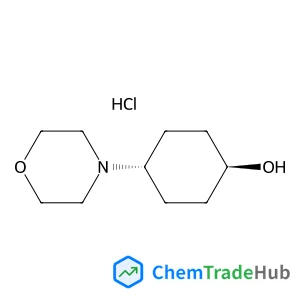
trans-4-(4-Morpholinyl)cyclohexanol hydrochloride (1:1)
CAS Number:
1588441-09-1
Molecular Formula:
C10H20ClNO2
Recommended Suppliers





Disclaimer
This page provides academic journal information for reference and research purposes only. We are not affiliated with any journal publishers and do not handle publication submissions. For publication-related inquiries, please contact the respective journal publishers directly.
If you notice any inaccuracies in the information displayed, please contact us at support@chemtradehub.com. We will promptly review and address your concerns.