


Free energy evaluation of the p53-Mdm2 complex from unbinding work measured by dynamic force spectroscopy
Literature Information
Publication Date
2010-12-10
DOI
10.1039/C0CP01474E
Impact Factor
3.676
Authors
Anna Rita Bizzarri, Salvatore Cannistraro
View Original
Abstract
The complex between the tumor suppressor p53 and its down-regulator Mdm2 has been studied by dynamic force spectroscopy and the unbinding data have been analyzed in the framework of the Jarzynski theoretical approach. Accordingly, the unbinding equilibrium free energy has been determined from the work done along several non-equilibrium paths from the bound to the unbound state in the single molecule regime. An unbinding free energy of −8.4 kcal mol−1 has been found for the complex; such a value is in a good agreement with that measured both in the bulk by isothermal titration calorimetry and that obtained from theoretical computing at the single molecule level. The determination of the unbinding free energy, together with the knowledge of the dissociation rate constant and energy barrier width, as previously obtained by dynamic force spectroscopy, adds rewarding insights on the energy landscape for this complex which is currently at the focus of anticancer drug design.
Recommended Journals

Journal of Saudi Chemical Society

Russian Journal of Organic Chemistry

Drug Discovery Today

Current Opinion in Solid State & Materials Science

Russian Journal of Applied Chemistry

Saudi Pharmaceutical Journal

Russian Chemical Bulletin

Acta Materialia

Russian Journal of General Chemistry

Russian Journal of Bioorganic Chemistry
Related Literature
A new two-dimensional all-sp3 carbon allotrope with an indirect band gap and superior carrier mobility
Xing Yang, Yuwei Wang, Ruining Xiao, Tao Wen, Yulin Shen, Huanxiang Liu, Yongfu Wang
2021-01-04
Paper
DOI: 10.1039/D0CP04547K
The quantitative impact of fluid vs. solid interfaces on the catalytic performance of pickering emulsions
Sebastian Stock, Annika Schlander, Maresa Kempin, Ramsia Geisler, Dmitrij Stehl, Kai Spanheimer, Nicole Hondow, Stuart Micklethwaite, Ariane Weber, Reinhard Schomäcker, Anja Drews, Markus Gallei, Regine von Klitzing
2020-12-16
Paper
DOI: 10.1039/D0CP06030E
In silico approach of modified melanoma peptides and their immunotherapeutic potential
A. C. L. Pereira, K. S. Bezerra, J. L. S. Santos, J. I. N. Oliveira, V. N. Freire, U. L. Fulco
2021-01-06
Paper
DOI: 10.1039/D0CP05322H
A simple strategy to overcome concentration dependence of photoswitching properties in donor–acceptor Stenhouse adducts
Sean W. Connolly, Simon J. Holder, Helena J. Shepherd
2021-01-13
Paper
DOI: 10.1039/D0CP06312F
The spin-dependent transport properties of defected zigzag graphene nanoribbons with graphene nanobubbles
Yun Ni, Jia Li, Wei Tao, Hao Ding, Rui-Xue Li
2021-01-07
Paper
DOI: 10.1039/D0CP05640E
Development of coarse-grained force field for alcohols: an efficient meta-multilinear interpolation parameterization algorithm
Junjie Song, Ying Yang, Lianghui Gao
2021-01-02
Paper
DOI: 10.1039/D0CP05503D
Exciton diffusion in solid solutions of luminescent lanthanide β-diketonates
Mingzhao Liu, Zhanlan Yang, Shifu Weng, Jinguang Wu
2020-12-07
Paper
DOI: 10.1039/D0CP04889E
Magnetic anisotropy in YbIII complex candidates for molecular qubits: a theoretical analysis
Martín Amoza, Silvia Gómez-Coca, Eliseo Ruiz
2020-12-16
Paper
DOI: 10.1039/D0CP05422D
Liquid dibromomethane under pressure: a computational study
Bernadeta Jasiok, Mirosław Chorążewski, Eugene B. Postnikov, Claude Millot
2021-01-22
Paper
DOI: 10.1039/D0CP06458K
Molecular perspective on charge-tunable adsorption of volatile organic compounds on carbon nanotubes
Bin Li, Changwen Mi
2020-12-22
Paper
DOI: 10.1039/D0CP05729K
You might also like
Compound Q&A
How is Ethyl 4-chlorothieno[2,3-b]pyridine-5-carboxylate (CAS: 59713-58-5) typically synthesized?
Ethyl 4-chlorothieno[2,3-b]pyridine-5-carboxylate (CAS: 59713-58-5) can be synth...
59713-58-5Ethyl 4-chlorothieno...
Compound Q&A
What regulatory guidelines apply to 5-Methyl-1H-indole-3-carbaldehyde (CAS: 52562-50-2)?
5-Methyl-1H-indole-3-carbaldehyde (CAS: 52562-50-2) is subject to various regula...
52562-50-25-Methyl-1H-indole-3...
Compound Q&A
What are the physical and chemical properties of (1,3-Dimethyl-2,4-dioxo-1,2,3,4-tetrahydro-5-pyrimidinyl)boronic acid (CAS: 223418-73-3)?
(1,3-Dimethyl-2,4-dioxo-1,2,3,4-tetrahydro-5-pyrimidinyl)boronic acid is a white...
223418-73-3(1,3-Dimethyl-2,4-di...
Compound Q&A
How should waste containing Sulfocostunolide A (CAS: 1016983-51-9) be handled?
Waste containing Sulfocostunolide A (CAS: 1016983-51-9) should be handled with c...
1016983-51-9Sulfocostunolide A
Compound Q&A
What precautions should be taken when handling Murraxocin (CAS: 88478-44-8)?
When handling Murraxocin (CAS: 88478-44-8), ensure proper personal protective eq...
88478-44-8Murraxocin
Compound Q&A
What are the physical and chemical properties of Formvar (CAS: 63148-64-1)?
Formvar (CAS: 63148-64-1) is an alkyd resin characterized by a high molecular we...
63148-64-1Formvar(R)
Compound Q&A
Is (S)-4-benzyl-2-((benzyloxy)methyl)morpholine (CAS: 205242-66-6) safe?
(S)-4-benzyl-2-((benzyloxy)methyl)morpholine is generally safe when handled with...
205242-66-6(S)-4-benzyl-2-((ben...
Compound Q&A
What industries use Methyl 1-(5-bromo-2-pyrimidinyl)cyclopropanecarboxylate (CAS: 1447607-69-3)?
Methyl 1-(5-bromo-2-pyrimidinyl)cyclopropanecarboxylate (CAS: 1447607-69-3) is p...
1447607-69-3Methyl 1-(5-bromo-2-...
Compound Q&A
Is 2-Methyl-1-phenyl-1-propanamine hydrochloride (CAS: 24290-47-9) safe?
2-Methyl-1-phenyl-1-propanamine hydrochloride (CAS: 24290-47-9) is generally con...
24290-47-92-Methyl-1-phenyl-1-...
Compound Q&A
How is 3-(4-Bromophenyl)-2-methylpropanoic acid (CAS: 66735-01-1) typically synthesized?
3-(4-Bromophenyl)-2-methylpropanoic acid is synthesized through a multi-step pro...
66735-01-13-(4-Bromophenyl)-2-...
Source Journal
Physical Chemistry Chemical Physics

CiteScore:
5.5
Self-citation Rate:
10.3%
Articles per Year:
3036
Physical Chemistry Chemical Physics (PCCP) is an international journal co-owned by 19 physical chemistry and physics societies from around the world. This journal publishes original, cutting-edge research in physical chemistry, chemical physics and biophysical chemistry. To be suitable for publication in PCCP, articles must include significant innovation and/or insight into physical chemistry; this is the most important criterion that reviewers and Editors will judge against when evaluating submissions. The journal has a broad scope and welcomes contributions spanning experiment, theory, computation and data science. Topical coverage includes spectroscopy, dynamics, kinetics, statistical mechanics, thermodynamics, electrochemistry, catalysis, surface science, quantum mechanics, quantum computing and machine learning. Interdisciplinary research areas such as polymers and soft matter, materials, nanoscience, energy, surfaces/interfaces, and biophysical chemistry are welcomed if they demonstrate significant innovation and/or insight into physical chemistry. Joined experimental/theoretical studies are particularly appreciated when complementary and based on up-to-date approaches.
Recommended Compounds
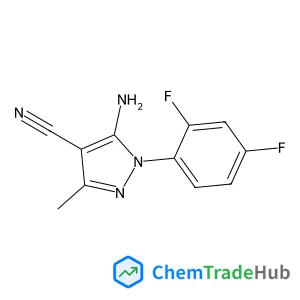
5-Amino-1-(2,4-difluorophenyl)-3-methyl-1H-pyrazole-4-carbonitrile
CAS Number:
1020057-92-4
Molecular Formula:
C11H8F2N4
![2-(Methylsulfonyl)-2,4,5,6-tetrahydropyrrolo[3,4-c]pyrazole structure](https://static.chemtradehub.com/structs/122/1226781-80-1-09d5.webp "2-(Methylsulfonyl)-2,4,5,6-tetrahydropyrrolo[3,4-c]pyrazole structure")
2-(Methylsulfonyl)-2,4,5,6-tetrahydropyrrolo[3,4-c]pyrazole
CAS Number:
1226781-80-1
Molecular Formula:
C6H9N3O2S
Recommended Suppliers




Disclaimer
This page provides academic journal information for reference and research purposes only. We are not affiliated with any journal publishers and do not handle publication submissions. For publication-related inquiries, please contact the respective journal publishers directly.
If you notice any inaccuracies in the information displayed, please contact us at support@chemtradehub.com. We will promptly review and address your concerns.