












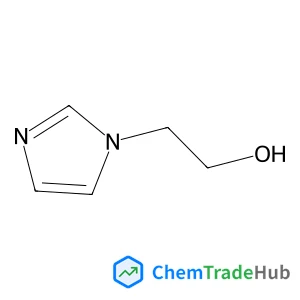
Back cover
Literature Information
Publication Date
DOI
10.1039/B601567K
Impact Factor
3.676
Authors
View Original
Abstract
The first page of this article is displayed as the abstract.
Related Literature
Tuning the electronic and mechanical properties of penta-graphene via hydrogenation and fluorination
Yaguang Guo, Jie Liu
2016-03-30
Paper
DOI: 10.1039/C6CP01092J
Simulation of lipid bilayer self-assembly using all-atom lipid force fields
Callum J. Dickson, Knut Teigen, Ian R. Gould
2016-03-01
Paper
DOI: 10.1039/C5CP07379K
Flexible magnetic filaments under the influence of external magnetic fields in the limit of infinite dilution
Joan J. Cerdà, Pedro A. Sánchez, Tomàs Sintes
2016-03-31
Paper
DOI: 10.1039/C6CP00923A
Multiscale computational modeling of 13C DNP in liquids
Sami Emre Küçük, Deniz Sezer
2016-03-11
Communication
DOI: 10.1039/C6CP01028H
How does the motion of the surrounding molecules depend on the shape of a folding molecular motor?
Nicolae Hurduc, Victor Teboul
2016-05-05
Paper
DOI: 10.1039/C6CP00023A
Combined experimental and density functional theory studies of an organic–inorganic hybrid perovskite
S. Kassou, R. El-Mrabet, A. Kaiba, P. Guionneau, A. Belaaraj
2016-03-07
Paper
DOI: 10.1039/C5CP06675A
Determination of Kamlet–Taft parameters for selected solvate ionic liquids
Baris Demir, Tiffany R. Walsh, Tom Welton
2016-04-20
Communication
DOI: 10.1039/C6CP01216G
Influences of S, Se, Te and Po substitutions on structural, electronic and optical properties of hexagonal CuAlO2 using GGA and B3LYP functionals
Zheng-Tang Liu
2016-05-11
Paper
DOI: 10.1039/C6CP02066F
Comment on “Is the regulation of the electronic properties of organic molecules by polynuclear superhalogens more effective than that by mononuclear superhalogens? A high-level ab initio case study” by M.-M. Li, J.-F. Li, H.-C. Bai, Y.-Y. Sun, J.-L. Li and B. Yin, Phys. Chem. Chem. Phys., 2015, 17, 20338
Manuel Díaz-Tinoco, J. V. Ortiz
2016-05-05
Comment
DOI: 10.1039/C6CP01897A
You might also like
Compound Q&A
How should waste containing 4-Bromo-3-methyl-2-thiophenecarboxylic acid (CAS: 265652-39-9) be handled?
Waste containing 4-Bromo-3-methyl-2-thiophenecarboxylic acid (CAS: 265652-39-9) ...
265652-39-94-Bromo-3-methyl-2-t...
Compound Q&A
What industries use (2S,5S,2'S,5'S)-1,1'-(1,2-Ethanediyl)bis(2,5-dimethylphospholane) (CAS: 136779-26-5)?
(2S,5S,2'S,5'S)-1,1'-(1,2-Ethanediyl)bis(2,5-dimethylphospholane) is primarily u...
136779-26-5(2S,5S,2'S,5'S)-1,1'...
Compound Q&A
What industries use Ethyl 2-(2-bromo-5-fluorophenyl)acetate (CAS: 1214910-61-8)?
Ethyl 2-(2-bromo-5-fluorophenyl)acetate (CAS: 1214910-61-8) is used in the pharm...
1214910-61-8Ethyl 2-(2-bromo-5-f...
Compound Q&A
How is 4-Methyl-2-benzofuran-1,3-dione (CAS: 4792-30-7) typically synthesized?
4-Methyl-2-benzofuran-1,3-dione (CAS: 4792-30-7) can be synthesized through seve...
4792-30-74-Methyl-2-benzofura...
Compound Q&A
What industries use 4,6-Dichloroquinoline-3-carbonitrile (CAS: 936498-04-3)?
4,6-Dichloroquinoline-3-carbonitrile (CAS: 936498-04-3) is used in the pharmaceu...
936498-04-34,6-Dichloroquinolin...
Compound Q&A
What are the main uses of Chloro[tris(para-trifluoromethylphenyl)phosphine]gold(I) (CAS: 385815-83-8)?
Chloro[tris(para-trifluoromethylphenyl)phosphine]gold(I) is primarily used in or...
385815-83-8Chloro[tris(para-tri...
Compound Q&A
Is 2-Bromo-5-nitrofuran (CAS: 823-73-4) safe?
2-Bromo-5-nitrofuran (CAS: 823-73-4) is generally considered safe when handled w...
823-73-42-Bromo-5-nitrofuran
Compound Q&A
How should 5-Bromo-2,3,4-trifluorobenzoic acid (CAS: 212631-85-1) be stored?
5-Bromo-2,3,4-trifluorobenzoic acid should be stored in a cool, dry place away f...
212631-85-15-Bromo-2,3,4-triflu...
Compound Q&A
What are the main uses of Zinc bis(aminoacetate) (CAS: 7214-08-6)?
Zinc bis(aminoacetate) (CAS: 7214-08-6) is primarily used in the pharmaceutical ...
7214-08-6Zinc bis(aminoacetat...
Compound Q&A
How should Adamantan-1-ylmethanol (CAS: 770-71-8) be stored?
Adamantan-1-ylmethanol should be stored in a cool, dry, and well-ventilated plac...
770-71-8Adamantan-1-ylmethan...
Source Journal
Physical Chemistry Chemical Physics

CiteScore:
5.5
Self-citation Rate:
10.3%
Articles per Year:
3036
Physical Chemistry Chemical Physics (PCCP) is an international journal co-owned by 19 physical chemistry and physics societies from around the world. This journal publishes original, cutting-edge research in physical chemistry, chemical physics and biophysical chemistry. To be suitable for publication in PCCP, articles must include significant innovation and/or insight into physical chemistry; this is the most important criterion that reviewers and Editors will judge against when evaluating submissions. The journal has a broad scope and welcomes contributions spanning experiment, theory, computation and data science. Topical coverage includes spectroscopy, dynamics, kinetics, statistical mechanics, thermodynamics, electrochemistry, catalysis, surface science, quantum mechanics, quantum computing and machine learning. Interdisciplinary research areas such as polymers and soft matter, materials, nanoscience, energy, surfaces/interfaces, and biophysical chemistry are welcomed if they demonstrate significant innovation and/or insight into physical chemistry. Joined experimental/theoretical studies are particularly appreciated when complementary and based on up-to-date approaches.
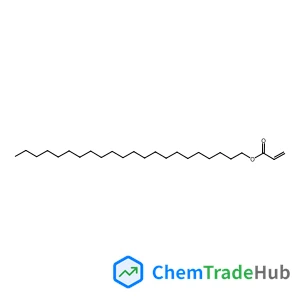
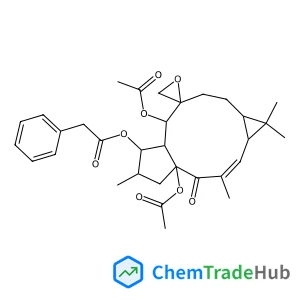
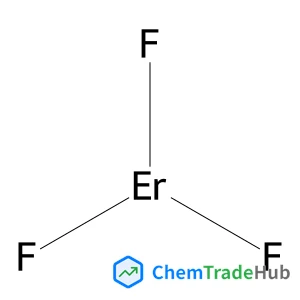
Recommended Compounds
Recommended Suppliers




Disclaimer
This page provides academic journal information for reference and research purposes only. We are not affiliated with any journal publishers and do not handle publication submissions. For publication-related inquiries, please contact the respective journal publishers directly.
If you notice any inaccuracies in the information displayed, please contact us at support@chemtradehub.com. We will promptly review and address your concerns.