












In situ synthesis of fluorescent copper nanoclusters for rapid detection of ascorbic acid in biological samples
Literature Information
Publication Date
2019-08-29
DOI
10.1039/C9AY01627A
Impact Factor
2.896
Authors
Xuan Wang, Caicheng Long, Zixin Jiang, Taiping Qing, Kaiwu Zhang, Peng Zhang, Bo Feng
View Original
Abstract
Ascorbic acid (AA) plays an important role in many physiological and biochemical processes. Herein, a novel, rapid and label-free fluorescence strategy was proposed to detect ascorbic acid based on the in situ formation of copper nanoclusters (CuNCs). When reducing ascorbic acid was present, the Cu(II) ions in 3-(N-morpholino) propanesulfonic acid (MOPS) buffer were transformed into CuNCs and showed high fluorescence. The excitation and emission peaks of CuNCs were 340 nm and 580 nm, respectively. The fluorescence intensity was proportional to the concentration of ascorbic acid. Under optimized conditions, the linear range of ascorbic acid detection is 50 to 1000 μM, and the detection limit is 41.94 μM. In addition, this method is successfully applied to the determination of ascorbic acid in real samples (serum samples and vitamin C tablets) and has shown satisfactory results. Besides the simple operation and good detection capability, the signal response of this method to ascorbic acid is fast and can reach maximum saturation in a few minutes. There is no background interference due to the in situ formation of the signal unit (CuNCs). Therefore, the proposed strategy has a strong potential to detect ascorbic acid in medical diagnosis and food safety due to its excellent analytical sensitivity and high selectivity.
Related Literature
An elevated concentration of MoS2 lowers the efficacy of liquid-phase exfoliation and triggers the production of MoOx nanoparticles
Michal Bodík, Jakub Hagara, Matej Mičušík, Mária Omastová, Mário Kotlár, Juraj Chlpík, Július Cirák, Helena Švajdlenková, Michal Anguš, Alicia Marín Roldán, Pavel Veis, Matej Jergel
2019-05-20
Paper
DOI: 10.1039/C9CP01951K
Structures and dynamic properties of the LiPF6 electrolytic solution under electric fields – a theoretical study
Man Liu, Peter J. Chimtali, Xue-bin Huang, Ru-bo Zhang
2019-05-23
Paper
DOI: 10.1039/C9CP00561G
Molecular mechanisms of pore formation and membrane disruption by the antimicrobial lantibiotic peptide Mutacin 1140
Rudramani Pokhrel, Nisha Bhattarai, Prabin Baral, Jae H. Park, Martin Handfield
2019-05-24
Paper
DOI: 10.1039/C9CP01558B
A new electrochemical cell with a uniformly accessible electrode to study fast catalytic reactions
Jean-Vincent Daurelle, Vincent Fourmond, Jérôme Vicente
2019-05-10
Paper
DOI: 10.1039/C9CP01487J
Structural and functional role of anions in electrochemical water oxidation probed by arsenate incorporation into cobalt-oxide materials
Javier Villalobos, Katharina Klingan, Petko Chernev, Paul Kubella, Roberto Urcuyo, Chiara Pasquini, Rodney D. L. Smith, Mavis L. Montero, Holger Dau
2019-05-10
Paper
DOI: 10.1039/C9CP01754B
Sub-100 nanometer silver doped gold–cysteine supramolecular assemblies with enhanced nonlinear optical properties
Hussein Fakhouri, Martina Perić, Franck Bertorelle, Philippe Dugourd, Xavier Dagany, Isabelle Russier-Antoine, Pierre-François Brevet, Rodolphe Antoine
2019-04-30
Paper
DOI: 10.1039/C9CP00829B
Strategies for the analysis of the elemental metal fraction of Ir and Ru oxides via XRD, XANES, and EXAFS
Anita Hamar Reksten, Andrea E. Russell, Peter W. Richardson, Stephen J. Thompson, Karina Mathisen, Frode Seland, Svein Sunde
2019-05-25
Paper
DOI: 10.1039/C9CP01758E
Intrinsic magnetism and biaxial strain tuning in two-dimensional metal halides V3X8 (X = F, Cl, Br, I) from first principles and Monte Carlo simulation
Haibo Xiao, Xiaonan Wang, Ruilong Wang, Lingfang Xu, Shiheng Liang, Changping Yang
2019-05-09
Paper
DOI: 10.1039/C9CP00850K
Enhanced photocatalytic activity of perovskite NaNbO3 by oxygen vacancy engineering
Bian Yang, Jihong Bian, Lei Wang, Jianwei Wang, Yaping Du, Zhiguang Wang, Chao Wu, Yaodong Yang
2019-05-10
Paper
DOI: 10.1039/C9CP01763A
Elusive hypervalent phosphorus⋯π interactions: evidence for paradigm transformation from hydrogen to phosphorus bonding at low temperatures
P. K. Sruthi, Shubhra Sarkar, N. Ramanathan, K. Sundararajan
2019-05-14
Paper
DOI: 10.1039/C9CP01925A
You might also like
Compound Q&A
What are the main uses of 1H-Indazole-6-carbonitrile (CAS: 141290-59-7)?
1H-Indazole-6-carbonitrile finds applications in pharmaceuticals, where it serve...
141290-59-71H-Indazole-6-carbon...
Compound Q&A
How should waste containing Dioctyl (2E)-2-butenedioate (CAS: 2997-85-5) be handled?
Waste containing Dioctyl (2E)-2-butenedioate (CAS: 2997-85-5) should be collecte...
2997-85-5Dioctyl (2E)-2-buten...
Compound Q&A
What industries use Sodium [(1,2-benzoxazol-3-ylmethyl)sulfonyl]azanide (CAS: 68291-98-5)?
Sodium [(1,2-benzoxazol-3-ylmethyl)sulfonyl]azanide is primarily used in pharmac...
68291-98-5Sodium [(1,2-benzoxa...
Compound Q&A
Are there alternatives to Dimethyl 4-(4,4,5,5-tetramethyl-1,3,2-dioxaborolan-2-yl)-2,6-pyridinedicarboxylate (CAS: 741709-66-0) in synthesis?
Dimethyl 4-(4,4,5,5-tetramethyl-1,3,2-dioxaborolan-2-yl)-2,6-pyridinedicarboxyla...
741709-66-0Dimethyl 4-(4,4,5,5-...
Compound Q&A
How should waste containing 2-Fluoro-6-hydrazinopyridine (CAS: 80714-39-2) be handled?
Waste containing 2-Fluoro-6-hydrazinopyridine (CAS: 80714-39-2) should be manage...
80714-39-22-Fluoro-6-hydrazino...
Compound Q&A
What is 6-Formyl-2-pyridinecarboxylic acid (CAS: 499214-11-8)?
6-Formyl-2-pyridinecarboxylic acid is an organic compound with the molecular for...
499214-11-86-Formyl-2-pyridinec...
Compound Q&A
What is the market or research trend for 3-(3,4-dimethoxyphenyl)-2,5-dimethyl-N-(2-morpholin-4-ylethyl)pyrazolo[1,5-a]pyrimidin-7-amine (CAS: 900874-91-1)?
Research trends for this compound indicate a focus on its potential applications...
900874-91-13-(3,4-dimethoxyphen...
Compound Q&A
How is 9H-Tribenzo[b,d,f]azepine (CAS: 29875-73-8) typically synthesized?
9H-Tribenzo[b,d,f]azepine is typically synthesized via a multi-step process invo...
29875-73-89H-Tribenzo[b,d,f]az...
Compound Q&A
How is 1-Cyclopropyl-7-ethoxy-6-fluoro-8-methoxy-4-oxo-1,4-dihydro-3-quinolinecarboxylic acid (CAS: 1797982-51-4) typically synthesized?
1-Cyclopropyl-7-ethoxy-6-fluoro-8-methoxy-4-oxo-1,4-dihydro-3-quinolinecarboxyli...
1797982-51-41-Cyclopropyl-7-etho...
Compound Q&A
How should waste containing Methyl 3-oxo-1,2,3,4-tetrahydro-6-quinoxalinecarboxylate (CAS: 671820-52-3) be handled?
Waste containing Methyl 3-oxo-1,2,3,4-tetrahydro-6-quinoxalinecarboxylate (CAS: ...
671820-52-3Methyl 3-oxo-1,2,3,4...
Source Journal
Analytical Methods

CiteScore:
5.1
Self-citation Rate:
3.7%
Articles per Year:
655
Analytical Methods welcomes early applications of new analytical and bioanalytical methods and technology demonstrating the potential for societal impact. We require that methods and technology reported in the journal are sufficiently innovative, robust, accurate, and compared to other available methods for the intended application. Developments with interdisciplinary approaches are particularly welcome. Systems should be proven with suitably complex and analytically challenging samples. We encourage developments within, but not limited to, the following technologies and applications: global health, point-of-care and molecular diagnostics biosensors and bioengineering drug development and pharmaceutical analysis applied microfluidics and nanotechnology omics studies, such as proteomics, metabolomics or glycomics environmental, agricultural and food science neuroscience biochemical and clinical analysis forensic analysis industrial process and method development
Recommended Compounds
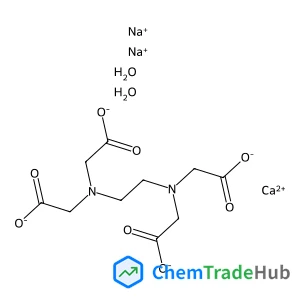
EthylenediaminetetraaceticacidcalciumDisodiumsalthydrate
CAS Number:
23411-34-9
Molecular Formula:
C10H16CaN2Na2O10
Recommended Suppliers





Disclaimer
This page provides academic journal information for reference and research purposes only. We are not affiliated with any journal publishers and do not handle publication submissions. For publication-related inquiries, please contact the respective journal publishers directly.
If you notice any inaccuracies in the information displayed, please contact us at support@chemtradehub.com. We will promptly review and address your concerns.