


Solubilization of DMPC-d54 and DMPG-d54 vesicles with octylglucoside and sodium dodecyl sulfate studied by FT-IR spectroscopy
Literature Information
Publication Date
2003-11-26
DOI
10.1039/B312533E
Impact Factor
3.676
Authors
Annette Meister, Alfred Blume
View Original
Abstract
The solubilization of deuterated dimyristoylphosphatidylcholine (DMPC-d54) and dimyristoylphosphatidylglycerol (DMPG-d54) vesicles by the surfactants sodium dodecyl sulfate (SDS) and octylglucoside (OG), respectively, was studied by Fourier transform infrared spectroscopy (FT-IR) at 30 °C. In order to obtain separate information about the structural changes of both, the lipid and the surfactant component during the solubilization process, isotopically labelled lipids (DMPC-d54 and DMPG-d54) were used. With increasing surfactant concentration, the shift of the CD2 stretching mode towards higher wavenumber indicates an increasing disorder of the lipid alkyl chains during the incorporation of the surfactants into the lipid bilayer. At the same time the frequency of the antisymmetric CH2 stretching mode of the surfactant alkyl chains shifts towards lower wavenumber with increasing amount of surfactant. This occurs due to the decreasing proportion of surfactant monomers until the saturation limit is reached. In the coexistence region the frequency of the CH2 vibration stays constant, which indicates no change in the monomer concentration of the surfactant. Only the proportion of micelles increases at the expense of the vesicles. Above the coexistence region no further frequency shift is observed except for the DMPC/SDS system, which show an additional frequency decrease of the CH2 stretching mode. This is due to the decreasing amount of SDS monomers according to the decrease of the CMC for charged systems. In DMPG/SDS mixtures, prepared in 0.1 mM NaCl, the surfactant charge is screened by the salt and no frequency shift is observed. The carbonyl vibrations show a pronounced frequency shift towards lower wavenumber exclusively for the DMPG/SDS system with high net charge. This indicates an increasing degree of hydration of the lipid head-group with increasing amount of surfactant due to the effort to separate the negative charge of the lipid head-group from the negatively charged surfactant head-group.
Recommended Journals

Current Opinion in Colloid & Interface Science

Journal of Peptide Science

Journal of Saudi Chemical Society

Journal of Natural Medicines

Current Opinion in Solid State & Materials Science

Russian Journal of General Chemistry

Chemical Communications

Chemistry Education Research and Practice

Acta Materialia

Nature Medicine
Related Literature
Activation of Kagome lattice-structured Cu3V2O7(OH)2·2H2O volborthite via hydrothermal crystallization for boosting visible light-driven water oxidation
Hengyan Yang, Ding Wang, AiYing Chen, Wei-Lin Dai, Xianglong Zhao
2018-07-09
Paper
DOI: 10.1039/C8CP03530J
Carbon-contacted single molecule electrical junctions
Cezhou Zhao, Chun Zhao, Weitao Su, Yannick J. Dappe, Richard J. Nichols
2018-06-21
Paper
DOI: 10.1039/C8CP02877J
Homogeneous and heterogeneous dynamics in native and denatured bovine serum albumin
Felix Ameseder, Aurel Radulescu, Marina Khaneft, Wiebke Lohstroh, Andreas M. Stadler
2018-01-26
Paper
DOI: 10.1039/C7CP08292D
Liquid crystals of hard rectangles on flat and cylindrical manifolds
2018-01-19
Paper
DOI: 10.1039/C7CP07026H
Super-resolution optical microscopy resolves network morphology of smart colloidal microgels
Stephan Bergmann, Oliver Wrede, Thomas Huser, Thomas Hellweg
2018-01-26
Paper
DOI: 10.1039/C7CP07648G
Global quasi-linearization (GQL) versus QSSA for a hydrogen–air auto-ignition problem
Chunkan Yu, Viatcheslav Bykov, Ulrich Maas
2018-01-15
Paper
DOI: 10.1039/C7CP07213A
Mineralization of phosphorylated cellulose: crucial role of surface structure and monovalent ions for optimizing calcium content
Natalia V. Lukasheva, Dmitry A. Tolmachev
2018-11-27
Paper
DOI: 10.1039/C8CP05767B
Competitor analysis of functional group H-bond donor and acceptor properties using the Cambridge Structural Database
James McKenzie, Christopher A. Hunter
2018-09-26
Paper
DOI: 10.1039/C8CP05470C
Hybrid DFT investigation of the energetics of Mg ion diffusion in α-MoO3
Taylor A. Barnes, Paul R. C. Kent, David Prendergast
2018-09-14
Paper
DOI: 10.1039/C8CP05511D
You might also like
Compound Q&A
What are the main uses of 1-(3-Aminophenyl)-3-[(3R)-1-(3,3-dimethyl-2-oxobutyl)-2-oxo-5-(2-pyridinyl)-2,3-dihydro-1H-1,4-benzodiazepin-3-yl]urea (CAS: 155412-88-7)?
This compound is mainly used as an intermediate in the synthesis of antipsychoti...
155412-88-71-(3-Aminophenyl)-3-...
Compound Q&A
How should waste containing 1-(D-Ribofuranosyl)-1,4-dihydro-3-pyridinecarboxamide (CAS: 19132-12-8) be handled?
Waste containing 1-(D-Ribofuranosyl)-1,4-dihydro-3-pyridinecarboxamide (CAS: 191...
19132-12-81-(D-Ribofuranosyl)-...
Compound Q&A
What regulatory guidelines apply to 2-Methyl-2-propanyl 3-bromo-3-(hydroxymethyl)-1-azetidinecarboxylate (CAS: 2007919-81-3)?
2-Methyl-2-propanyl 3-bromo-3-(hydroxymethyl)-1-azetidinecarboxylate (CAS: 20079...
2007919-81-32-Methyl-2-propanyl ...
Compound Q&A
What is N-(4-Chloro-2-pyridinyl)acetamide (CAS: 245056-66-0)?
N-(4-Chloro-2-pyridinyl)acetamide (CAS: 245056-66-0) is a chemical compound with...
245056-66-0N-(4-Chloro-2-pyridi...
Compound Q&A
What is 5-Chloro-2-hydroxybenzoic acid (CAS: 321-14-2)?
5-Chloro-2-hydroxybenzoic acid, also known as 5-chlorosalicylic acid, is an arom...
321-14-25-Chloro-2-hydroxybe...
Compound Q&A
What precautions should be taken when handling 1,1-Dichloro-1-fluoroethane (CAS: 1717-00-6)?
When handling 1,1-Dichloro-1-fluoroethane (CAS: 1717-00-6), it is important to u...
1717-00-61,1-Dichloro-1-fluor...
Compound Q&A
What are the physical and chemical properties of Fmoc-(2S,3R)-3-phenylpyrrolidine-2-carboxylic acid (CAS: 281655-32-1)?
Fmoc-(2S,3R)-3-phenylpyrrolidine-2-carboxylic acid is a white crystalline solid ...
281655-32-1Fmoc-(2S,3R)-3-pheny...
Compound Q&A
What are the main uses of 4-Amino-5-bromo-2-pyridinecarboxylic acid (CAS: 1363381-01-4)?
4-Amino-5-bromo-2-pyridinecarboxylic acid is primarily used as a precursor in th...
1363381-01-44-Amino-5-bromo-2-py...
Compound Q&A
What precautions should be taken when handling (S)-tert-butyl 2-((2-(4-bromophenyl)-2-oxoethyl)carbamoyl)pyrrolidine-1-carboxylate (CAS: 1007881-98-2)?
Handling this compound should be done with personal protective equipment (PPE) i...
1007881-98-2(S)-tert-butyl 2-((2...
Compound Q&A
What precautions should be taken when handling 8-bromo-2,2-dimethyl-3,4-dihydro-2H-1,4-benzoxazin-3-one (CAS: 688363-73-7)?
When handling 8-bromo-2,2-dimethyl-3,4-dihydro-2H-1,4-benzoxazin-3-one, use prop...
688363-73-78-bromo-2,2-dimethyl...
Source Journal
Physical Chemistry Chemical Physics

CiteScore:
5.5
Self-citation Rate:
10.3%
Articles per Year:
3036
Physical Chemistry Chemical Physics (PCCP) is an international journal co-owned by 19 physical chemistry and physics societies from around the world. This journal publishes original, cutting-edge research in physical chemistry, chemical physics and biophysical chemistry. To be suitable for publication in PCCP, articles must include significant innovation and/or insight into physical chemistry; this is the most important criterion that reviewers and Editors will judge against when evaluating submissions. The journal has a broad scope and welcomes contributions spanning experiment, theory, computation and data science. Topical coverage includes spectroscopy, dynamics, kinetics, statistical mechanics, thermodynamics, electrochemistry, catalysis, surface science, quantum mechanics, quantum computing and machine learning. Interdisciplinary research areas such as polymers and soft matter, materials, nanoscience, energy, surfaces/interfaces, and biophysical chemistry are welcomed if they demonstrate significant innovation and/or insight into physical chemistry. Joined experimental/theoretical studies are particularly appreciated when complementary and based on up-to-date approaches.
Recommended Compounds
![Methyl 4-({[(2-methyl-2-propanyl)oxy]carbonyl}amino)bicyclo[2.2.2]octane-1-carboxylate structure](https://static.chemtradehub.com/structs/943/943845-74-7-b7e5.webp "Methyl 4-({[(2-methyl-2-propanyl)oxy]carbonyl}amino)bicyclo[2.2.2]octane-1-carboxylate structure")
Methyl 4-({[(2-methyl-2-propanyl)oxy]carbonyl}amino)bicyclo[2.2.2]octane-1-carboxylate
CAS Number:
943845-74-7
Molecular Formula:
C15H25NO4
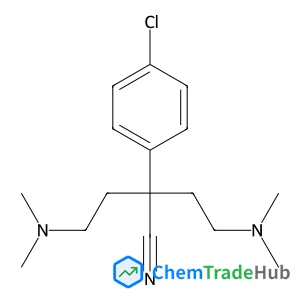
2-(4-Chlorophenyl)-4-(dimethylamino)-2-(2-(dimethylamino)ethyl)butanenitrile
CAS Number:
1246816-57-8
Molecular Formula:
C16H24ClN3
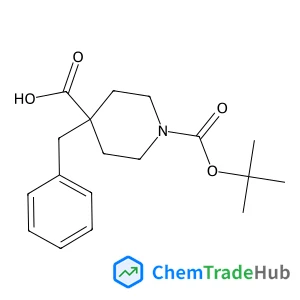
4-Benzyl-1-(tert-butoxycarbonyl)piperidine-4-carboxylic acid
CAS Number:
170838-87-6
Molecular Formula:
C18H25NO4
Recommended Suppliers





Disclaimer
This page provides academic journal information for reference and research purposes only. We are not affiliated with any journal publishers and do not handle publication submissions. For publication-related inquiries, please contact the respective journal publishers directly.
If you notice any inaccuracies in the information displayed, please contact us at support@chemtradehub.com. We will promptly review and address your concerns.