


Liquid crystals of hard rectangles on flat and cylindrical manifolds
Literature Information
Publication Date
2018-01-19
DOI
10.1039/C7CP07026H
Impact Factor
3.676
Authors
View Original
Abstract
Using the classical density functional theory of freezing and Monte Carlo computer simulations, we explore the liquid-crystalline phase behavior of hard rectangles on flat and cylindrical manifolds. Moreover, we study the effect of a static external field which couples to the rectangles' orientations, aligning them towards a preferred direction. In the flat and field-free case, the bulk phase diagram involves stable isotropic, nematic, tetratic, and smectic phases depending on the aspect ratio and number density of the particles. The external field shifts the transition curves significantly and generates a binematic phase at the expense of the tetratic phase. On a cylindrical manifold, we observe tilted smectic-like order, as obtained by wrapping a smectic layer around a cylinder. We find in general good agreement between our density functional calculations and particle-resolved computer simulations and mention possible setups to verify our predictions in experiments.
Recommended Journals

Journal of Physics and Chemistry of Solids

Journal of Heterocyclic Chemistry

Helvetica Chimica Acta

Proceedings of the National Academy of Sciences of the United States of America

Pharmacological Reviews

Kinetics and Catalysis

Israel Journal of Chemistry

Fibre Chemistry

Science Progress

Russian Chemical Reviews
Related Literature
Hierarchical micro/nano structures of carbon composites as anodes for microbial fuel cells
Yong Zhao
2011-07-25
Paper
DOI: 10.1039/C1CP21813A
A new approach to local hardness
T. Gál, P. Geerlings, F. De Proft, M. Torrent-Sucarrat
2011-07-26
Paper
DOI: 10.1039/C1CP21213C
Molecules for organic electronics studied one by one
Jörg Meyer, Anja Wadewitz, Lokamani, Cormac Toher, Roland Gresser, Karl Leo, Moritz Riede, Francesca Moresco
2011-07-28
Paper
DOI: 10.1039/C1CP20999J
Nonequilibrium transport in quantum impurity models: exact path integral simulations
Dvira Segal, Andrew J. Millis, David R. Reichman
2011-06-15
Paper
DOI: 10.1039/C1CP20702D
Steady-state photoinduced absorption of CdSe/CdS octapod shaped nanocrystals
Maria Rosa Antognazza, Francesco Scotognella, Karol Miszta, Dirk Dorfs, Marco Zanella, Margherita Zavelani-Rossi, Liberato Manna, Francesco Tassone
2011-07-25
Paper
DOI: 10.1039/C1CP21402K
Structural, morphological, and kinetic studies of β-amyloid peptide aggregation on self-assembled monolayers
Qiuming Wang, Nilam Shah, Jun Zhao, Chengshan Wang, Chao Zhao, Lingyun Liu, Lingyan Li, Feimeng Zhou, Jie Zheng
2011-07-19
Paper
DOI: 10.1039/C1CP21156K
π-Stacking between Casiopeinas® and DNA bases
Rodrigo Galindo-Murillo, Joseelyne Hernandez-Lima, Mayra González-Rendón, Lena Ruíz-Azuara, Rafael Moreno-Esparza
2011-07-12
Paper
DOI: 10.1039/C1CP20183B
Self-doping of molecular quantum-dot cellular automata: mixed valence zwitterions
Yuhui Lu, Craig Lent
2011-07-14
Paper
DOI: 10.1039/C1CP21332F
Questioning the photophysical model for the indolechromophore in the light of evidence obtained by controlling the non-specific effect of the medium with 1-chlorobutane as solvent
Juan Pablo Catalán
2011-07-14
Paper
DOI: 10.1039/C1CP21380F
You might also like
Compound Q&A
What are the main uses of 1-(3-Aminophenyl)-3-[(3R)-1-(3,3-dimethyl-2-oxobutyl)-2-oxo-5-(2-pyridinyl)-2,3-dihydro-1H-1,4-benzodiazepin-3-yl]urea (CAS: 155412-88-7)?
This compound is mainly used as an intermediate in the synthesis of antipsychoti...
155412-88-71-(3-Aminophenyl)-3-...
Compound Q&A
How should waste containing 1-(D-Ribofuranosyl)-1,4-dihydro-3-pyridinecarboxamide (CAS: 19132-12-8) be handled?
Waste containing 1-(D-Ribofuranosyl)-1,4-dihydro-3-pyridinecarboxamide (CAS: 191...
19132-12-81-(D-Ribofuranosyl)-...
Compound Q&A
What regulatory guidelines apply to 2-Methyl-2-propanyl 3-bromo-3-(hydroxymethyl)-1-azetidinecarboxylate (CAS: 2007919-81-3)?
2-Methyl-2-propanyl 3-bromo-3-(hydroxymethyl)-1-azetidinecarboxylate (CAS: 20079...
2007919-81-32-Methyl-2-propanyl ...
Compound Q&A
What is N-(4-Chloro-2-pyridinyl)acetamide (CAS: 245056-66-0)?
N-(4-Chloro-2-pyridinyl)acetamide (CAS: 245056-66-0) is a chemical compound with...
245056-66-0N-(4-Chloro-2-pyridi...
Compound Q&A
What is 5-Chloro-2-hydroxybenzoic acid (CAS: 321-14-2)?
5-Chloro-2-hydroxybenzoic acid, also known as 5-chlorosalicylic acid, is an arom...
321-14-25-Chloro-2-hydroxybe...
Compound Q&A
What precautions should be taken when handling 1,1-Dichloro-1-fluoroethane (CAS: 1717-00-6)?
When handling 1,1-Dichloro-1-fluoroethane (CAS: 1717-00-6), it is important to u...
1717-00-61,1-Dichloro-1-fluor...
Compound Q&A
What are the physical and chemical properties of Fmoc-(2S,3R)-3-phenylpyrrolidine-2-carboxylic acid (CAS: 281655-32-1)?
Fmoc-(2S,3R)-3-phenylpyrrolidine-2-carboxylic acid is a white crystalline solid ...
281655-32-1Fmoc-(2S,3R)-3-pheny...
Compound Q&A
What are the main uses of 4-Amino-5-bromo-2-pyridinecarboxylic acid (CAS: 1363381-01-4)?
4-Amino-5-bromo-2-pyridinecarboxylic acid is primarily used as a precursor in th...
1363381-01-44-Amino-5-bromo-2-py...
Compound Q&A
What precautions should be taken when handling (S)-tert-butyl 2-((2-(4-bromophenyl)-2-oxoethyl)carbamoyl)pyrrolidine-1-carboxylate (CAS: 1007881-98-2)?
Handling this compound should be done with personal protective equipment (PPE) i...
1007881-98-2(S)-tert-butyl 2-((2...
Compound Q&A
What precautions should be taken when handling 8-bromo-2,2-dimethyl-3,4-dihydro-2H-1,4-benzoxazin-3-one (CAS: 688363-73-7)?
When handling 8-bromo-2,2-dimethyl-3,4-dihydro-2H-1,4-benzoxazin-3-one, use prop...
688363-73-78-bromo-2,2-dimethyl...
Source Journal
Physical Chemistry Chemical Physics

CiteScore:
5.5
Self-citation Rate:
10.3%
Articles per Year:
3036
Physical Chemistry Chemical Physics (PCCP) is an international journal co-owned by 19 physical chemistry and physics societies from around the world. This journal publishes original, cutting-edge research in physical chemistry, chemical physics and biophysical chemistry. To be suitable for publication in PCCP, articles must include significant innovation and/or insight into physical chemistry; this is the most important criterion that reviewers and Editors will judge against when evaluating submissions. The journal has a broad scope and welcomes contributions spanning experiment, theory, computation and data science. Topical coverage includes spectroscopy, dynamics, kinetics, statistical mechanics, thermodynamics, electrochemistry, catalysis, surface science, quantum mechanics, quantum computing and machine learning. Interdisciplinary research areas such as polymers and soft matter, materials, nanoscience, energy, surfaces/interfaces, and biophysical chemistry are welcomed if they demonstrate significant innovation and/or insight into physical chemistry. Joined experimental/theoretical studies are particularly appreciated when complementary and based on up-to-date approaches.
Recommended Compounds
![Methyl 4-({[(2-methyl-2-propanyl)oxy]carbonyl}amino)bicyclo[2.2.2]octane-1-carboxylate structure](https://static.chemtradehub.com/structs/943/943845-74-7-b7e5.webp "Methyl 4-({[(2-methyl-2-propanyl)oxy]carbonyl}amino)bicyclo[2.2.2]octane-1-carboxylate structure")
Methyl 4-({[(2-methyl-2-propanyl)oxy]carbonyl}amino)bicyclo[2.2.2]octane-1-carboxylate
CAS Number:
943845-74-7
Molecular Formula:
C15H25NO4
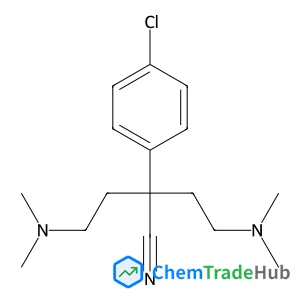
2-(4-Chlorophenyl)-4-(dimethylamino)-2-(2-(dimethylamino)ethyl)butanenitrile
CAS Number:
1246816-57-8
Molecular Formula:
C16H24ClN3
Recommended Suppliers



Disclaimer
This page provides academic journal information for reference and research purposes only. We are not affiliated with any journal publishers and do not handle publication submissions. For publication-related inquiries, please contact the respective journal publishers directly.
If you notice any inaccuracies in the information displayed, please contact us at support@chemtradehub.com. We will promptly review and address your concerns.