


Super-resolution optical microscopy resolves network morphology of smart colloidal microgels
Literature Information
Publication Date
2018-01-26
DOI
10.1039/C7CP07648G
Impact Factor
3.676
Authors
Stephan Bergmann, Oliver Wrede, Thomas Huser, Thomas Hellweg
View Original
Abstract
We present a new method to resolve the network morphology of colloidal particles in an aqueous environment via super-resolution microscopy. By localization of freely diffusing fluorophores inside the particle network we can resolve the three dimensional structure of one species of colloidal particles (thermoresponsive microgels) without altering their chemical composition through copolymerization with fluorescent monomers. Our approach utilizes the interaction of the fluorescent dye rhodamine 6G with the polymer network to achieve an indirect labeling. We calculate the 3D structure from the 2D images and compare the structure to previously published models for the microgel morphology, e.g. the fuzzy sphere model. To describe the differences in the data an extension of this model is suggested. Our method enables the tailor-made fabrication of colloidal particles which are used in various applications, such as paints or cosmetics, and are promising candidates for drug delivery, smart surface coatings, and nanocatalysis. With the precise knowledge of the particle morphology an understanding of the underlying structure–property relationships for various colloidal systems is possible.
Recommended Journals

Pure and Applied Chemistry

Kinetics and Catalysis

Russian Chemical Reviews

Organic Preparations and Procedures International

Proceedings of the National Academy of Sciences of the United States of America

Molecular Pharmacology

Journal of Catalysis

Journal of Organometallic Chemistry

Israel Journal of Chemistry

Journal of Heterocyclic Chemistry
Related Literature
Photoinduced work function changes by isomerization of a densely packed azobenzene-based SAM on Au: a joint experimental and theoretical study
N. Crivillers, A. Liscio, F. Di Stasio, C. Van Dyck, S. Osella, D. Cornil, S. Mian, G. M. Lazzerini, O. Fenwick, E. Orgiu, F. Reinders, S. Braun, M. Fahlman, J. Cornil, V. Palermo, F. Cacialli, P. Samorì
2011-06-22
Paper
DOI: 10.1039/C1CP20851A
Polarization induced water molecule dissociation below the first-order electronic-phase transition temperature
Andrew Das Arulsamy, Zlatko Kregar, Kristina Eleršič, Martina Modic, Uma Shankar Subramani
2011-07-21
Paper
DOI: 10.1039/C1CP20138G
Platinum-nanogaps for single-molecule electronics: room-temperature stability
Ferry Prins, Ahson J. Shaikh, Jan H. van Esch, Rienk Eelkema, Herre S. J. van der Zant
2011-05-09
Paper
DOI: 10.1039/C1CP20555B
Electrocatalytic oxygen evolution from water on a Mn(iii–v) dimer model catalyst—A DFT perspective
I. Panas
2011-07-20
Paper
DOI: 10.1039/C0CP02132F
Sensitive triplet exciton detection in polyfluorene using Pd-coordinated porphyrin
Maria Antonietta Loi
2011-07-06
Communication
DOI: 10.1039/C1CP21146C
The protein folding transition-state ensemble from a Gō-like model
Athi N. Naganathan
2011-07-21
Paper
DOI: 10.1039/C1CP20964G
A new approach to local hardness
T. Gál, P. Geerlings, F. De Proft, M. Torrent-Sucarrat
2011-07-26
Paper
DOI: 10.1039/C1CP21213C
Covalent networks through on-surface chemistry in ultra-high vacuum: state-of-the-art and recent developments
2011-05-09
Perspective
DOI: 10.1039/C1CP20700H
Monolayer properties of uronic acid bicatenary derivatives at the air–water interface: effect of hydroxyl group stereochemistry evidenced by experimental and computational approaches
Hary Razafindralambo, Aurore Richel, Bernard Wathelet, Christophe Blecker, Jean-Paul Wathelet, Robert Brasseur, Laurence Lins, Jose Miñones, Jr., Michel Paquot
2011-07-22
Paper
DOI: 10.1039/C1CP21365B
You might also like
Compound Q&A
What are the main uses of 1-(3-Aminophenyl)-3-[(3R)-1-(3,3-dimethyl-2-oxobutyl)-2-oxo-5-(2-pyridinyl)-2,3-dihydro-1H-1,4-benzodiazepin-3-yl]urea (CAS: 155412-88-7)?
This compound is mainly used as an intermediate in the synthesis of antipsychoti...
155412-88-71-(3-Aminophenyl)-3-...
Compound Q&A
How should waste containing 1-(D-Ribofuranosyl)-1,4-dihydro-3-pyridinecarboxamide (CAS: 19132-12-8) be handled?
Waste containing 1-(D-Ribofuranosyl)-1,4-dihydro-3-pyridinecarboxamide (CAS: 191...
19132-12-81-(D-Ribofuranosyl)-...
Compound Q&A
What regulatory guidelines apply to 2-Methyl-2-propanyl 3-bromo-3-(hydroxymethyl)-1-azetidinecarboxylate (CAS: 2007919-81-3)?
2-Methyl-2-propanyl 3-bromo-3-(hydroxymethyl)-1-azetidinecarboxylate (CAS: 20079...
2007919-81-32-Methyl-2-propanyl ...
Compound Q&A
What is N-(4-Chloro-2-pyridinyl)acetamide (CAS: 245056-66-0)?
N-(4-Chloro-2-pyridinyl)acetamide (CAS: 245056-66-0) is a chemical compound with...
245056-66-0N-(4-Chloro-2-pyridi...
Compound Q&A
What is 5-Chloro-2-hydroxybenzoic acid (CAS: 321-14-2)?
5-Chloro-2-hydroxybenzoic acid, also known as 5-chlorosalicylic acid, is an arom...
321-14-25-Chloro-2-hydroxybe...
Compound Q&A
What precautions should be taken when handling 1,1-Dichloro-1-fluoroethane (CAS: 1717-00-6)?
When handling 1,1-Dichloro-1-fluoroethane (CAS: 1717-00-6), it is important to u...
1717-00-61,1-Dichloro-1-fluor...
Compound Q&A
What are the physical and chemical properties of Fmoc-(2S,3R)-3-phenylpyrrolidine-2-carboxylic acid (CAS: 281655-32-1)?
Fmoc-(2S,3R)-3-phenylpyrrolidine-2-carboxylic acid is a white crystalline solid ...
281655-32-1Fmoc-(2S,3R)-3-pheny...
Compound Q&A
What are the main uses of 4-Amino-5-bromo-2-pyridinecarboxylic acid (CAS: 1363381-01-4)?
4-Amino-5-bromo-2-pyridinecarboxylic acid is primarily used as a precursor in th...
1363381-01-44-Amino-5-bromo-2-py...
Compound Q&A
What precautions should be taken when handling (S)-tert-butyl 2-((2-(4-bromophenyl)-2-oxoethyl)carbamoyl)pyrrolidine-1-carboxylate (CAS: 1007881-98-2)?
Handling this compound should be done with personal protective equipment (PPE) i...
1007881-98-2(S)-tert-butyl 2-((2...
Compound Q&A
What precautions should be taken when handling 8-bromo-2,2-dimethyl-3,4-dihydro-2H-1,4-benzoxazin-3-one (CAS: 688363-73-7)?
When handling 8-bromo-2,2-dimethyl-3,4-dihydro-2H-1,4-benzoxazin-3-one, use prop...
688363-73-78-bromo-2,2-dimethyl...
Source Journal
Physical Chemistry Chemical Physics

CiteScore:
5.5
Self-citation Rate:
10.3%
Articles per Year:
3036
Physical Chemistry Chemical Physics (PCCP) is an international journal co-owned by 19 physical chemistry and physics societies from around the world. This journal publishes original, cutting-edge research in physical chemistry, chemical physics and biophysical chemistry. To be suitable for publication in PCCP, articles must include significant innovation and/or insight into physical chemistry; this is the most important criterion that reviewers and Editors will judge against when evaluating submissions. The journal has a broad scope and welcomes contributions spanning experiment, theory, computation and data science. Topical coverage includes spectroscopy, dynamics, kinetics, statistical mechanics, thermodynamics, electrochemistry, catalysis, surface science, quantum mechanics, quantum computing and machine learning. Interdisciplinary research areas such as polymers and soft matter, materials, nanoscience, energy, surfaces/interfaces, and biophysical chemistry are welcomed if they demonstrate significant innovation and/or insight into physical chemistry. Joined experimental/theoretical studies are particularly appreciated when complementary and based on up-to-date approaches.
Recommended Compounds

![6-Benzyl-4,5,6,7-tetrahydro-1H-pyrazolo[3,4-c]pyridin-3(2H)-one structure](https://static.chemtradehub.com/structs/909/909187-64-0-f54f.webp "6-Benzyl-4,5,6,7-tetrahydro-1H-pyrazolo[3,4-c]pyridin-3(2H)-one structure")
6-Benzyl-4,5,6,7-tetrahydro-1H-pyrazolo[3,4-c]pyridin-3(2H)-one
CAS Number:
909187-64-0
Molecular Formula:
C13H15N3O
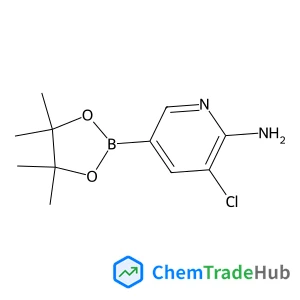
3-Chloro-5-(4,4,5,5-tetramethyl-1,3,2-dioxaborolan-2-yl)-2-pyridinamine
CAS Number:
1032758-99-8
Molecular Formula:
C11H16BClN2O2

Recommended Suppliers





Disclaimer
This page provides academic journal information for reference and research purposes only. We are not affiliated with any journal publishers and do not handle publication submissions. For publication-related inquiries, please contact the respective journal publishers directly.
If you notice any inaccuracies in the information displayed, please contact us at support@chemtradehub.com. We will promptly review and address your concerns.