












Competitor analysis of functional group H-bond donor and acceptor properties using the Cambridge Structural Database
Literature Information
Publication Date
2018-09-26
DOI
10.1039/C8CP05470C
Impact Factor
3.676
Authors
James McKenzie, Christopher A. Hunter
View Original
Abstract
Intermolecular interactions found in the Cambridge Structural Database (CSD) are analysed as the outcomes of competitions between the different functional groups that are present in each structure: the most energetically favourable interactions are expected to win more often than weaker interactions. Tracking winners and losers through each crystal structure in the CSD provides data that can be analysed using paired comparison algorithms to rank functional group H-bonding properties based on how frequently they outcompete other functional groups in the crystal. This treatment is superior to simple statistical analyses of whether functional groups H-bond or not, because the distribution of H-bond donors and acceptors in the structures of the molecules found in the CSD is non-random. Most organic molecules contain more acceptors than donors, so that all H-bond donors are almost always H-bonded in all crystal structures, and most acceptors are not. The rankings of H-bond acceptors obtained by applying the TrueSkill paired comparison algorithm to the CSD agree well with the corresponding experimentally determined solution phase H-bond acceptor parameters β, but there is insufficient data to corroborate H-bond donor rankings calculated in the same way. The method is used to make predictions of the H-bond acceptor properties of functional groups for which solution phase measurements are not available.
Recommended Journals
Related Literature
Nonequilibrium transport in quantum impurity models: exact path integral simulations
Dvira Segal, Andrew J. Millis, David R. Reichman
2011-06-15
Paper
DOI: 10.1039/C1CP20702D
Towards the computational modelling of polyoxoanions on metal surfaces: IR spectrum characterisation of [SiW12O40]4− on Ag(111)
Xavier Aparicio-Anglès, Anna Clotet, Josep M. Poblet
2011-07-11
Paper
DOI: 10.1039/C0CP02602F
Effect of volatile organic chemicals on surface-enhanced Raman scattering of 4-aminobenzenethiol on Ag: comparison with the potential dependence
Kwan Kim, Kyung Lock Kim, Jeong-Young Choi, Dongha Shin, Kuan Soo Shin
2011-07-29
Paper
DOI: 10.1039/C1CP21249D
Quantum design rules for single molecule logic gates
N. Renaud, M. Hliwa, C. Joachim
2011-07-27
Paper
DOI: 10.1039/C1CP21221D
QM/MM calculation of protein magnetic shielding tensors with generalized hybrid-orbital method: A GIAO approach
Yoshinobu Akinaga, Jaewoon Jung, Seiichiro Ten-no
2011-07-15
Paper
DOI: 10.1039/C1CP21001G
Effects of cross-links, pressure and temperature on the thermal properties and glass transition behaviour of polybutadiene
Bounphanh Tonpheng, Junchun Yu, Ove Andersson
2011-07-21
Paper
DOI: 10.1039/C1CP20785G
Ion-specific and charge effects in counterion binding to poly(styrenesulfonate) anions
Josip Požar, Klemen Bohinc, Vojko Vlachy, Davor Kovačević
2011-07-26
Paper
DOI: 10.1039/C1CP21291E
Aromaticity in all-metal annular systems: the counter-ion effect
Arindam Chakraborty, Santanab Giri, Soma Duley, Anakuthil Anoop, Patrick Bultinck, Pratim K. Chattaraj
2011-07-26
Perspective
DOI: 10.1039/C1CP21430F
A theoretical study on structural, spectroscopic and energetic properties of acetamide clusters [CH3CONH2] (n = 1–15)
A. Subha Mahadevi, Y. Indra Neela, G. Narahari Sastry
2011-07-14
Paper
DOI: 10.1039/C1CP21346F
You might also like
Compound Q&A
What are the main uses of 1-(3-Aminophenyl)-3-[(3R)-1-(3,3-dimethyl-2-oxobutyl)-2-oxo-5-(2-pyridinyl)-2,3-dihydro-1H-1,4-benzodiazepin-3-yl]urea (CAS: 155412-88-7)?
This compound is mainly used as an intermediate in the synthesis of antipsychoti...
155412-88-71-(3-Aminophenyl)-3-...
Compound Q&A
How should waste containing 1-(D-Ribofuranosyl)-1,4-dihydro-3-pyridinecarboxamide (CAS: 19132-12-8) be handled?
Waste containing 1-(D-Ribofuranosyl)-1,4-dihydro-3-pyridinecarboxamide (CAS: 191...
19132-12-81-(D-Ribofuranosyl)-...
Compound Q&A
What regulatory guidelines apply to 2-Methyl-2-propanyl 3-bromo-3-(hydroxymethyl)-1-azetidinecarboxylate (CAS: 2007919-81-3)?
2-Methyl-2-propanyl 3-bromo-3-(hydroxymethyl)-1-azetidinecarboxylate (CAS: 20079...
2007919-81-32-Methyl-2-propanyl ...
Compound Q&A
What is N-(4-Chloro-2-pyridinyl)acetamide (CAS: 245056-66-0)?
N-(4-Chloro-2-pyridinyl)acetamide (CAS: 245056-66-0) is a chemical compound with...
245056-66-0N-(4-Chloro-2-pyridi...
Compound Q&A
What is 5-Chloro-2-hydroxybenzoic acid (CAS: 321-14-2)?
5-Chloro-2-hydroxybenzoic acid, also known as 5-chlorosalicylic acid, is an arom...
321-14-25-Chloro-2-hydroxybe...
Compound Q&A
What precautions should be taken when handling 1,1-Dichloro-1-fluoroethane (CAS: 1717-00-6)?
When handling 1,1-Dichloro-1-fluoroethane (CAS: 1717-00-6), it is important to u...
1717-00-61,1-Dichloro-1-fluor...
Compound Q&A
What are the physical and chemical properties of Fmoc-(2S,3R)-3-phenylpyrrolidine-2-carboxylic acid (CAS: 281655-32-1)?
Fmoc-(2S,3R)-3-phenylpyrrolidine-2-carboxylic acid is a white crystalline solid ...
281655-32-1Fmoc-(2S,3R)-3-pheny...
Compound Q&A
What are the main uses of 4-Amino-5-bromo-2-pyridinecarboxylic acid (CAS: 1363381-01-4)?
4-Amino-5-bromo-2-pyridinecarboxylic acid is primarily used as a precursor in th...
1363381-01-44-Amino-5-bromo-2-py...
Compound Q&A
What precautions should be taken when handling (S)-tert-butyl 2-((2-(4-bromophenyl)-2-oxoethyl)carbamoyl)pyrrolidine-1-carboxylate (CAS: 1007881-98-2)?
Handling this compound should be done with personal protective equipment (PPE) i...
1007881-98-2(S)-tert-butyl 2-((2...
Compound Q&A
What precautions should be taken when handling 8-bromo-2,2-dimethyl-3,4-dihydro-2H-1,4-benzoxazin-3-one (CAS: 688363-73-7)?
When handling 8-bromo-2,2-dimethyl-3,4-dihydro-2H-1,4-benzoxazin-3-one, use prop...
688363-73-78-bromo-2,2-dimethyl...
Source Journal
Physical Chemistry Chemical Physics

CiteScore:
5.5
Self-citation Rate:
10.3%
Articles per Year:
3036
Physical Chemistry Chemical Physics (PCCP) is an international journal co-owned by 19 physical chemistry and physics societies from around the world. This journal publishes original, cutting-edge research in physical chemistry, chemical physics and biophysical chemistry. To be suitable for publication in PCCP, articles must include significant innovation and/or insight into physical chemistry; this is the most important criterion that reviewers and Editors will judge against when evaluating submissions. The journal has a broad scope and welcomes contributions spanning experiment, theory, computation and data science. Topical coverage includes spectroscopy, dynamics, kinetics, statistical mechanics, thermodynamics, electrochemistry, catalysis, surface science, quantum mechanics, quantum computing and machine learning. Interdisciplinary research areas such as polymers and soft matter, materials, nanoscience, energy, surfaces/interfaces, and biophysical chemistry are welcomed if they demonstrate significant innovation and/or insight into physical chemistry. Joined experimental/theoretical studies are particularly appreciated when complementary and based on up-to-date approaches.
Recommended Compounds
![5-Methyl-4,5,6,7-tetrahydropyrazolo[1,5-a]pyrazin-2-amine structure](https://static.chemtradehub.com/structs/122/1227210-33-4-8d64.webp "5-Methyl-4,5,6,7-tetrahydropyrazolo[1,5-a]pyrazin-2-amine structure")
5-Methyl-4,5,6,7-tetrahydropyrazolo[1,5-a]pyrazin-2-amine
CAS Number:
1227210-33-4
Molecular Formula:
C7H12N4
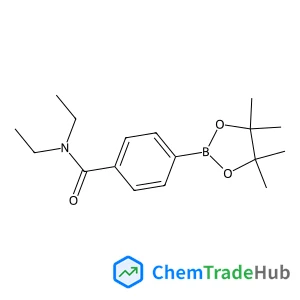
N,N-Diethyl-4-(4,4,5,5-tetramethyl-1,3,2-dioxaborolan-2-yl)benzamide
CAS Number:
325142-99-2
Molecular Formula:
C17H26BNO3

![Pyrazolo[1,5-a]pyridine-3-carbothioamide structure](https://static.chemtradehub.com/structs/885/885275-44-5-aae0.webp "Pyrazolo[1,5-a]pyridine-3-carbothioamide structure")
Recommended Suppliers




Disclaimer
This page provides academic journal information for reference and research purposes only. We are not affiliated with any journal publishers and do not handle publication submissions. For publication-related inquiries, please contact the respective journal publishers directly.
If you notice any inaccuracies in the information displayed, please contact us at support@chemtradehub.com. We will promptly review and address your concerns.