












![1-[6-(1H-Imidazol-1-yl)-3-pyridinyl]methanamine structure](https://static.chemtradehub.com/structs/914/914637-08-4-8825.webp "1-[6-(1H-Imidazol-1-yl)-3-pyridinyl]methanamine structure")
Dioxygen activation by a dinuclear nickel thiolate complex: structural characterization of the ligand oxidized product
Literature Information
Publication Date
2003-01-14
DOI
10.1039/B211395N
Impact Factor
6.222
Authors
Todd C. Harrop, Marilyn M. Olmstead, Pradip K. Mascharak
View Original
Abstract
A (μ-SR)2-nickel(II) dimer derived from a ligand with carboxamido nitrogen and thiolato sulfur donors reacts with O2 to afford an oxidized product in which phenyl groups of the ligand frames are oxidized to nickel-bound phenolates.
Related Literature
Self-consistent field modeling of mesomorphic phase changes of monoolein and phospholipids in response to additives
N. de Lange, J. M. Kleijn, F. A. M. Leermakers
2021-06-17
Paper
DOI: 10.1039/D1CP00697E
Entropic analysis of bistability and the general evolution criterion
David Hochberg, Josep M. Ribó
2021-06-01
Paper
DOI: 10.1039/D1CP01236C
Bayesian phase difference estimation: a general quantum algorithm for the direct calculation of energy gaps
Chikako Sakai, Kazuo Toyota, Kazunobu Sato, Daisuke Shiomi
2021-09-02
Paper
DOI: 10.1039/D1CP03156B
The impact of insufficient time resolution on dye regeneration lifetime determined using transient absorption spectroscopy
Inseong Cho, Pawel Wagner, Peter C. Innis, Attila J. Mozer
2021-05-29
Paper
DOI: 10.1039/D1CP01217G
Origin of the hydrophobicity of sulfur-containing iron surfaces
Hao Li, Weijie Yang, Chongchong Wu, Jiang Xu
2021-05-28
Paper
DOI: 10.1039/D1CP00588J
Fabrication and photocatalytic activity of graphitic-C3N4 quantum dots-decorated basic zinc carbonate prepared by a co-precipitation method
Ping Zhao, Bo Jin, Qingchun Zhang, Rufang Peng
2021-08-09
Paper
DOI: 10.1039/D1CP03466A
Influence of water content on the [2σ+2σ+2π] cycloaddition of dimethyl azodicarboxylate with quadricyclane in mixed methanol–water solvents from QM/MM Monte Carlo simulations
Lian Yang, Xudong Liu, Yan Zhang, Yongsheng Yang, Ying Xue
2021-08-23
Paper
DOI: 10.1039/D1CP01973B
Thermal conductivity and electrical resistivity of single copper nanowires
Wei-Tsu Peng, Fu-Ren Chen, Ming-Chang Lu
2021-08-26
Paper
DOI: 10.1039/D1CP02774C
You might also like
Compound Q&A
What is the market or research trend for N-(4-Methoxybenzyl)-2-pyridinamine (CAS: 52818-63-0)?
N-(4-Methoxybenzyl)-2-pyridinamine (CAS: 52818-63-0) is increasingly being used ...
52818-63-0N-(4-Methoxybenzyl)-...
Compound Q&A
What precautions should be taken when handling Ethyl 4-(2-chlorophenyl)-1,3-thiazole-2-carboxylate (CAS: 1050507-06-6)?
When handling Ethyl 4-(2-chlorophenyl)-1,3-thiazole-2-carboxylate, appropriate p...
1050507-06-6Ethyl 4-(2-chlorophe...
Compound Q&A
What regulatory guidelines apply to diethyldiselane (CAS: 628-39-7)?
Diethyldiselane (CAS: 628-39-7) is classified under the Globally Harmonized Syst...
628-39-7Diethyldiselane
Compound Q&A
What is the market or research trend for oxocopper (CAS: 12053-18-8)?
The market for oxocopper (CAS: 12053-18-8) is primarily driven by its use in cat...
12053-18-8oxocopper; oxo-(oxoc...
Compound Q&A
What is the market or research trend for 5-{[(2-Methyl-2-propanyl)oxy]carbonyl}-5-azaspiro[2.4]heptane-7-carboxylic acid?
The market for 5-{[(2-Methyl-2-propanyl)oxy]carbonyl}-5-azaspiro[2.4]heptane-7-c...
1268519-54-55-{[(2-Methyl-2-prop...
Compound Q&A
What is 2-(1-Pyrrolidinyl)-4-pyridinamine (CAS: 35981-63-6)?
2-(1-Pyrrolidinyl)-4-pyridinamine is a chemical compound with the CAS number 359...
35981-63-62-(1-Pyrrolidinyl)-4...
Compound Q&A
What are the physical and chemical properties of 2-(3-Pyridinyl)-1-azabicyclo[2.2.2]octane (CAS: 91556-75-1)?
2-(3-Pyridinyl)-1-azabicyclo[2.2.2]octane (CAS: 91556-75-1) is a crystalline sol...
91556-75-12-(3-Pyridinyl)-1-az...
Compound Q&A
How is (S)-Alpha-allyl-proline hydrochloride (CAS: 129704-91-2) typically synthesized?
(S)-Alpha-allyl-proline hydrochloride is usually synthesized via a Wittig reacti...
129704-91-2(S)-Alpha-allyl-prol...
Compound Q&A
What is 3-Methyl-1,2-oxazole-5-carboxylic acid (CAS: 4857-42-5)?
3-Methyl-1,2-oxazole-5-carboxylic acid (CAS: 4857-42-5) is an organic compound w...
4857-42-53-Methyl-1,2-oxazole...
Compound Q&A
How is Lys-SMCC-DM1 (CAS: 1281816-04-3) typically synthesized?
Lys-SMCC-DM1 is synthesized via a multi-step process involving the coupling of S...
1281816-04-3Lys-SMCC-DM1
Source Journal
Chemical Communications

CiteScore:
8.6
Self-citation Rate:
4.7%
Articles per Year:
2458
ChemComm publishes urgent research which is of outstanding significance and interest to experts in the field, while also appealing to the journal’s broad chemistry readership. Our communication format is ideally suited to short, urgent studies that are of such importance that they require accelerated publication. Our scope covers all topics in chemistry, and research at the interface of chemistry and other disciplines (such as materials science, nanoscience, physics, engineering and biology) where there is a significant novelty in the chemistry aspects. Major topic areas covered include: Analytical Chemistry Catalysis Chemical Biology and medicinal chemistry Computational Chemistry and Machine Learning Energy and sustainable chemistry Environmental Chemistry Green Chemistry Inorganic Chemistry Materials Chemistry Nanoscience Organic Chemistry Physical Chemistry Polymer Chemistry Supramolecular Chemistry
Recommended Compounds

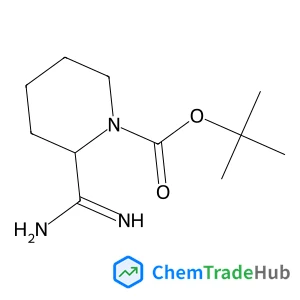
2-Methyl-2-propanyl 2-carbamimidoyl-1-piperidinecarboxylate
CAS Number:
1258640-98-0
Molecular Formula:
C11H21N3O2
![5'-Fluoro-[2,3'-biindolinylidene]-2',3-dione structure](https://static.chemtradehub.com/structs/251/251903-00-1-9cb1.webp "5'-Fluoro-[2,3'-biindolinylidene]-2',3-dione structure")
Recommended Suppliers




Disclaimer
This page provides academic journal information for reference and research purposes only. We are not affiliated with any journal publishers and do not handle publication submissions. For publication-related inquiries, please contact the respective journal publishers directly.
If you notice any inaccuracies in the information displayed, please contact us at support@chemtradehub.com. We will promptly review and address your concerns.