


The impact of insufficient time resolution on dye regeneration lifetime determined using transient absorption spectroscopy
Literature Information
Publication Date
2021-05-29
DOI
10.1039/D1CP01217G
Impact Factor
3.676
Authors
Inseong Cho, Pawel Wagner, Peter C. Innis, Attila J. Mozer
View Original
Abstract
Dye regeneration lifetimes of a combination of dyes and redox mediators were determined by two transient absorption (TA) spectrometers with 0.5 ns (sub-ns) and 6 ns (ns) time resolutions to elucidate the impact of insufficient time resolution on the measurements of dye regeneration kinetics in dye-sensitised semiconductor electrodes. Due to the disordered nature of the dye-sensitised electrodes, the dye regeneration lifetime is often characterised by half-decay time (τ1/2) of the initial signal magnitude. Alternatively, τ1/2,S is calculated from stretched-exponential lifetime (τww) and the distribution of lifetimes characterised by the stretch parameter (β). Stretched-exponential functions were numerically modelled, showing that to keep the error in τ1/2 ≤ 10%, τww needs to be at least 20 times longer than the time resolution in case of non-dispersive transients (β = 0.9) but at least 870 times longer when dispersive (β = 0.5). To test the predictions, TA decays of a combination of organic and porhyrin dyes and three cobalt-complex mediators are analysed, spanning a range of τww and β. These examples show that a 262% error in τ1/2 is possible if the time resolution of the TA setup is only 13 times faster than τww and smaller β results in larger error when τww is similar. Determining τ1/2,S by stretched-exponential fitting generally reduces the error compared to that determined directly from the graph. However, if the stretched-exponential function does not correctly describe the early signal transient, even a larger error by stretched-exponetial fitting is introduced. The key requirement for accurate measurement is to have a fast-enough TA setup to resolve the initial plateau of the TA signal. To demonstrate the impact of the measured errors, the measured regeneration lifetimes are plotted versus the driving force of the reaction and modelled using Marcus theory. Erroneous regeneration rates lead to an underestimated electronic coupling term by 2.2 times in case of a series of porphyrin dyes matched with Co complex electrolytes, a significant impact when the interpretation of factors affecting electron transfer at dye-sensitised semiconductor/electrolyte interface is discussed.
Recommended Journals

Planta Medica

Russian Chemical Reviews

Science Progress

Journal of Physics and Chemistry of Solids

Fibre Chemistry

Proceedings of the National Academy of Sciences of the United States of America

Organic Preparations and Procedures International

Journal of Catalysis

Israel Journal of Chemistry

Pure and Applied Chemistry
Related Literature
A well-tempered density functional theory of electrons in molecules
Ester Livshits, Roi Baer
2007-03-01
Invited Article
DOI: 10.1039/B617919C
Formation of mesoscopic water networks in aqueous systems
Lívia B. Pártay, Pál Jedlovszky, Ivan Brovchenko, Alla Oleinikova
2007-01-25
Paper
DOI: 10.1039/B617042K
Isothermal crystallization kinetics of in situ photo and thermo aged poly(ethylene oxide) using photoDSC
Frédéric Fraïsse, Jean-Marie Nedelec, Jean Pierre E. Grolier
2007-02-16
Paper
DOI: 10.1039/B618701C
Short-range interactions between non-ionic surfactant layers
Orlando J. Rojas, Cosima Stubenrauch
2006-10-19
Invited Article
DOI: 10.1039/B610295F
Dissociative electron attachment to abasic DNA
Sylwia Ptasińska, Léon Sanche
2007-02-12
Paper
DOI: 10.1039/B616619A
Low energy 13C+ and 13C2+ ion irradiation of water ice
Anita Dawes, Adam Hunniford, Philip D. Holtom, Robin J. Mukerji, Robert W. McCullough, Nigel J. Mason
2007-04-13
Paper
DOI: 10.1039/B618026D
You might also like
Compound Q&A
What is the market or research trend for N-(4-Methoxybenzyl)-2-pyridinamine (CAS: 52818-63-0)?
N-(4-Methoxybenzyl)-2-pyridinamine (CAS: 52818-63-0) is increasingly being used ...
52818-63-0N-(4-Methoxybenzyl)-...
Compound Q&A
What precautions should be taken when handling Ethyl 4-(2-chlorophenyl)-1,3-thiazole-2-carboxylate (CAS: 1050507-06-6)?
When handling Ethyl 4-(2-chlorophenyl)-1,3-thiazole-2-carboxylate, appropriate p...
1050507-06-6Ethyl 4-(2-chlorophe...
Compound Q&A
What regulatory guidelines apply to diethyldiselane (CAS: 628-39-7)?
Diethyldiselane (CAS: 628-39-7) is classified under the Globally Harmonized Syst...
628-39-7Diethyldiselane
Compound Q&A
What is the market or research trend for oxocopper (CAS: 12053-18-8)?
The market for oxocopper (CAS: 12053-18-8) is primarily driven by its use in cat...
12053-18-8oxocopper; oxo-(oxoc...
Compound Q&A
What is the market or research trend for 5-{[(2-Methyl-2-propanyl)oxy]carbonyl}-5-azaspiro[2.4]heptane-7-carboxylic acid?
The market for 5-{[(2-Methyl-2-propanyl)oxy]carbonyl}-5-azaspiro[2.4]heptane-7-c...
1268519-54-55-{[(2-Methyl-2-prop...
Compound Q&A
What is 2-(1-Pyrrolidinyl)-4-pyridinamine (CAS: 35981-63-6)?
2-(1-Pyrrolidinyl)-4-pyridinamine is a chemical compound with the CAS number 359...
35981-63-62-(1-Pyrrolidinyl)-4...
Compound Q&A
What are the physical and chemical properties of 2-(3-Pyridinyl)-1-azabicyclo[2.2.2]octane (CAS: 91556-75-1)?
2-(3-Pyridinyl)-1-azabicyclo[2.2.2]octane (CAS: 91556-75-1) is a crystalline sol...
91556-75-12-(3-Pyridinyl)-1-az...
Compound Q&A
How is (S)-Alpha-allyl-proline hydrochloride (CAS: 129704-91-2) typically synthesized?
(S)-Alpha-allyl-proline hydrochloride is usually synthesized via a Wittig reacti...
129704-91-2(S)-Alpha-allyl-prol...
Compound Q&A
What is 3-Methyl-1,2-oxazole-5-carboxylic acid (CAS: 4857-42-5)?
3-Methyl-1,2-oxazole-5-carboxylic acid (CAS: 4857-42-5) is an organic compound w...
4857-42-53-Methyl-1,2-oxazole...
Compound Q&A
How is Lys-SMCC-DM1 (CAS: 1281816-04-3) typically synthesized?
Lys-SMCC-DM1 is synthesized via a multi-step process involving the coupling of S...
1281816-04-3Lys-SMCC-DM1
Source Journal
Physical Chemistry Chemical Physics

CiteScore:
5.5
Self-citation Rate:
10.3%
Articles per Year:
3036
Physical Chemistry Chemical Physics (PCCP) is an international journal co-owned by 19 physical chemistry and physics societies from around the world. This journal publishes original, cutting-edge research in physical chemistry, chemical physics and biophysical chemistry. To be suitable for publication in PCCP, articles must include significant innovation and/or insight into physical chemistry; this is the most important criterion that reviewers and Editors will judge against when evaluating submissions. The journal has a broad scope and welcomes contributions spanning experiment, theory, computation and data science. Topical coverage includes spectroscopy, dynamics, kinetics, statistical mechanics, thermodynamics, electrochemistry, catalysis, surface science, quantum mechanics, quantum computing and machine learning. Interdisciplinary research areas such as polymers and soft matter, materials, nanoscience, energy, surfaces/interfaces, and biophysical chemistry are welcomed if they demonstrate significant innovation and/or insight into physical chemistry. Joined experimental/theoretical studies are particularly appreciated when complementary and based on up-to-date approaches.
Recommended Compounds

![1-oxaspiro[4.4]nonan-6-one structure](https://static.chemtradehub.com/structs/134/134179-01-4-e051.webp "1-oxaspiro[4.4]nonan-6-one structure")
![(2R,6S)-6-[(Benzyloxy)methyl]-4-{[(2-methyl-2-propanyl)oxy]carbonyl}-2-morpholinecarboxylic acid structure](https://static.chemtradehub.com/structs/109/1093085-91-6-3382.webp "(2R,6S)-6-[(Benzyloxy)methyl]-4-{[(2-methyl-2-propanyl)oxy]carbonyl}-2-morpholinecarboxylic acid structure")
(2R,6S)-6-[(Benzyloxy)methyl]-4-{[(2-methyl-2-propanyl)oxy]carbonyl}-2-morpholinecarboxylic acid
CAS Number:
1093085-91-6
Molecular Formula:
C18H25NO6
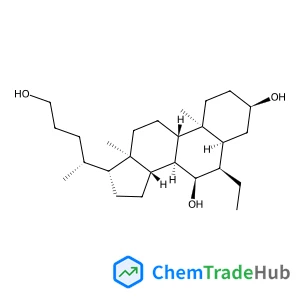
(3alpha,5beta,6alpha,7alpha)-6-Ethylcholane-3,7,24-triol
CAS Number:
1537866-49-1
Molecular Formula:
C26H46O3
Recommended Suppliers






Disclaimer
This page provides academic journal information for reference and research purposes only. We are not affiliated with any journal publishers and do not handle publication submissions. For publication-related inquiries, please contact the respective journal publishers directly.
If you notice any inaccuracies in the information displayed, please contact us at support@chemtradehub.com. We will promptly review and address your concerns.